Here's a number that should stop you: roughly 95% of Americans don't get enough fiber. Not most. Almost everyone.
Now add a GLP-1 to that picture — a medication that slows digestion and shrinks how much you eat — and the gap doesn't just persist. It widens.
Fiber might be the most underrated thing standing between you and feeling good on this medication.
The Myth: "I Eat Pretty Healthy, So I Probably Get Enough Fiber"
Most people assume they're fine on fiber. The data says otherwise — the overwhelming majority of Americans fall short of recommended intake, even people who consider themselves healthy eaters. Fiber is just genuinely hard to get enough of from a typical diet.
On a GLP-1, the problem compounds from two directions. You're eating less overall, so you're taking in less fiber by default. And the medication slows your digestion, which makes constipation one of the most common complaints — exactly the thing fiber helps prevent. Less fiber, more need for it. That's the squeeze.
What adequate fiber actually does:
- Keeps digestion moving and helps prevent constipation.
- Feeds the beneficial bacteria in your gut.
- Supports steady blood sugar by slowing absorption.
- Aids fullness and appetite regulation.
The Biology: Why GLP-1 Users Need Even More
Fiber comes in two broad types. Soluble fiber dissolves into a gel that slows digestion, supports blood sugar, and feeds gut bacteria. Insoluble fiber adds bulk to keep things moving. Both matter, but for GLP-1 users dealing with slowed transit and constipation, soluble fiber's gel-forming, gut-feeding action is especially valuable.
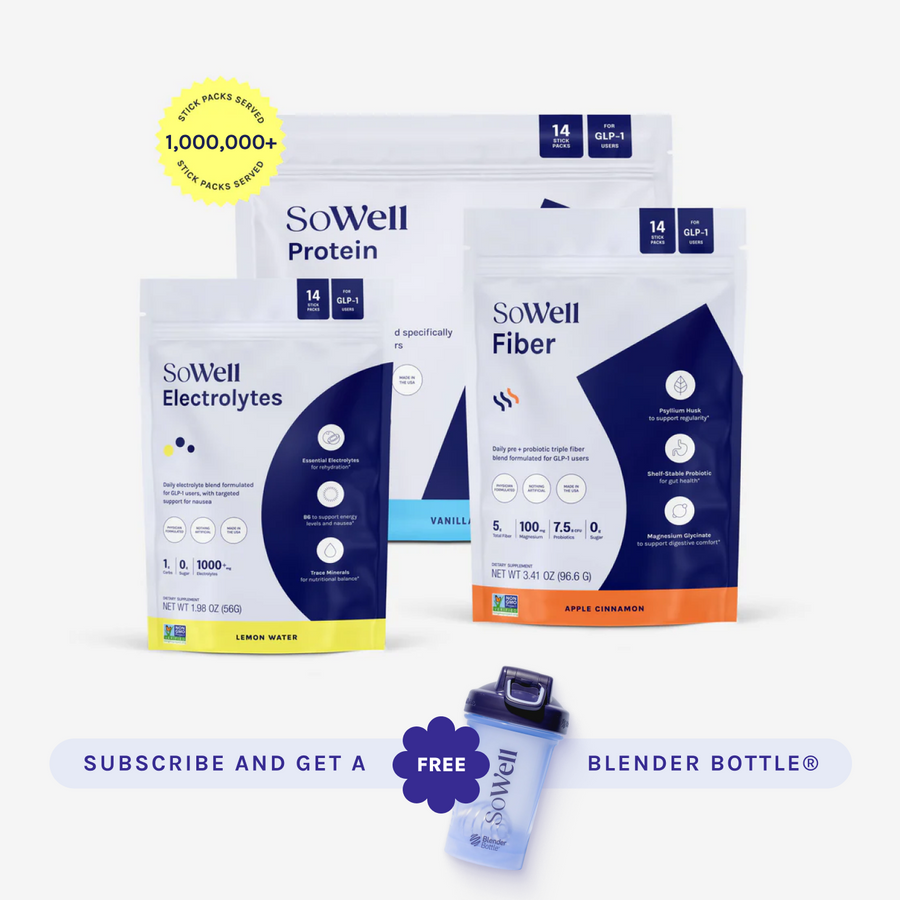
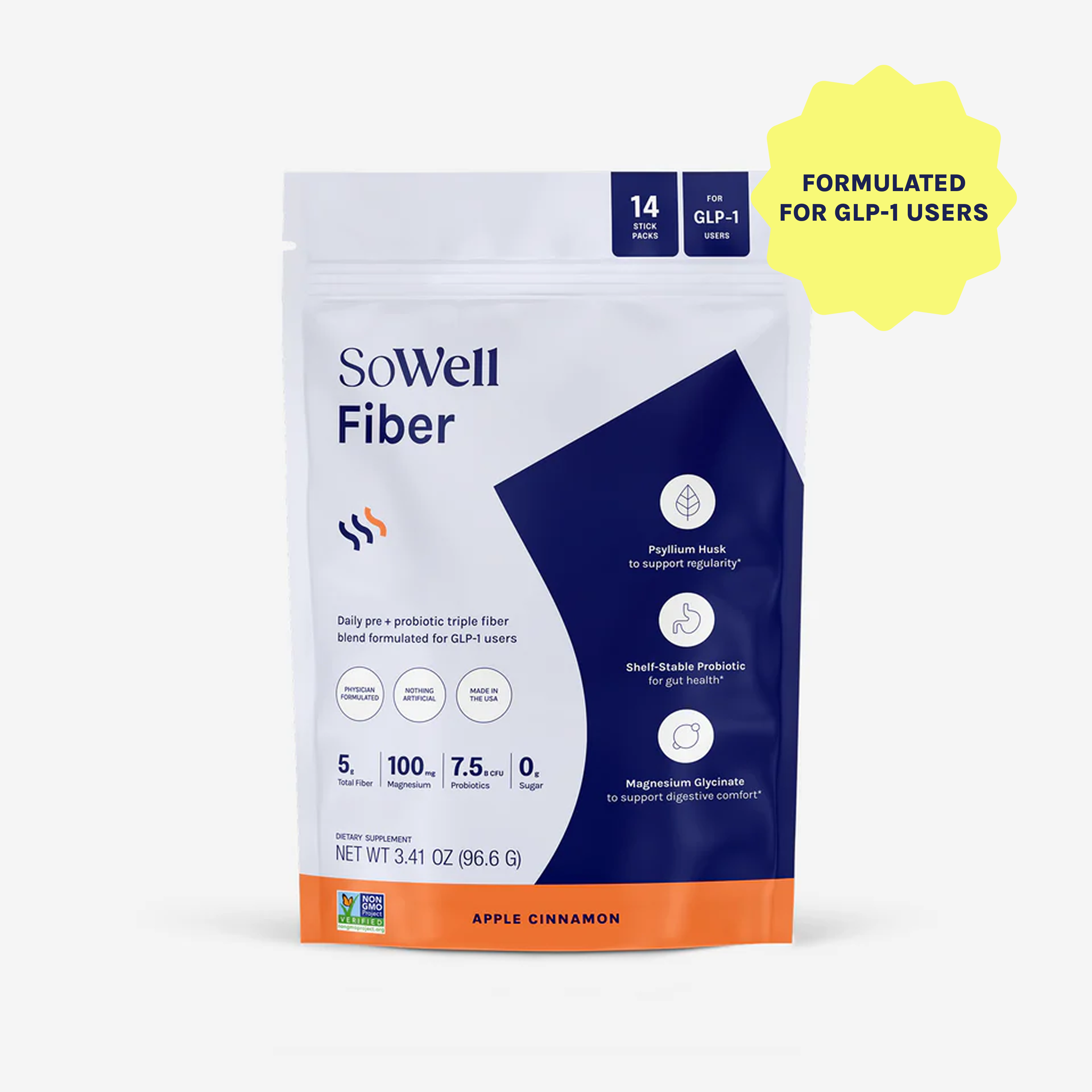
The catch is that not all fiber supplements suit a GLP-1 body. Some are loaded with sugar; some use single-source fiber that can increase bloating in a sensitive gut. A blend designed for this population does more — which is why a triple-fiber blend with probiotics and magnesium addresses the GLP-1 constipation problem more completely than a basic psyllium product. It combines psyllium, guar gum, and apple pectin for balanced support, adds a probiotic to feed gut health, and includes magnesium glycinate for comfortable digestion. The form matters as much as the fact of fiber.
Why "just eat more fiber" isn't enough here
Telling a GLP-1 user to simply eat more high-fiber food runs into a wall: appetite suppression means there's only so much you can eat. When your stomach fills fast and food sounds unappealing, loading up on fibrous vegetables isn't always realistic. That's the practical case for a fiber supplement on a GLP-1 — it closes a gap that's structurally hard to close through food alone when you're eating less.
The need went up. The capacity to eat went down. Something has to bridge that.
What to look for in GLP-1 fiber
- Soluble fiber for gentle, effective support
- A blend, not single-source (less bloating)
- Zero or minimal sugar
- Added probiotics for gut health
- Magnesium for digestive comfort
Free ResourceGet Dr. Sowa's GLP-1 Starter Guide
Weekly protocols, nutrition tips, and evidence-based guidance for your GLP-1 journey. Join 50,000+ readers.
★ Trusted by 50,000+ GLP-1 users · No spam, ever
How to Close the Fiber Gap
Make fiber a non-negotiable daily habit
Make it daily, not occasional. Fiber works through consistency. A daily habit beats sporadic big doses, especially for preventing constipation.
Always pair with water. Fiber needs fluid to work. Without enough water, it can worsen constipation instead of relieving it — non-negotiable on a GLP-1.
Choose a blend over single-source. Multiple fiber types provide more balanced support and tend to be gentler than a single fiber in a sensitive gut.
Don't rely on food alone. With appetite suppressed, hitting your fiber target through food is genuinely hard. A supplement bridges the gap realistically.
The Bottom Line
Almost everyone falls short on fiber, and a GLP-1 widens that gap from both sides — you eat less while your slowed digestion needs fiber more than ever. "Just eat more vegetables" runs straight into appetite suppression, which is exactly why a daily fiber supplement earns its place here. Your next step is to make fiber a non-negotiable daily habit, paired with water, in a blended low-sugar form that's gentle on a sensitive gut. Close the gap that almost everyone has and most GLP-1 users feel acutely, and constipation stops running your week.
The gap is real. The fix is daily. Don't leave it to chance.