The tiredness creeps in a few weeks into your GLP-1. Not dramatic — just a flatness. Less spark, heavier mornings, an afternoon wall you walk into around three o'clock.
You chalk it up to the medication. Probably the drug, right?
Maybe. But there's a gap most GLP-1 users don't think to check, and it has a name.
B vitamins.
The Myth: "The Fatigue Is Just the Drug"
It's the easy explanation, so it sticks. Feeling tired on a GLP-1? Must be the medication. Nothing to do but ride it out and hope it passes.
Except that framing ignores what changed about how you eat. When a GLP-1 slashes your appetite, it also slashes how much food — and how many nutrients — you take in. B vitamins, including B12 and folate, are involved in turning food into usable energy. They're not optional extras; they're part of the machinery that converts what you eat into what powers your day. Eat dramatically less, and research suggests it becomes harder to get enough of them, which may quietly contribute to the very fatigue you're blaming entirely on the drug.
So some of that tiredness might not be the medication at all. It might be a nutrient gap the medication created as a side effect of doing exactly what it's supposed to do — shrink your appetite. The drug isn't malfunctioning. It's just that eating far less has downstream consequences nobody flagged for you.
Why B vitamins matter here
They play a central role in energy metabolism
B12 and folate are commonly discussed in the context of fatigue
Lower food intake means lower dietary B vitamins
"Just eat more of them" is hard advice when you can barely eat
“
"Most GLP-1 supplements weren't designed for GLP-1 users. They were designed for general wellness shoppers and rebranded when semaglutide went mainstream."
The cruel irony of GLP-1 fatigue is the feedback loop it can create. You're tired, so cooking and eating feel like chores, so you eat even less, so you take in even fewer of the nutrients that support energy, so you get more tired. The smaller your appetite, the standard advice — "just get it from a balanced diet" — becomes harder to actually follow. The people who most need more nutrients are the people least able to eat their way to them.
This is exactly why a reduced appetite changes the supplement conversation. In normal circumstances, "get it from food" is reasonable advice. But when you physically cannot eat the volume of food that would deliver enough B vitamins, a targeted source stops being an optional extra and becomes a practical bridge. It's not about replacing food or admitting defeat — it's about covering a gap that eating-less makes genuinely, mechanically hard to close.
And there's a real payoff to checking. If part of your fatigue is a nutrient gap, it's one of the more fixable causes of feeling flat. You can't always do much about how a medication makes you feel, but you can do something about whether you're running low on the vitamins your energy depends on.
Push through the tiredness Check the gap first
Toughing out fatigue makes sense only if there's nothing to fix. But if part of your tiredness is a B-vitamin gap from eating far less, white-knuckling through it just leaves the gap open indefinitely. Checking and covering the nutrient side is a more useful first move than resigning yourself to feeling flat — while still ruling out medical causes with your clinician, since fatigue can have many sources.
Fatigue has many causes. Don't assume the drug owns all of them before you've looked at the obvious one.
Before you accept the tiredness
Are you eating far less than before?
Has your variety of food shrunk too?
Could a targeted B-complex help bridge it?
Have you mentioned the fatigue to your clinician?
Are hydration and protein also covered?
Step back and the broader principle is that 'eat a balanced diet' quietly assumes you're eating a normal volume of food — and on a GLP-1, that assumption breaks. Advice built for an average appetite doesn't automatically transfer to someone eating a fraction of what they used to. That's not a flaw in you; it's a mismatch between standard guidance and an unusual situation. Recognizing that mismatch is what gives you permission to use targeted tools, like a B-complex, that wouldn't be necessary if you were simply eating more.
The reassuring takeaway is that fatigue on a GLP-1 is rarely a dead end. Between covering the nutrient gap eating-less creates, staying ahead on protein and hydration, and looping in your clinician for anything persistent, you have several real levers — and pulling them often produces a noticeable lift. Don't quietly accept feeling flat as the price of the medication before you've checked the things that are genuinely fixable.
4.8 Stars (73 Reviews)
Trusted by thousands of GLP-1 users
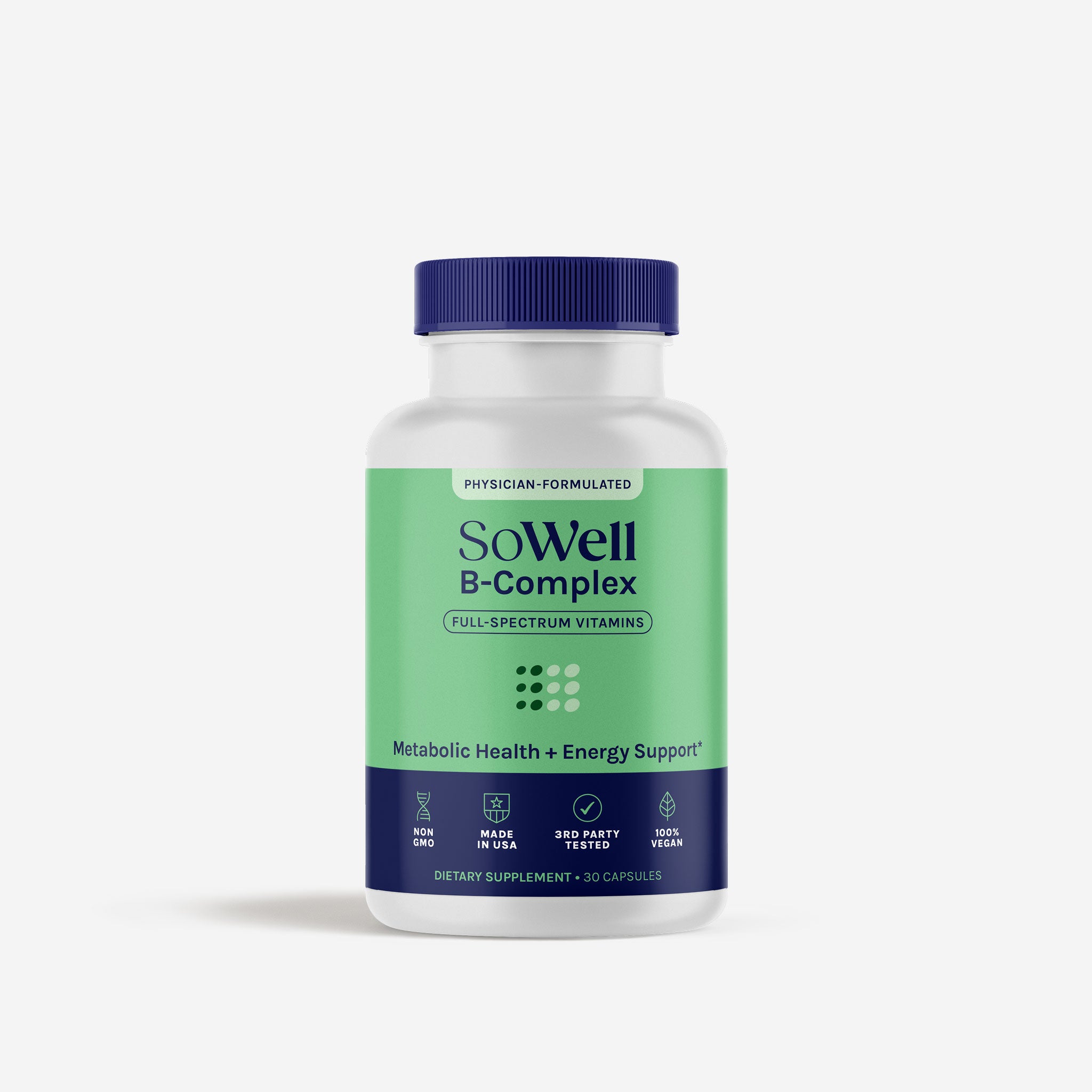
B-Complex
Benefits mood, cellular energy production, hair, skin and nails.
$28.00
Free Resource
Get Dr. Sowa's GLP-1 Starter Guide
Weekly protocols, nutrition tips, and evidence-based guidance for your GLP-1 journey. Join 50,000+ readers.
★ Trusted by 50,000+ GLP-1 users · No spam, ever
How to Close the Energy Gap
Support energy when you can't eat much
Consider a targeted B-complex. When appetite is too low to get enough from food, a B-Complex built for GLP-1 users offers a practical way to cover the gap that eating-less creates.
Don't neglect protein. Steady protein supports stable energy and protects muscle, both of which feed into how tired you feel day to day. Energy isn't only about vitamins.
Cover hydration too. Fatigue on a GLP-1 is often multi-causal — dehydration and low electrolytes can stack right on top of a nutrient gap and deepen the slump.
Rule out medical causes. Persistent or significant fatigue deserves a clinician's attention to check for other explanations beyond diet, from thyroid to anemia to medication effects.
It's worth distinguishing the kinds of tired, too, because they point to different fixes. A flat, all-day low energy that tracks with how little you're eating points more toward a nutrient and intake gap. Tiredness that comes with dizziness, headaches, or muscle cramps leans toward hydration and electrolytes. Profound or worsening fatigue, especially with other symptoms, points toward your clinician and possible testing. Paying attention to the texture of the fatigue helps you aim your response instead of guessing.
None of this means a supplement is a magic switch, either. A B-complex can close a genuine gap, but it won't manufacture energy out of nothing if the real issue is that you're sleeping badly, under-eating across the board, or dealing with an unrelated medical cause. Think of it as removing one plausible obstacle to feeling normal — an important one, and an easy one to address — while you keep the bigger picture of sleep, protein, hydration, and medical follow-up in view.
The Bottom Line
If you're dragging on your GLP-1, don't automatically file it under "just the drug." Eating far less can leave you short on the B vitamins that support energy, and that's a gap you can actually close. The practical next step is a targeted B-Complex to bridge what your reduced appetite can't deliver from food — ideally alongside the protein, fiber, and hydration of a full GLP-1 support system — while you check in with your clinician to rule out other causes.
Some of that tiredness is the gap, not the drug. Close the gap before you settle for feeling flat.
Your Questions About B Vitamins and GLP-1 Fatigue, Answered
Why am I so tired on my GLP-1?
Fatigue on a GLP-1 can have several causes, including reduced food intake leaving you short on energy-supporting nutrients like B vitamins, as well as dehydration and low electrolytes. Some tiredness may relate to the medication itself. Because the causes overlap, it's worth covering the nutrition and hydration gaps and checking persistent fatigue with your clinician.
Can low B12 cause fatigue on a GLP-1?
B12 and folate are involved in energy metabolism and are commonly discussed in relation to fatigue. Eating dramatically less can make it harder to get enough from food, so a gap is plausible for some GLP-1 users. A targeted B-complex can help bridge it, and a clinician can assess whether testing or further evaluation makes sense.
Should I take a B-complex on a GLP-1?
It can be a practical way to cover B vitamins when a reduced appetite makes getting enough from food difficult. A B-complex designed with GLP-1 users in mind fits that situation well. As with any supplement, it's worth confirming with your clinician, especially if you're managing other conditions or medications.
Will eating more fix the fatigue?
In theory more nutrient-dense food helps, but the whole challenge on a GLP-1 is that appetite is low, so eating the volume needed to close the gap is genuinely hard. That's why a targeted supplement can serve as a bridge. Protein and hydration also matter, and persistent fatigue should be reviewed by your clinician.
4.8 Stars (73 Reviews)
Trusted by thousands of GLP-1 users
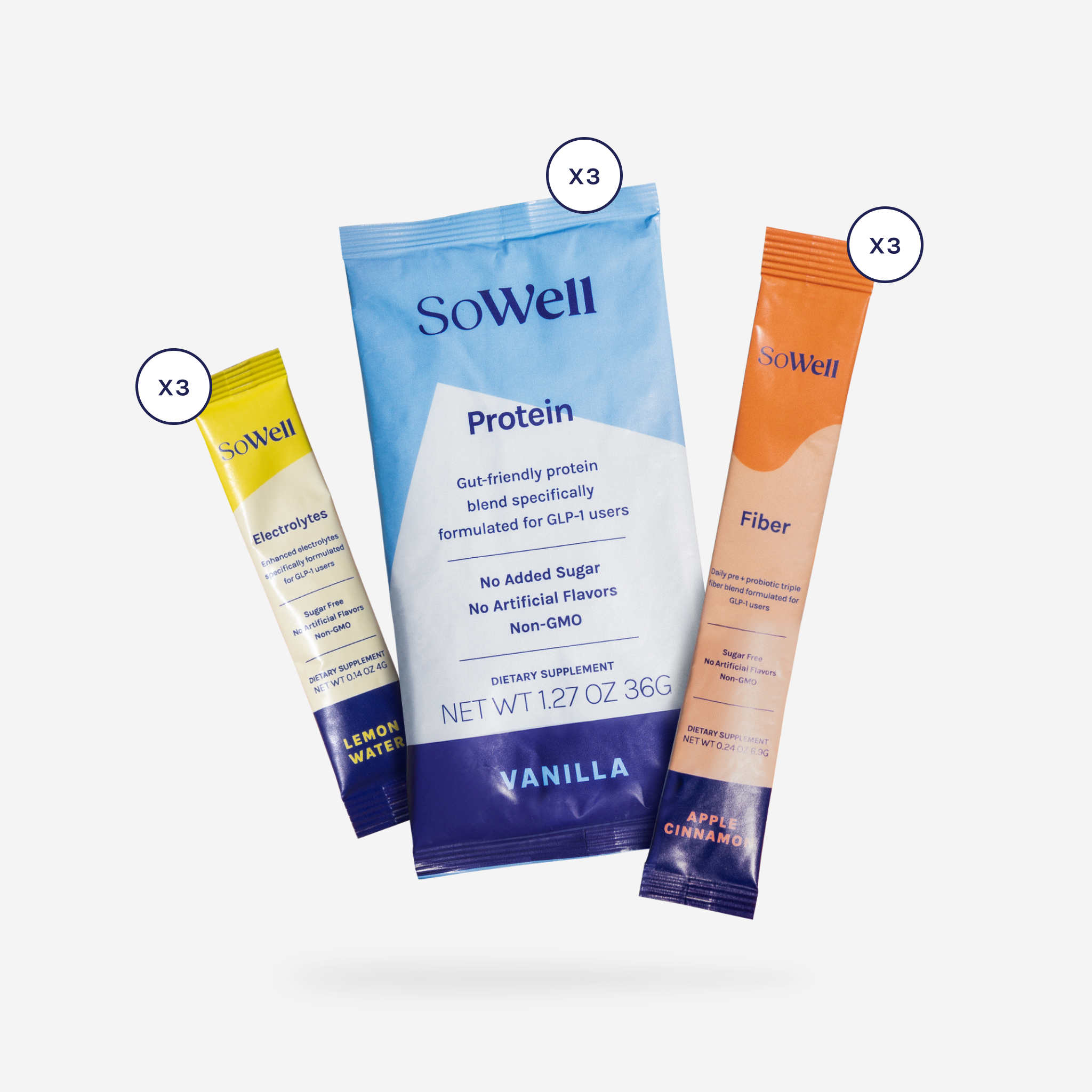
GLP-1 Support System Sample Pack
GLP-1 Support System Sample Pack
$19.99
4.8 Stars (73 Reviews)TRUSTED BY THOUSANDS OF GLP-1 USERS
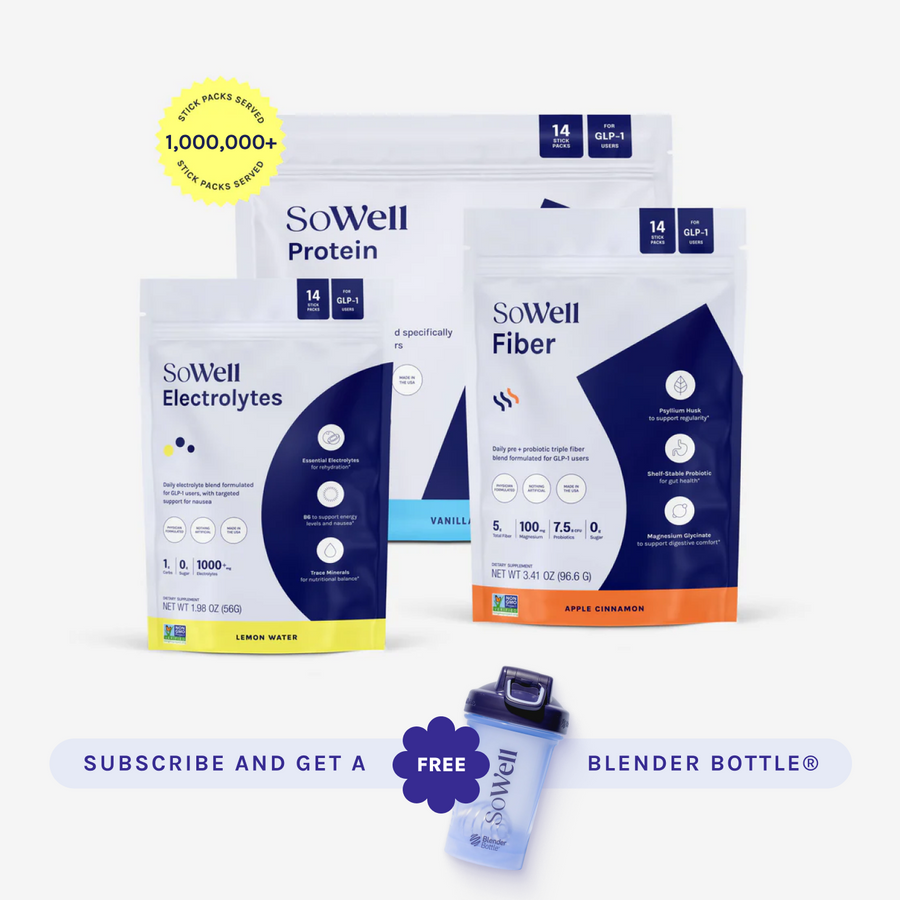
The GLP-1 Support System
Everything you need for a supported GLP-1 journey — fiber, protein, and essential micronutrients in one physician-formulated bundle. Save 20% vs. buying separately.
$104.97
$114.97
Quantity:
About the Author
Dr. Alexandra Sowa, M
Internal Medicine & Obesity Medicine Specialist · SoWell Medical Advisor
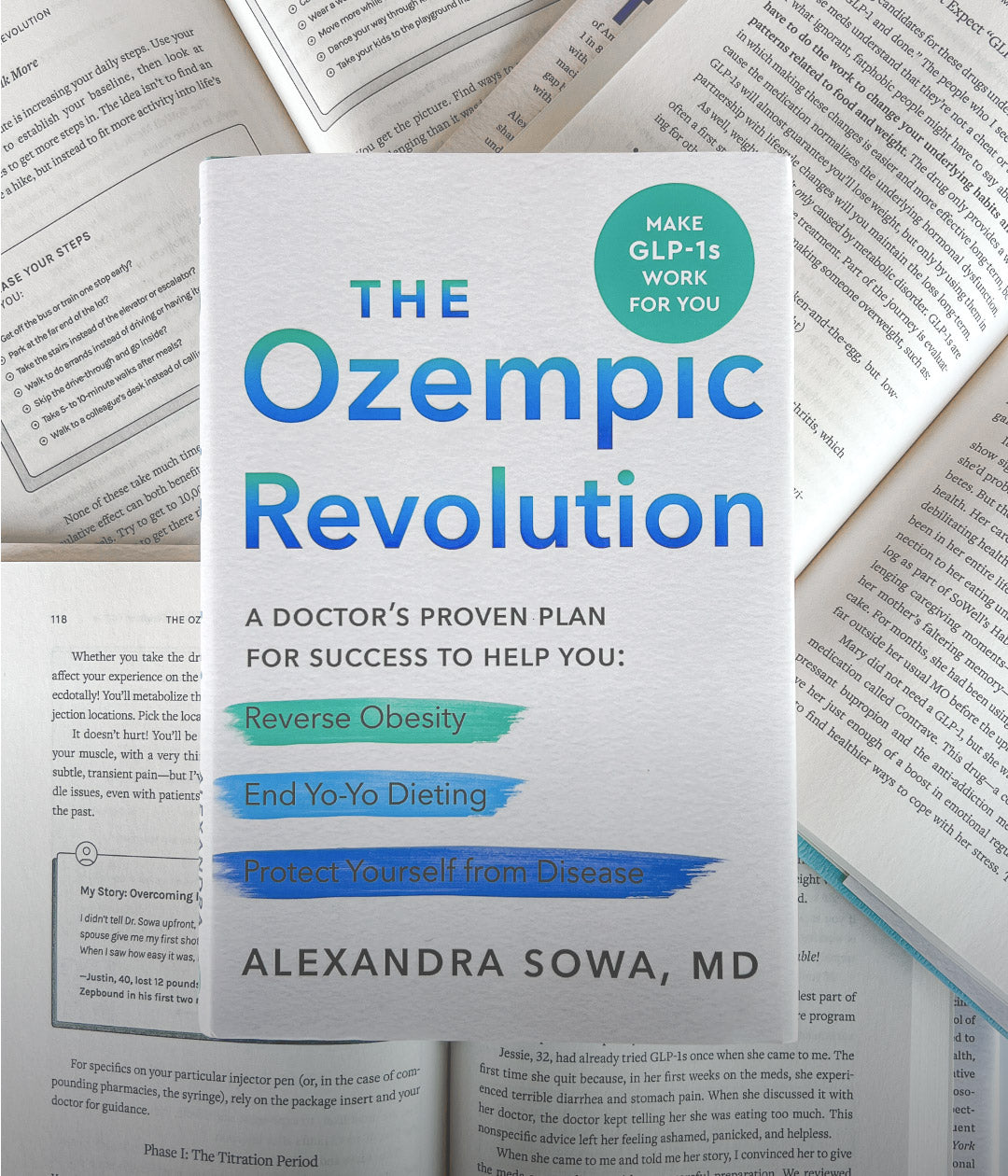
Dr. Sowa is a dual board-certified physician specializing in internal and obesity medicine. She is the founder of SoWell and the author of The Ozempic Revolution. Her practice focuses on evidence-based metabolic health and GLP-1 therapy, and she has been featured in The New York Times, Today Show, and Good Morning America.
*These statements have not been evaluated by the Food and Drug Administration. Products are not intended to diagnose, treat, cure, or prevent any disease.