You did the responsible thing. You grabbed an electrolyte mix to fight the nausea and the dragging fatigue.
And it didn't help much. Maybe it even made you feel a little worse — too sweet, too salty, sitting heavy in a stomach that's already moving slow.
That's not you doing it wrong. Most electrolyte drinks were built for a body that doesn't exist on a GLP-1.
The Myth: "An Electrolyte Is an Electrolyte"
The wellness aisle wants you to believe hydration is hydration — that any packet with sodium and potassium will do the job. For a someone sweating heavily, maybe. For someone on semaglutide or tirzepatide, the assumptions baked into those formulas fall apart.
GLP-1 medications slow gastric emptying and blunt thirst cues. You're not sweating out electrolytes the way an athlete does — you're losing them through reduced intake, occasional vomiting, and the digestive slowdown that comes with the territory. Pouring a sports formula designed for heavy sweat loss into that situation is solving the wrong problem.
What GLP-1 users actually need:
Enough sodium to support hydration — without the sky-high doses built for endurance sweat.
A formula light enough to sit well in a slowed stomach.
Ingredients that target nausea, not just replace minerals.
No sugar bombs that worsen GI distress and undercut your goals.
“
"Most GLP-1 supplements weren't designed for GLP-1 users. They were designed for general wellness shoppers and rebranded when semaglutide went mainstream."
What Separates a GLP-1 Electrolyte From a Sports Drink
The criteria that matter for this body are specific. A good electrolyte for a GLP-1 user isn't the one with the most minerals or the boldest flavor — it's the one engineered around slowed digestion, suppressed thirst, and nausea management.
Start with sodium load. Endurance formulas pack 500mg to 1,000mg-plus per serving because athletes lose enormous amounts through sweat. You're not. A lighter, balanced sodium level hydrates without overwhelming a sensitive stomach. Then look at what else is in the packet. The single most useful addition for this population is vitamin B6, which clinicians and patients commonly associate with nausea relief — which is exactly why an electrolyte formula built with B6 for GLP-1 nausea does something a plain mineral mix can't.
Then there's sugar, and this is where a lot of "hydration" products quietly sabotage you. Many popular mixes lean on sugar or maltodextrin to drive absorption and taste — fine for a depleted athlete, counterproductive for someone managing blood sugar and a queasy stomach. Added sugar can worsen GI distress and works directly against the metabolic goals that brought you to a GLP-1 in the first place. Finally, consider the experience itself: when you're nauseated, a heavy, intensely salty or syrupy drink is the last thing you'll reach for. A light, genuinely refreshing formula is the one you'll actually finish — and the electrolyte you drink beats the perfect one sitting untouched in your cabinet.
What you've been told vs. what's actually happening
"Grab a sports electrolyte, you're losing minerals."
You're losing electrolytes through reduced intake and GI changes, not gallons of sweat. The mechanism is different, so the fix is different. A sweat-replacement formula over-delivers sodium and sugar your slowed system doesn't want — and the heaviness can make nausea worse, not better.
The GLP-1 electrolyte checklist
Moderate, balanced sodium — not endurance-level
Vitamin B6 to target nausea
Zero or minimal sugar
Light, refreshing, easy on a slow stomach
Built to pull water in with each dose
What GLP-1 users need
SoWell
LMNT
Liquid IV
Nuun
Formulated specifically for GLP-1 physiology
Yes
No
No
No
Vitamin B6 for nausea support
Yes
No
No
No
Moderate sodium (not endurance-level)
Yes
No — very high sodium
Moderate
Yes
Low/no added sugar
Yes
Yes
No — added sugar
Yes
Best for
GLP-1 nausea & daily hydration
Endurance athletes & high-sweat days
Fast rehydration & travel
Active lifestyle & light hydration
Based on publicly available label data as of June 2026. Formulas may change — verify on each brand's site.
4.8 Stars (73 Reviews)
Trusted by thousands of GLP-1 users
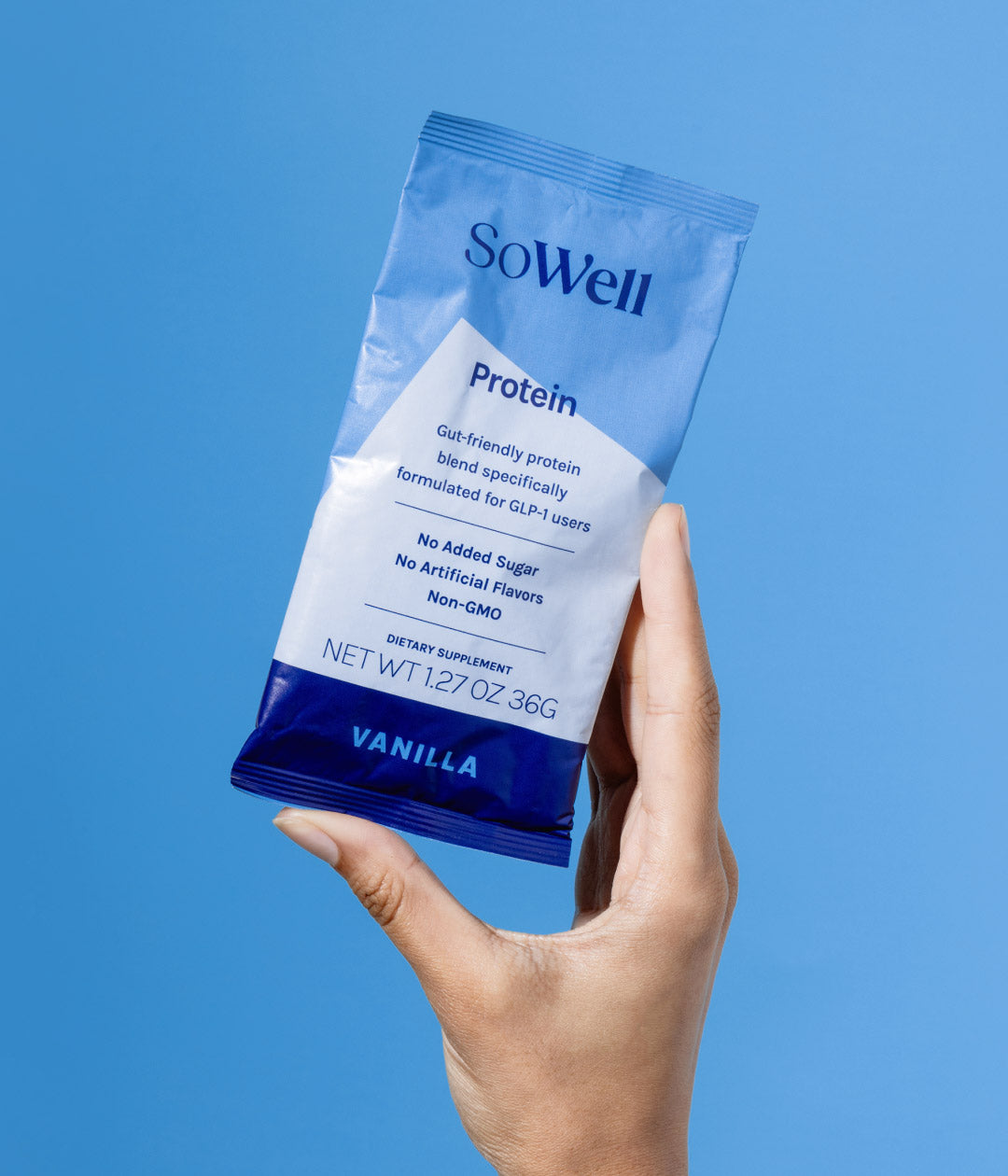
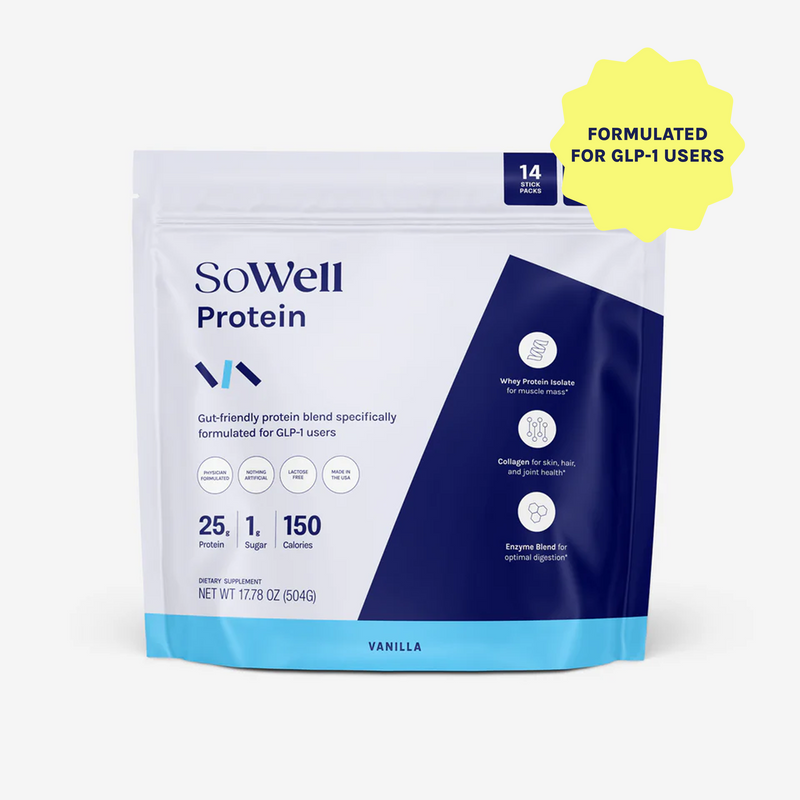
SoWell Protein
• Choose from 14 or 28 grab-and-go protein packets in a resealable, travel-friendly bag• Natural vanilla flavor mixes into anything• Easy-to-mix powder leaves no clumps•...
$89.98$44.99
Quantity:
Free Resource
Get Dr. Sowa's GLP-1 Starter Guide
Weekly protocols, nutrition tips, and evidence-based guidance for your GLP-1 journey. Join 50,000+ readers.
★ Trusted by 50,000+ GLP-1 users · No spam, ever
How to Choose the Right One
Read the label like a GLP-1 user, not an athlete
Check the sodium first. If it's built for endurance sweat (700mg+), it's likely too heavy for a slowed stomach. Moderate is your friend.
Look for B6. Most electrolyte drinks skip it. For GLP-1 nausea, it's one of the most useful things in the packet.
Scan for sugar. Added sugar can worsen GI distress and works against your goals. Choose zero or minimal.
Test the taste when nauseated. Light and refreshing beats bold and sweet when your stomach is sensitive. You'll actually drink it.
The Bottom Line
The reason your electrolyte mix isn't pulling its weight isn't a willpower problem or a hydration myth — it's that you've been drinking a formula designed for a sweating athlete, not a body running on slowed digestion and quiet thirst signals. The fix is a mix matched to your actual physiology: moderate sodium, real nausea support from B6, and nothing heavy or sugary to fight your slowed stomach. Swap the sports formula for one built for the medication you're on, and the early weeks get noticeably easier.
Hydration isn't one-size-fits-all. Neither are you.
Your Questions About Electrolytes for GLP-1 Users, Answered
Why don't regular sports electrolytes work well on a GLP-1?
Sports electrolytes are formulated to replace what athletes lose through heavy sweating, so they tend to be high in sodium and often sugar. On a GLP-1, you're losing electrolytes mainly through reduced intake and digestive changes, not sweat. The heavy sodium and sugar load can sit poorly in a slowed stomach and may worsen nausea rather than relieve it.
What should I look for in an electrolyte drink as a GLP-1 user?
Look for moderate, balanced sodium rather than endurance-level amounts, little to no added sugar, and a light formula that's easy on a sensitive stomach. Vitamin B6 is a valuable addition because it's commonly associated with nausea relief — something most standard electrolyte mixes don't include.
Is LMNT or Liquid IV good for people on Ozempic?
They're solid products for their intended uses — LMNT for endurance athletes and high-sweat days, Liquid IV for fast rehydration and travel. But neither is formulated for GLP-1 physiology. LMNT's very high sodium can feel heavy on a slowed stomach, and Liquid IV's added sugar may aggravate GI distress. For GLP-1-specific needs, a formula built around moderate sodium and nausea support is a better match.
Does sugar in electrolyte drinks matter on a GLP-1?
It can. Added sugar may worsen the GI distress that's already common on these medications, and it works against the metabolic goals most GLP-1 users have. Choosing a zero- or minimal-sugar electrolyte avoids both problems while still delivering the hydration support you need.
4.8 Stars (73 Reviews)
Trusted by thousands of GLP-1 users
SoWell Protein
• Choose from 14 or 28 grab-and-go protein packets in a resealable, travel-friendly bag• Natural vanilla flavor mixes into anything• Easy-to-mix powder leaves no clumps•...
$89.98$44.99
Quantity:
4.8 Stars (73 Reviews)TRUSTED BY THOUSANDS OF GLP-1 USERS
The GLP-1 Support System
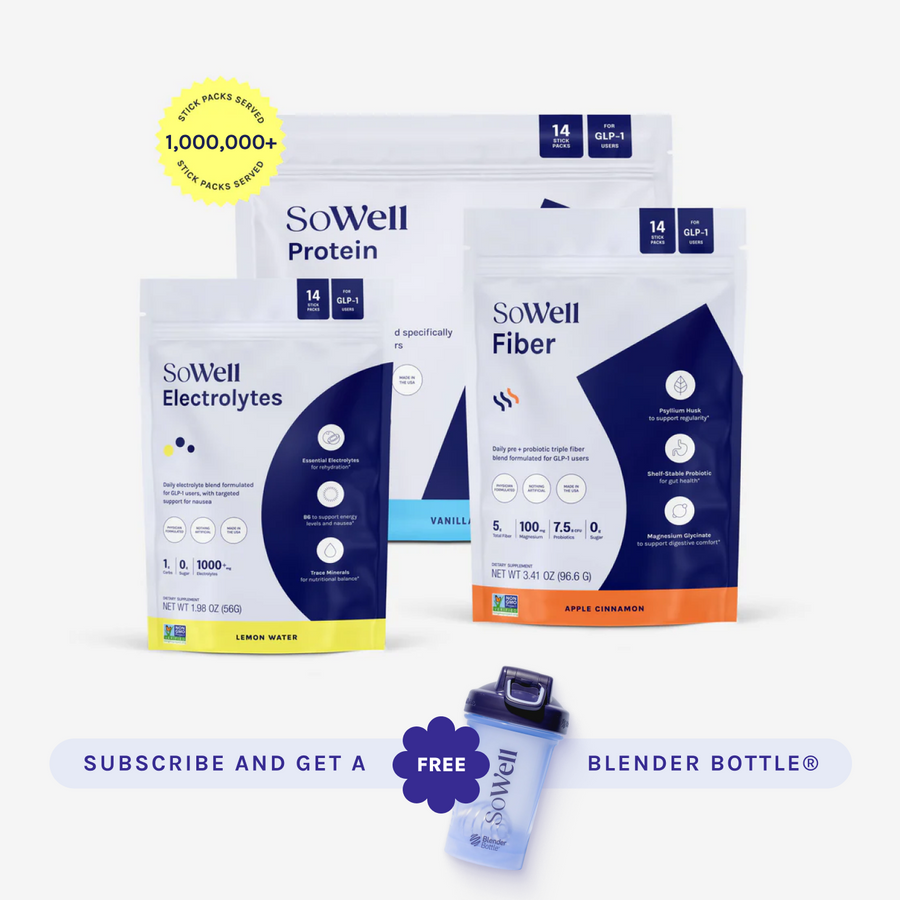
Everything you need for a supported GLP-1 journey — fiber, protein, and essential micronutrients in one physician-formulated bundle. Save 20% vs. buying separately.
$104.97
$114.97
Quantity:
About the Author
Dr. Alexandra Sowa, M
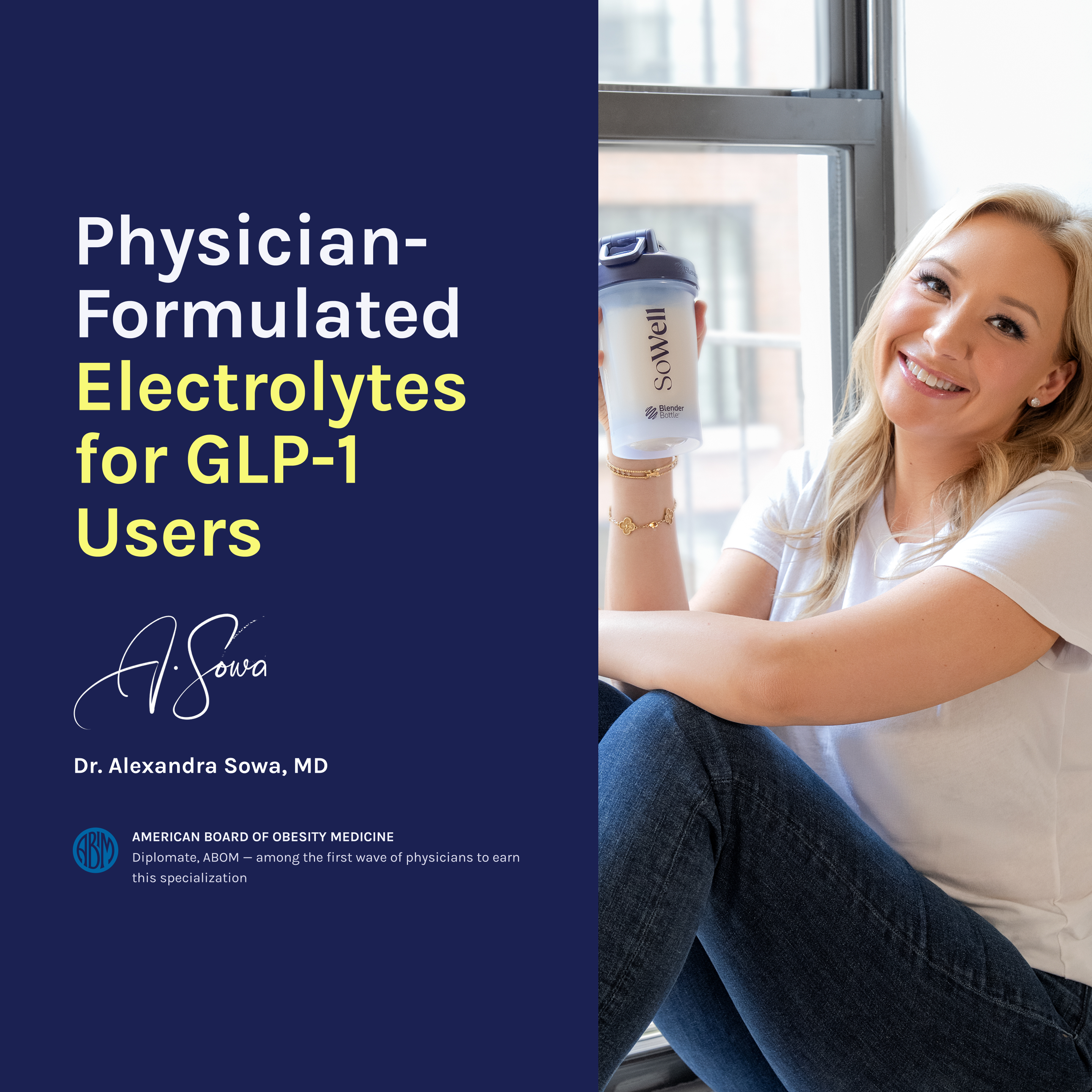
Internal Medicine & Obesity Medicine Specialist · SoWell Medical Advisor
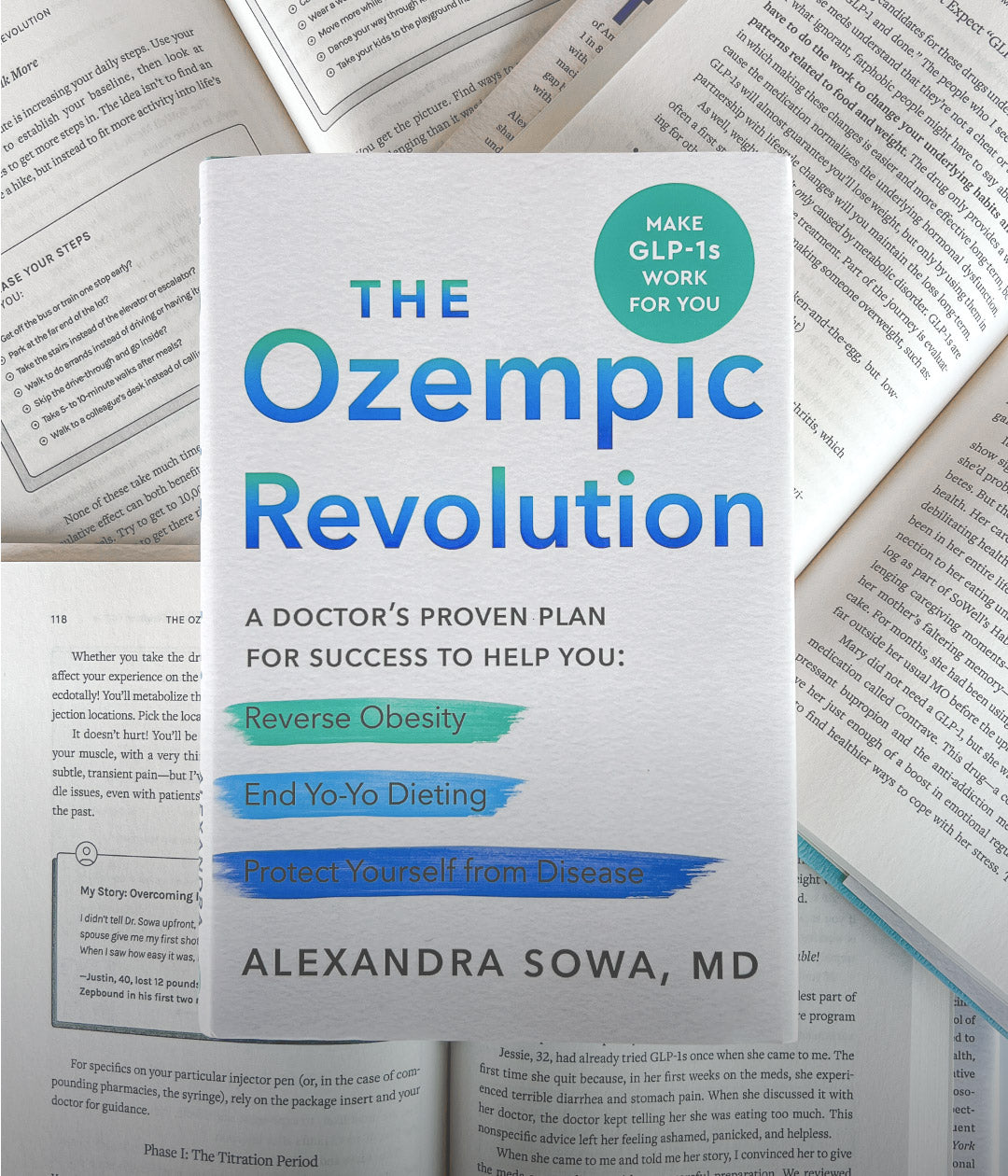
Dr. Sowa is a dual board-certified physician specializing in internal and obesity medicine. She is the founder of SoWell and the author of The Ozempic Revolution. Her practice focuses on evidence-based metabolic health and GLP-1 therapy, and she has been featured in The New York Times, Today Show, and Good Morning America.
*These statements have not been evaluated by the Food and Drug Administration. Products are not intended to diagnose, treat, cure, or prevent any disease.