You're eating less. You're on the medication. And there are still weeks where the scale won't move — or creeps the wrong way — no matter what you do.
Before you blame yourself, look at the hormone almost nobody factors in: cortisol.
Stress isn't just a feeling. It's a metabolic event, and it can quietly work against everything you're doing right.
The Myth: "If I Stick to the Plan, the Stress Doesn't Matter"
We treat stress as a mental issue and weight as a physical one, as if they live in separate rooms. They don't. Cortisol, your primary stress hormone, has direct effects on blood sugar, fat storage, and appetite. Chronic stress means chronically elevated cortisol — and that changes how your body handles food.
This is why two people on the same GLP-1, eating similarly, can have different results. The one running on chronic stress, poor sleep, and a maxed-out nervous system is fighting a metabolic headwind the other isn't.
What chronic cortisol does:
- Raises blood sugar, prompting more insulin and easier fat storage.
- Encourages fat storage around the midsection specifically.
- Drives cravings, often for sugar and fast carbs.
- Disrupts sleep, which loops back to worsen everything above.
The Biology: The Cortisol-Metabolism Loop
Cortisol evolved to handle short-term threats. It releases stored sugar into your blood for quick energy and sharpens your focus — useful when the stressor is brief. The problem is modern stress rarely turns off. When cortisol stays elevated for weeks and months, that constant trickle of released sugar keeps insulin high, and high insulin makes fat storage easier and fat burning harder.
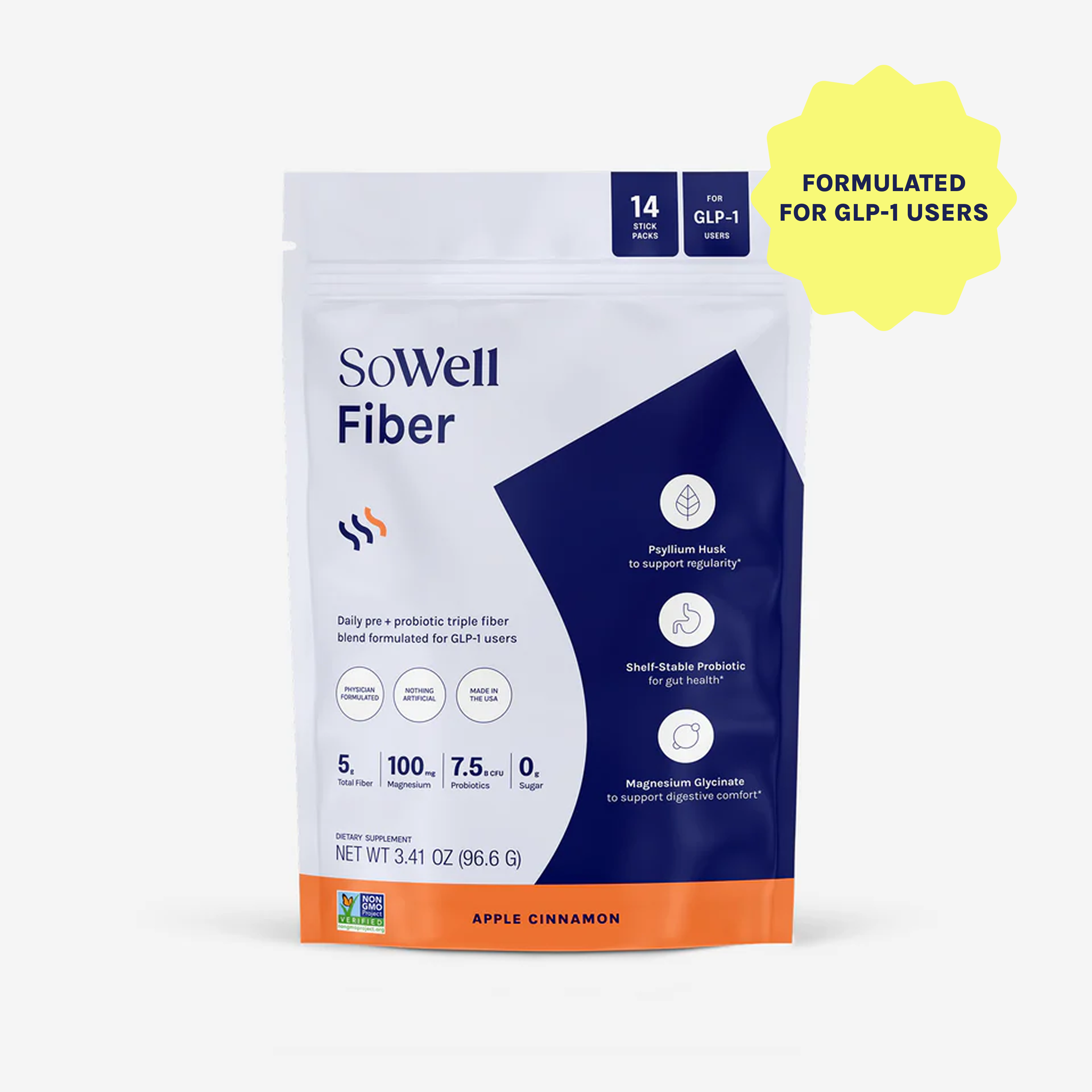
Sleep is where the loop tightens. Poor sleep raises cortisol, elevated cortisol disrupts sleep, and the cycle feeds itself — while also intensifying cravings and draining the willpower you'd need to break out. Magnesium plays a quiet role here, since it supports the nervous system and sleep quality, and many people run low on it. A daily fiber that delivers magnesium glycinate alongside gut support is one practical way GLP-1 users work some calm into the day's routine, since the magnesium form it uses is known for its relaxing effect. It won't erase stress, but supporting sleep and steady blood sugar chips away at the loop.
Why this hits GLP-1 users specifically
You're already asking a lot of your body — rapid change, lower intake, new routines. Layer chronic stress on top and you blunt some of the metabolic benefit you're working for. Managing stress isn't a soft, optional add-on. It's a lever on the same outcomes the medication targets: blood sugar, appetite, fat storage. Treating it seriously is treating your results seriously.
The scale isn't only listening to your fork. It's listening to your nervous system too.
Levers that lower the cortisol load
- Consistent, quality sleep
- Steady blood sugar (fewer spikes and crashes)
- Magnesium to support the nervous system
- Movement — without overtraining
- Genuine downtime, not just less work
Free ResourceGet Dr. Sowa's GLP-1 Starter Guide
Weekly protocols, nutrition tips, and evidence-based guidance for your GLP-1 journey. Join 50,000+ readers.
★ Trusted by 50,000+ GLP-1 users · No spam, ever
How to Lower the Stress Tax
Treat stress as a metabolic priority
Protect your sleep first. It's the highest-leverage move. Poor sleep raises cortisol and cravings; good sleep does the reverse. Build a wind-down routine you actually keep.
Steady your blood sugar. Fiber and protein at meals reduce the spikes and crashes that pile onto cortisol's effects. Stability beats restriction.
Support your nervous system. Magnesium supports relaxation and sleep, and many people run low. A magnesium-containing routine can help you wind down.
Move, but don't punish yourself. Movement lowers stress — until it becomes another stressor. Aim for consistent, not extreme.
The Bottom Line
If your results have stalled despite doing everything right, chronic stress may be the variable nobody flagged. Cortisol raises blood sugar, drives midsection fat storage, fuels cravings, and wrecks sleep — and on a GLP-1, that headwind can blunt the benefit you're working for. Your next step isn't another restriction; it's protecting your sleep, steadying your blood sugar, and supporting your nervous system so the cortisol loop loosens its grip. Manage the stress, and you stop quietly taxing your own progress.
Your nervous system has a vote. Stop letting it work against you.