The leg cramp that wakes you at 2 a.m. The constipation that won't quit. The sleep that never feels deep. The fog you can't shake.
You've blamed the medication. Fair guess. But there's a quieter suspect that GLP-1 users almost never check.
Magnesium.
And no, drinking more water doesn't fix it.
The Myth: "If I'm Drinking Water, I'm Covered"
Water is necessary. Water is not sufficient. That's the part the "just stay hydrated" advice misses, and it's the reason so many GLP-1 users do everything they're told and still feel terrible.
When a GLP-1 cuts your appetite, it also quietly cuts your intake of the minerals food normally delivers — magnesium among them. You're not eating the leafy greens, nuts, legumes, and whole grains that would normally top you up, because you're barely eating at all. Add in the GI fluid losses that come with nausea or loose stools at certain points, and you've got two pathways draining minerals at once. Plain water replaces the fluid. It doesn't replace the magnesium.
Research suggests magnesium is involved in hundreds of processes in the body — muscle function, nerve signaling, sleep regulation, and healthy digestion among them. When levels run low, the symptoms read like a greatest-hits list of GLP-1 complaints. That overlap is exactly why magnesium gets missed: the symptoms look like "just the medication," so nobody thinks to ask whether a mineral gap is part of the story.
Where low magnesium may show up
Muscle cramps and twitches, especially at night
Constipation, since magnesium plays a role in bowel function
Poor or restless sleep
Fatigue and low mood
“
"Most GLP-1 supplements weren't designed for GLP-1 users. They were designed for general wellness shoppers and rebranded when semaglutide went mainstream."
The math is simple and a little brutal. You're eating significantly less, so you're taking in fewer minerals from food. Some of those minerals are also being lost through the GI tract during the rougher stretches. And the standard advice — drink water — addresses only the fluid half of the equation, leaving the mineral half wide open.
So the GLP-1 user ends up in a spot the general "wellness" advice never accounts for: adequately hydrated on paper, still short on the minerals that keep muscles, digestion, and sleep working smoothly. They're drinking their eight glasses and still cramping at night, still backed up, still waking unrested — and concluding, reasonably but wrongly, that this is just what the medication feels like.
It's not that magnesium is some miracle cure. It's that it's quietly missing from exactly the population least able to replace it through food. Recognizing that gap is the whole point — because once you see it, the fix is straightforward.
Grab any magnesium pill Match the form to the job
Not all magnesium is equal, and this is where people waste money. Magnesium oxide is cheap and poorly absorbed — a lot of it passes right through you. Magnesium citrate is better absorbed and can support regularity. Magnesium glycinate is gentle and often favored for sleep and muscle relaxation. Grabbing a random bottle without matching the form to what you need is how good intentions produce no results.
Better still: get magnesium inside an electrolyte blend built for low-appetite days, so you're covering the whole mineral picture, not just one box on a list.
Magnesium forms at a glance
Oxide: cheap, poorly absorbed
Citrate: well absorbed, supports regularity
Glycinate: gentle, favored for sleep and cramps
In an electrolyte blend: covers magnesium alongside the other minerals you're under-replacing
Step back and the bigger lesson is about minerals as a category, not magnesium alone. When your food intake drops sharply, magnesium is simply the most symptomatic example of a broader shortfall — sodium, potassium, and other minerals are getting under-replaced at the same time, for the same reason. That's why chasing a single nutrient in isolation tends to disappoint: you fix one and the others are still short. Thinking in terms of overall mineral replacement, rather than one heroic supplement, is what actually moves the cluster of symptoms.
It's also a useful reframe for the 'is this the drug or is this fixable?' question that haunts so many GLP-1 users. A surprising share of what gets chalked up to 'just how the medication makes me feel' — the cramps, the dull headaches, the restless sleep, the afternoon flatness — overlaps neatly with the symptoms of running low on minerals. That doesn't mean minerals explain everything, but it does mean they're worth ruling in or out before you resign yourself to feeling rough. It's one of the cheapest, most reversible things to check.
None of this replaces medical guidance, especially if you take other medications or have kidney concerns, since magnesium needs can be affected by both. The point isn't to self-diagnose a deficiency or to treat magnesium as a cure-all. It's to recognize that 'drink more water' was always incomplete advice for someone eating far less than usual, and that replacing the minerals food normally provides is a basic, sensible part of doing a GLP-1 well.
4.8 Stars (73 Reviews)
Trusted by thousands of GLP-1 users
The GLP-1 Support System
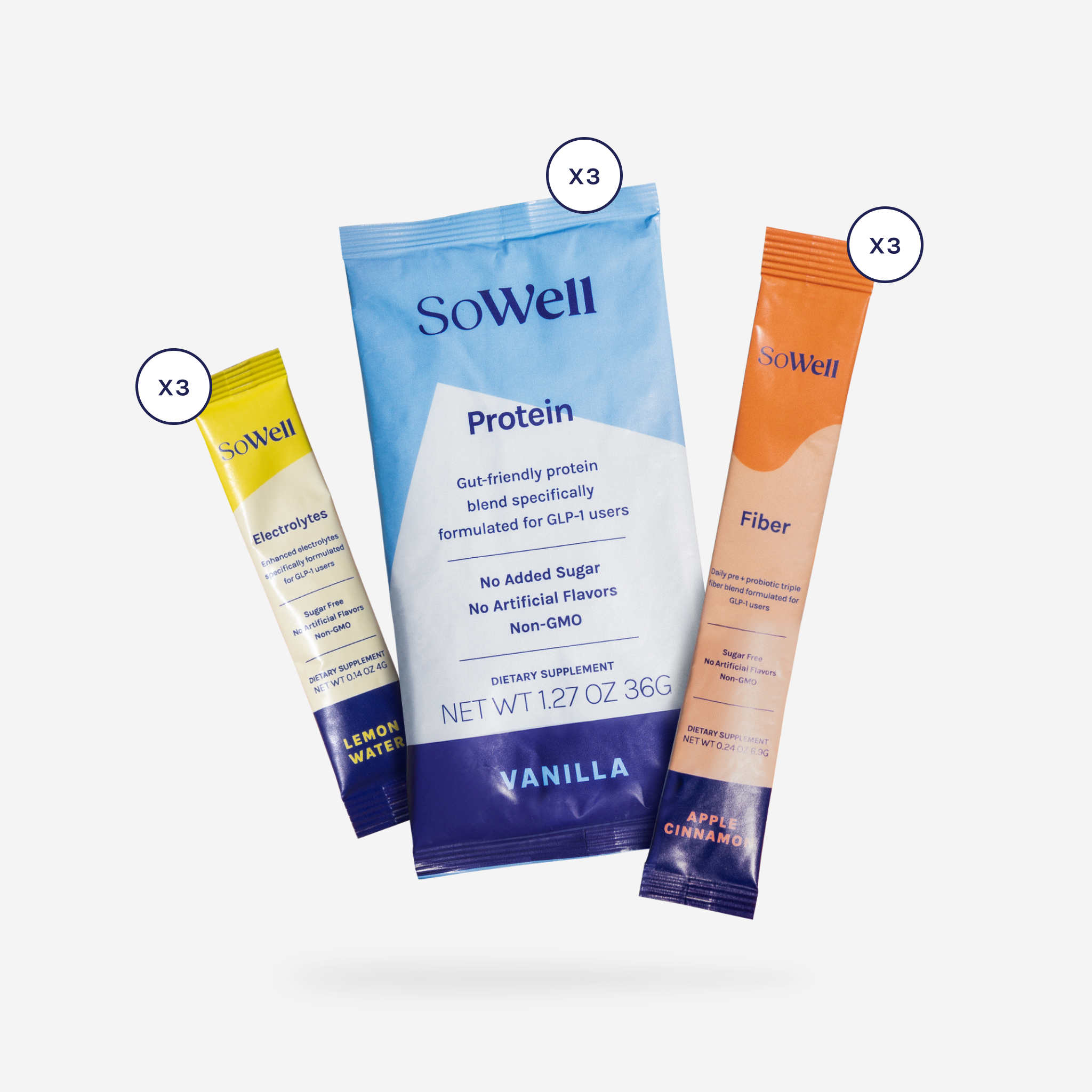
STARTER PACK INCLUDES: 14 SoWell Electrolytes stick packs in Lemon Water ($34.99 value) 14 SoWell Protein packs in Vanilla ($44.99 value) 14 SoWell Fiber stick packs in Apple Cinnamon ($34.99...
$114.97$104.97
Quantity:
Free Resource
Get Dr. Sowa's GLP-1 Starter Guide
Weekly protocols, nutrition tips, and evidence-based guidance for your GLP-1 journey. Join 50,000+ readers.
★ Trusted by 50,000+ GLP-1 users · No spam, ever
How to Cover Your Magnesium on a GLP-1
Replace what water can't
Think electrolytes, not just water. Reduced intake means reduced minerals. An electrolyte blend designed for GLP-1 days addresses the magnesium and mineral gap plain water leaves wide open.
Match the form to the symptom. Cramps and sleep point toward glycinate; regularity toward citrate. Random oxide capsules are the least useful option for the money.
Look at the whole picture. Magnesium rarely runs low alone. If cramps, constipation, and poor sleep cluster together, it's a sign your overall mineral replacement needs attention, not just one nutrient.
Mention persistent symptoms. Ongoing cramps, severe constipation, or sleep problems deserve a clinician's eyes to rule out other causes and confirm what you actually need.
One practical note: timing and consistency matter as much as the form you choose. Magnesium isn't a one-and-done fix — its supportive effects on sleep, cramps, and regularity show up when levels are kept topped up over time, not from a single dose on a bad night. Building it into a daily routine, ideally alongside the rest of your hydration, is what turns it from an occasional rescue attempt into actual support.
It's also worth resisting the urge to mega-dose your way out of symptoms. More isn't automatically better with magnesium — too much, particularly in poorly absorbed forms, can cause its own digestive upset, which is the last thing a GLP-1 user needs. A sensible amount in a well-absorbed form, taken consistently, beats a heroic dose that sends you in the opposite direction. As always, persistent symptoms are worth a clinician's input rather than escalating doses on your own.
The Bottom Line
If you're cramping at night, stuck on constipation, and sleeping badly on your GLP-1, magnesium is worth a serious look — because the "just drink water" advice was only ever half the answer. Reduced appetite means reduced minerals, and the fix is replacing what food isn't delivering. The straightforward move is an electrolyte blend built for reduced-appetite days that covers magnesium alongside the other minerals you're under-replacing.
Water handles the thirst. Magnesium handles the cramps, the sleep, and the rest. Stop replacing only half of what you're losing.
4.8 Stars (73 Reviews)
Trusted by thousands of GLP-1 users
SoWell Electrolytes
Grab-and-go stick packs in a resealable, travel-friendly bag Light, refreshing, natural lemon water flavor Super dissolvable powder leaves no residue or grit 1g carbs...
Your Questions About Magnesium and GLP-1s, Answered
Why might I need more magnesium on a GLP-1?
GLP-1s reduce appetite, which lowers the magnesium and other minerals you'd normally get from food, and GI fluid losses can compound that. Since magnesium supports muscle function, digestion, and sleep, running low may contribute to cramps, constipation, and poor sleep that GLP-1 users commonly report. Plain water replaces fluid but not minerals.
What's the best form of magnesium?
It depends on your goal. Magnesium glycinate is gentle and often favored for sleep and muscle relaxation, citrate is well absorbed and supports regularity, and oxide is cheap but poorly absorbed. Getting magnesium within an electrolyte blend designed for GLP-1 users covers it alongside the other minerals you may be under-replacing.
Will magnesium help my GLP-1 constipation?
Magnesium plays a role in bowel function, and certain forms like citrate are associated with supporting regularity. It's one piece of a constipation strategy that also includes fiber and hydration. If constipation is severe or persistent, check with your clinician.
Can I just drink more water instead?
Water is essential but only addresses fluid, not the minerals you're under-consuming on a reduced appetite. That's why cramps, poor sleep, and constipation can persist even when you're drinking plenty. Replacing electrolytes, including magnesium, addresses what water alone can't.
4.8 Stars (73 Reviews)
Trusted by thousands of GLP-1 users
GLP-1 Support System Sample Pack
GLP-1 Support System Sample Pack
$19.99
4.8 Stars (73 Reviews)TRUSTED BY THOUSANDS OF GLP-1 USERS
The GLP-1 Support System
Everything you need for a supported GLP-1 journey — fiber, protein, and essential micronutrients in one physician-formulated bundle. Save 20% vs. buying separately.
$104.97
$114.97
Quantity:
About the Author
Dr. Alexandra Sowa, M
Internal Medicine & Obesity Medicine Specialist · SoWell Medical Advisor
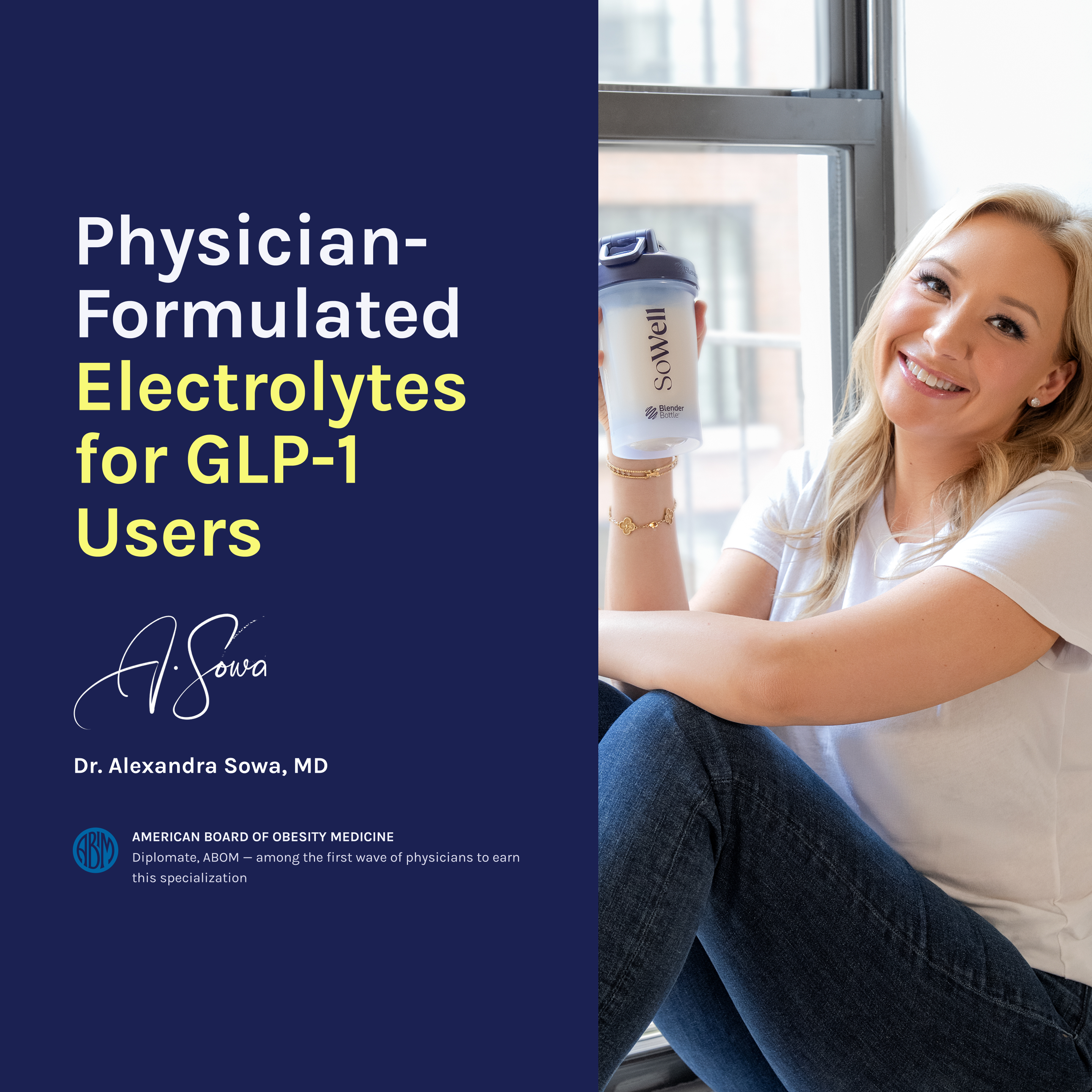
Dr. Sowa is a dual board-certified physician specializing in internal and obesity medicine. She is the founder of SoWell and the author of The Ozempic Revolution. Her practice focuses on evidence-based metabolic health and GLP-1 therapy, and she has been featured in The New York Times, Today Show, and Good Morning America.
*These statements have not been evaluated by the Food and Drug Administration. Products are not intended to diagnose, treat, cure, or prevent any disease.