The bloating. The constipation. The way your gut feels like it's running in slow motion since you started the medication.
You've probably been told to drink more water and eat more fiber. Good advice — but incomplete.
There's a whole ecosystem inside you that GLP-1 medications quietly reshape, and almost nobody is talking about it.
The Myth: "Gut Issues on a GLP-1 Are Just About Fiber"
The standard fix for GLP-1 digestive trouble is fiber and fluids, full stop. That handles the mechanics — slowed transit, harder stools — but it skips the living part of the equation: the trillions of bacteria in your gut that influence digestion, inflammation, and even how you metabolize food.
When a GLP-1 slows your digestion and shrinks how much you eat, it doesn't just change transit time. It changes the environment your gut bacteria live in — what they're fed, how fast things move through, and which species thrive. Emerging research suggests these medications may shift the gut microbiome itself, an area scientists are actively studying.
Why your microbiome matters here:
- Gut bacteria help break down food and produce beneficial compounds.
- A disrupted microbiome is linked to bloating, irregularity, and discomfort.
- Lower food and fiber intake changes what your good bacteria have to eat.
The Biology: How GLP-1s Change Your Gut Environment
Your gut microbiome is a living community, and like any community, it responds to its conditions. The bacteria that support smooth digestion feed largely on fiber — specifically the fermentable fibers that reach the colon intact. When appetite suppression cuts your food intake, and fiber often drops along with it, you're effectively feeding those beneficial bacteria less. At the same time, slowed gastric emptying changes the pace and rhythm of digestion they're adapted to.
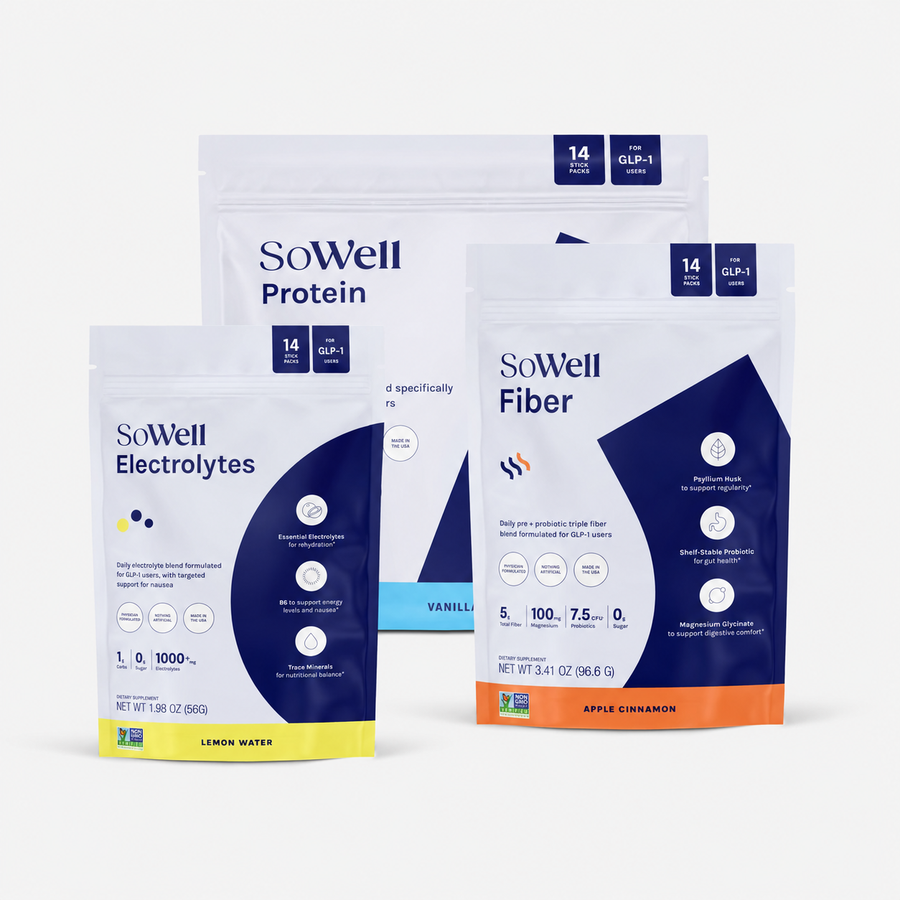
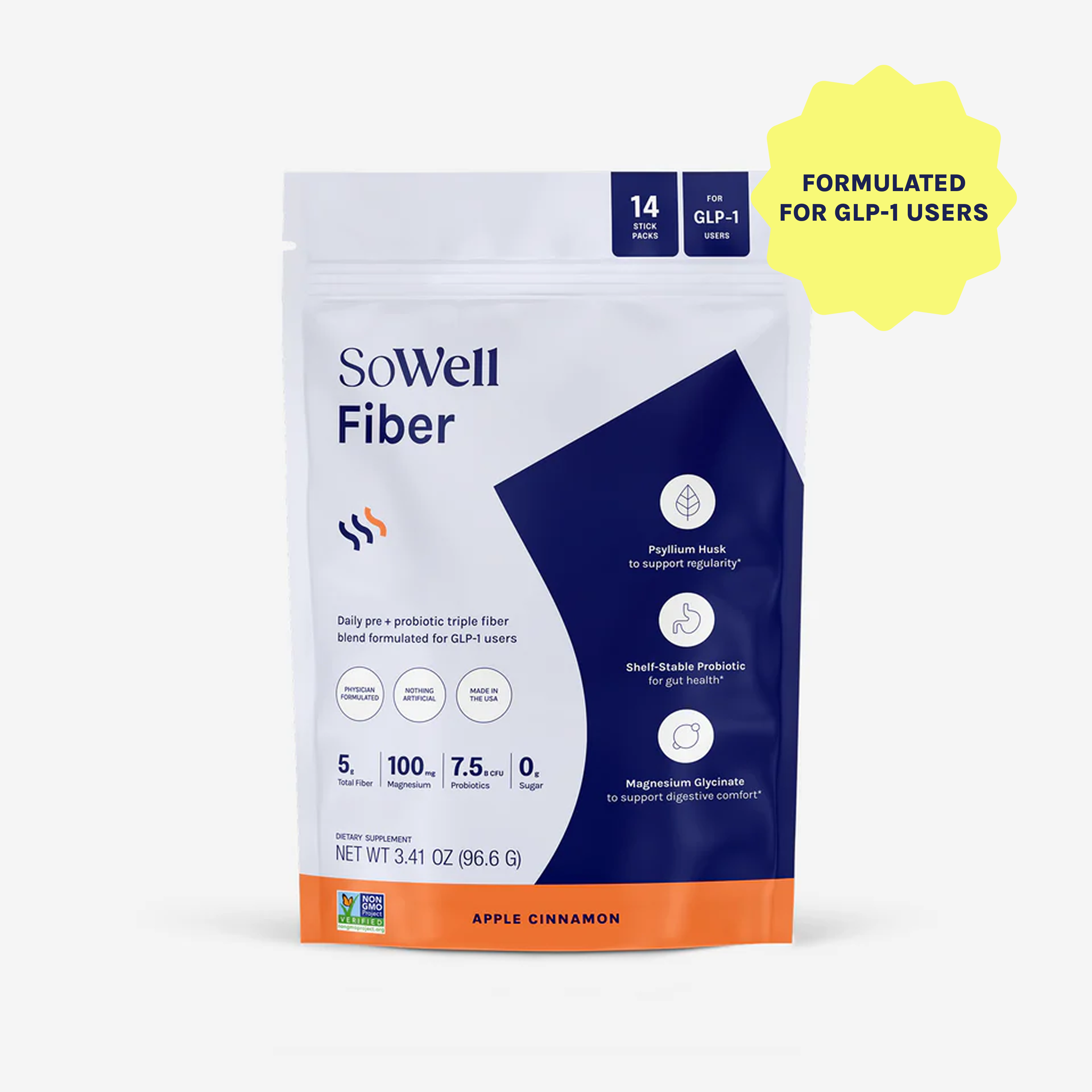
This is where the fiber-and-probiotic relationship gets interesting. Probiotics introduce beneficial bacteria; fiber feeds them. The two work as a pair, which is why supporting gut health on a GLP-1 isn't only about adding probiotics — it's about making sure your gut bacteria have fuel. A daily fiber that keeps things moving while feeding your microbiome does double duty: it addresses the constipation directly and supplies the fermentable fiber your beneficial bacteria depend on.
There's a downstream benefit too. When beneficial bacteria ferment fiber, they produce short-chain fatty acids — compounds linked to gut lining health and a calmer inflammatory environment. Starve those bacteria of fiber, and you lose more than regularity; you lose the byproducts that help your gut function smoothly. That's the quiet cost of eating less on a GLP-1 that almost no one warns you about: it's not just fewer calories, it's less fuel for the ecosystem doing a lot of invisible work on your behalf.
The two halves of gut support
Think of it as a system, not a single fix. Fiber is the food source — it keeps transit moving and feeds the bacteria that support digestion and produce beneficial short-chain fatty acids. Probiotics are reinforcements — they introduce beneficial strains that may help restore balance when your gut environment is in flux.
Neither does the whole job alone. Fiber without enough beneficial bacteria has less to work with; probiotics without fiber have less to feed on.
Supporting your gut on a GLP-1
- Soluble fiber — feeds beneficial bacteria, eases constipation
- Probiotic strains — introduce beneficial bacteria
- Adequate hydration — essential for fiber to work
- Consistent intake — your microbiome responds to routine
- Whole foods where possible — variety supports diversity
Free ResourceGet Dr. Sowa's GLP-1 Starter Guide
Weekly protocols, nutrition tips, and evidence-based guidance for your GLP-1 journey. Join 50,000+ readers.
★ Trusted by 50,000+ GLP-1 users · No spam, ever
How to Support Your Microbiome
Build a gut routine, not a one-off fix
Get consistent fiber in daily. Soluble fiber feeds beneficial bacteria and keeps transit moving. Consistency matters more than occasional big doses.
Pair fiber with fluids. Fiber needs water to do its job. Without enough fluid, it can actually worsen constipation rather than relieve it.
Consider a probiotic. Introducing beneficial strains may help when your gut environment is shifting, though research in GLP-1 users specifically is still emerging.
Eat for diversity. Different plants feed different bacteria. Even with reduced appetite, variety supports a healthier microbiome.
The Bottom Line
Gut trouble on a GLP-1 isn't only a fiber problem or only a probiotic problem — it's an ecosystem problem. Your medication reshapes the environment your gut bacteria live in, and supporting them takes both the food source and, for some people, the reinforcements. The most reliable place to start is consistent daily soluble fiber, because it tackles the constipation you can feel right now while quietly feeding the microbiome you can't. Build the routine, give it water, and let your gut find its rhythm again.
Your gut isn't broken. It's been left hungry. Feed it.