If you have PCOS, you already know the frustration: the weight that won't move, the cravings that won't quit, the sense that your body plays by different rules.
It does, in a way — and at the center of those rules sits insulin resistance, which affects a large share of women with PCOS.
Berberine keeps coming up in the PCOS conversation. Here's what the research actually supports.
The Myth: "PCOS Weight Is Just About Eating Less"
Women with PCOS are too often handed the same tired advice: eat less, move more, try harder. It ignores the metabolic engine underneath. Many women with PCOS have insulin resistance, where cells respond poorly to insulin and the body compensates with more of it — a hormonal pattern that makes weight loss genuinely harder and drives cravings.
So when standard diet advice fails you, it's not a willpower failure. It's that the advice never addressed the insulin resistance doing the real work behind the scenes.
The PCOS-insulin connection:
- Insulin resistance is common in PCOS and central to its metabolic picture.
- High insulin promotes fat storage and intensifies cravings.
- It's tied to the hormonal imbalances behind PCOS symptoms.
- Improving insulin sensitivity is a key lever for many women.
“
"Most GLP-1 supplements weren't designed for GLP-1 users. They were designed for general wellness shoppers and rebranded when semaglutide went mainstream."
ASDr. Alexandra Sowa, MDInternal Medicine & Obesity Medicine Specialist
The Biology: Where Berberine Fits
Berberine is a plant compound used for centuries in traditional medicine and studied extensively in modern research — by some counts, dozens of clinical studies have examined its effects. The most relevant for PCOS: berberine has been studied for its role in supporting healthy blood sugar and insulin sensitivity, the exact metabolic levers that matter in PCOS. Some research has looked specifically at berberine in women with PCOS, examining effects on blood glucose and related markers.
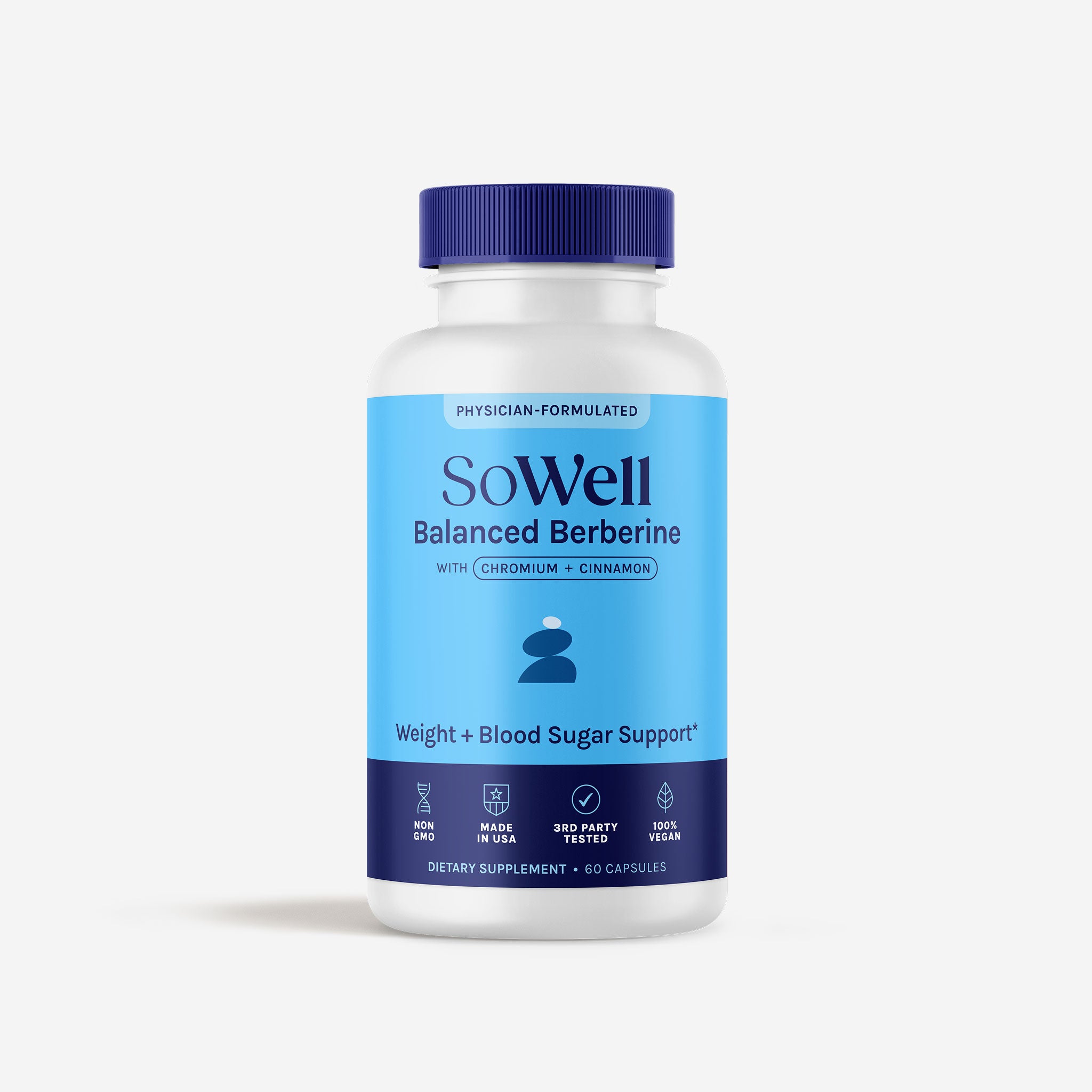
The honest framing is "supportive," not "cure." Berberine doesn't resolve PCOS, and it's not a substitute for medical care. But as part of a broader plan, a berberine formula that pairs it with chromium and cinnamon targets the insulin-resistance side of PCOS that standard advice ignores — combining three ingredients with blood-sugar support roles rather than relying on berberine alone. For women whose PCOS runs on insulin resistance, that's a meaningful, evidence-informed place to focus.
A root-cause lever, not a magic fix
What makes the insulin angle compelling is that it targets a root driver rather than chasing symptoms. Support insulin sensitivity and you may influence several PCOS challenges at once — weight, cravings, and the metabolic backdrop to hormonal symptoms. Berberine is one tool in that effort, alongside diet, movement, muscle-building, and medical care. It works best inside a plan, not as a standalone hope.
PCOS is complex. The approach should respect that complexity.
A PCOS metabolic toolkit
- Berberine for blood sugar and insulin support
- Protein and fiber to steady blood sugar
- Muscle-building movement
- Inositol (often used for PCOS hormone support)
- Medical guidance tailored to you
Free ResourceGet Dr. Sowa's GLP-1 Starter Guide
Weekly protocols, nutrition tips, and evidence-based guidance for your GLP-1 journey. Join 50,000+ readers.
★ Trusted by 50,000+ GLP-1 users · No spam, ever
How to Approach Berberine for PCOS
Target the root, build the plan
Focus on insulin sensitivity. It's a root driver in many PCOS cases. Berberine, diet, and muscle-building all push in the same helpful direction.
Use berberine as support. Research backs its role in blood sugar and insulin sensitivity, including some PCOS-specific studies — but it supports, it doesn't cure.
Pair with diet and movement. Protein, fiber, and resistance training amplify the same metabolic benefits. Supplements work best inside a plan.
Loop in your clinician. PCOS is individual, and care should be tailored. Talk to your provider before starting berberine, especially with other medications.
The Bottom Line
PCOS weight struggles aren't a willpower problem — they're often driven by insulin resistance, the metabolic pattern standard "eat less" advice never addresses. Berberine has real research behind its role in supporting healthy blood sugar and insulin sensitivity, including some studies in women with PCOS, which makes it a genuine, evidence-informed lever on the root issue. Your next step is to target insulin sensitivity directly — through berberine, protein and fiber, muscle-building, and a plan built with your clinician — rather than chasing symptoms with restriction. Address the engine, not just the dashboard.
Your body wasn't being difficult. It was being insulin-resistant. Now you can work the right lever.