About 11% of people on semaglutide report fatigue in clinical trials. The real number is almost certainly higher.
"Tired" is a word people skip past. It doesn't make it into the symptom log next to nausea or constipation. It gets filed under "life" — work, stress, bad sleep, getting older — long before it gets filed under "the medication I started three weeks ago."
But if you're on a GLP-1 and you're dragging yourself through the afternoon like your legs are filled with wet sand, it's probably not your personality. It's probably your physiology.
And most of it is fixable.
The fatigue isn't in your head — and it isn't your fault
Here's what usually happens. You start a GLP-1. The appetite quiets down in a way that feels almost spiritual. You're eating less, drinking less, thinking about food less. The scale moves. You feel like you finally cracked the code.
Then around week three, the exhaustion hits. Not sleepy-tired. Bone-tired. The kind where standing up from the couch feels like a decision.
Most people blame themselves. They assume they need to push harder, sleep more, try a new supplement stack they saw on TikTok. Their clinician, if they mention it at all, shrugs and says it usually passes.
Read that again. Usually passes.
That's not a treatment plan. That's a coin flip. And it ignores the fact that GLP-1 fatigue has specific, named causes — and every one of them has a specific, named fix.
The five culprits, ranked by how often they get missed:
- Dehydration (the most underestimated, by a wide margin)
- Accidental caloric deficit
- B12 depletion from slowed digestion
- Blood sugar swings
- Fragmented sleep from GI symptoms
Why a medication that slows your stomach also drains your battery
GLP-1s do three things that matter here: they slow gastric emptying, they suppress appetite centrally in the brain, and they blunt the hunger and thirst cues you've relied on your entire life. Those same mechanisms that make the medication work are the mechanisms that set you up for fatigue.
Slower digestion means slower absorption of nutrients, including the B vitamins that run your energy metabolism. Suppressed appetite means fewer calories — often dramatically fewer, without you noticing. And here's the one almost nobody mentions: roughly 20% of your daily water intake comes from food. When you stop eating three meals, you stop drinking three meals' worth of water, even if your glass count looks the same.
Meanwhile, the thirst cue that would normally nudge you to the faucet? Quiet. Turned down. Part of the same appetite-suppression effect that's helping you lose weight is also hiding the fact that you're walking around mildly dehydrated most of the day.
You're just adjusting to the medication You're running on empty tanks
The "your body is adjusting" explanation is half-true and mostly useless. Yes, there's an adjustment period. But what people are actually adjusting to is a state of chronic under-hydration, under-fueling, and nutrient malabsorption that they could address directly instead of waiting it out. Waiting doesn't fix dehydration. Water does. And on a GLP-1, water alone isn't always enough.
What's actually happening at the cellular level:
- Sodium and potassium drop as you eat less (most electrolytes come from food)
- B6 and B12 absorption slows with gastric emptying
- Intracellular hydration falls even when you're drinking water
- Mitochondria produce less ATP without the cofactors they need
- Your brain reads the whole situation as: conserve energy
Free ResourceGet Dr. Sowa's GLP-1 Starter Guide
Weekly protocols, nutrition tips, and evidence-based guidance for your GLP-1 journey. Join 50,000+ readers.
★ Trusted by 50,000+ GLP-1 users · No spam, ever
Five causes, five fixes
How to actually address GLP-1 fatigue
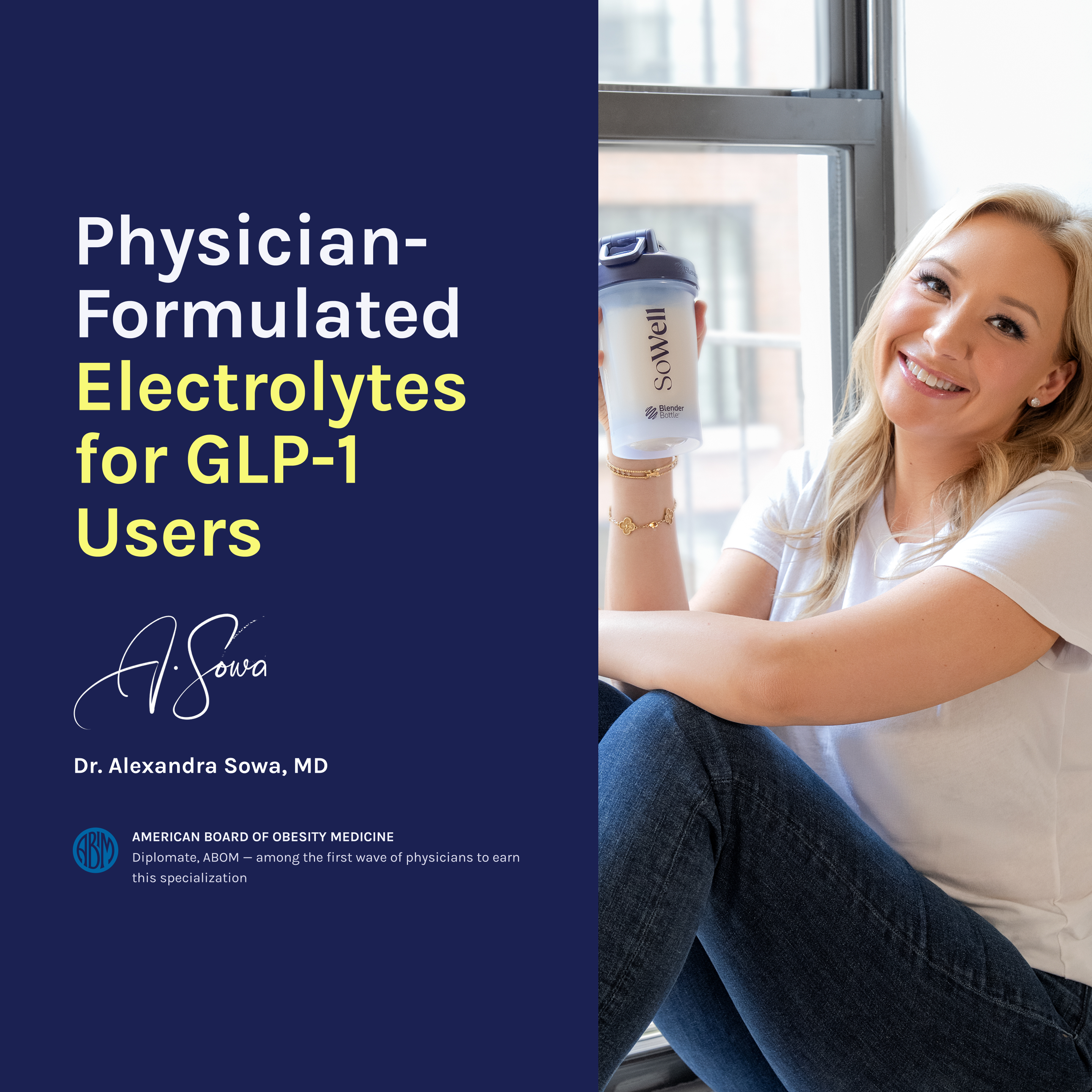
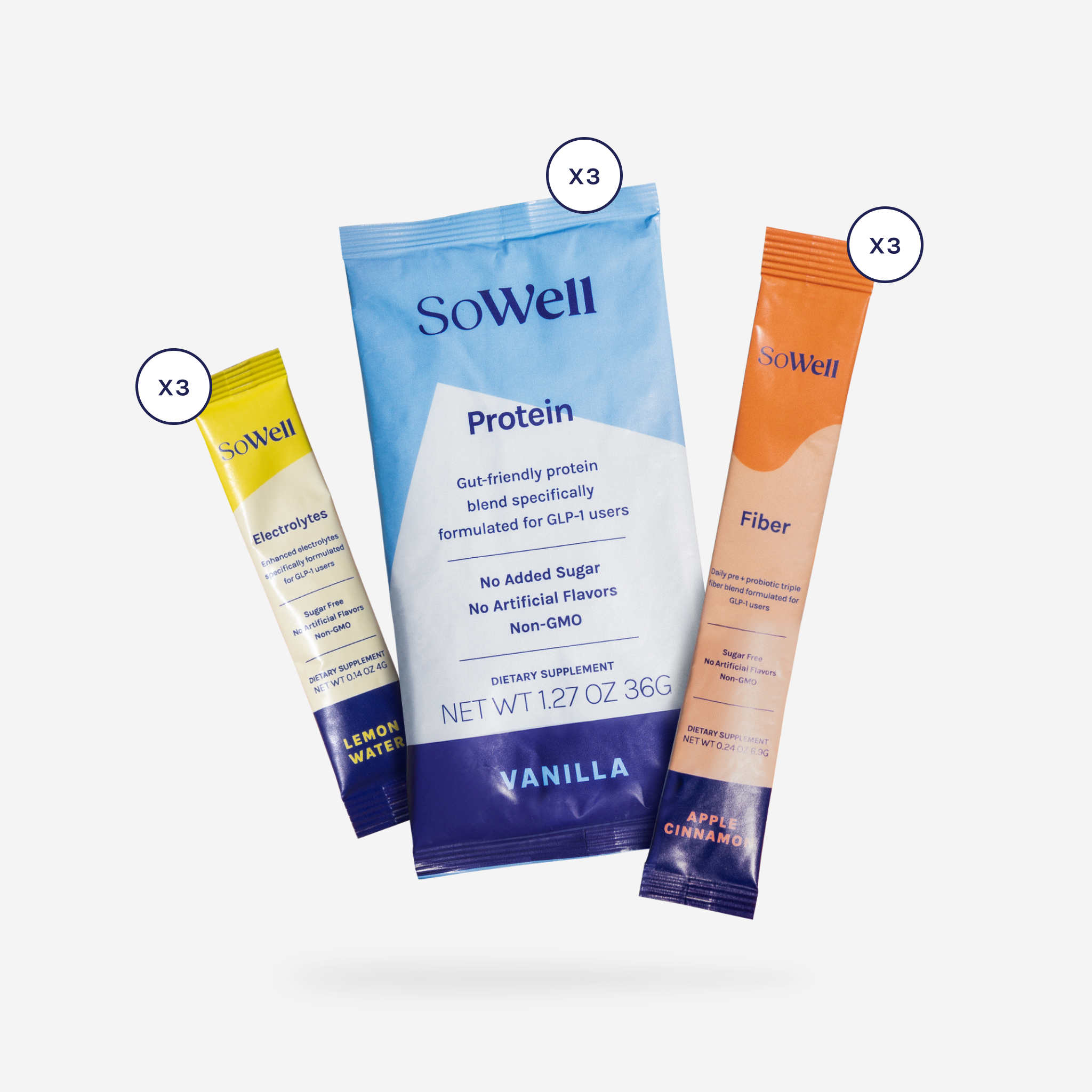
Replace electrolytes, not just water. Dehydration on a GLP-1 isn't solved by drinking more water, which can further dilute already low sodium and potassium levels. You need targeted replacement: sodium, potassium, magnesium, and ideally B6 (which directly supports energy metabolism). This is the fix that moves the needle fastest. SoWell Electrolytes were formulated specifically for this physiology — designed for the person eating less, absorbing less, and feeling it by 3pm.
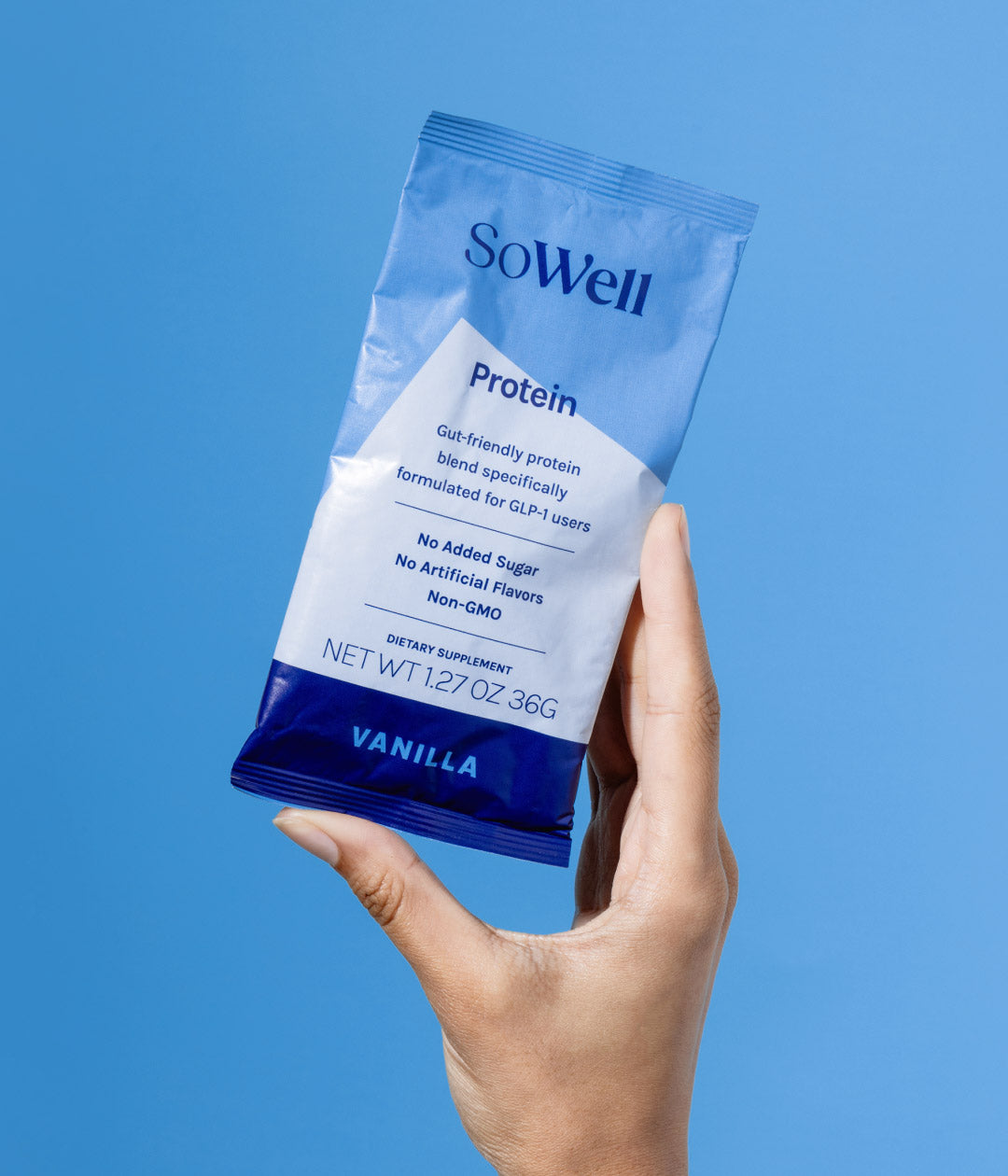
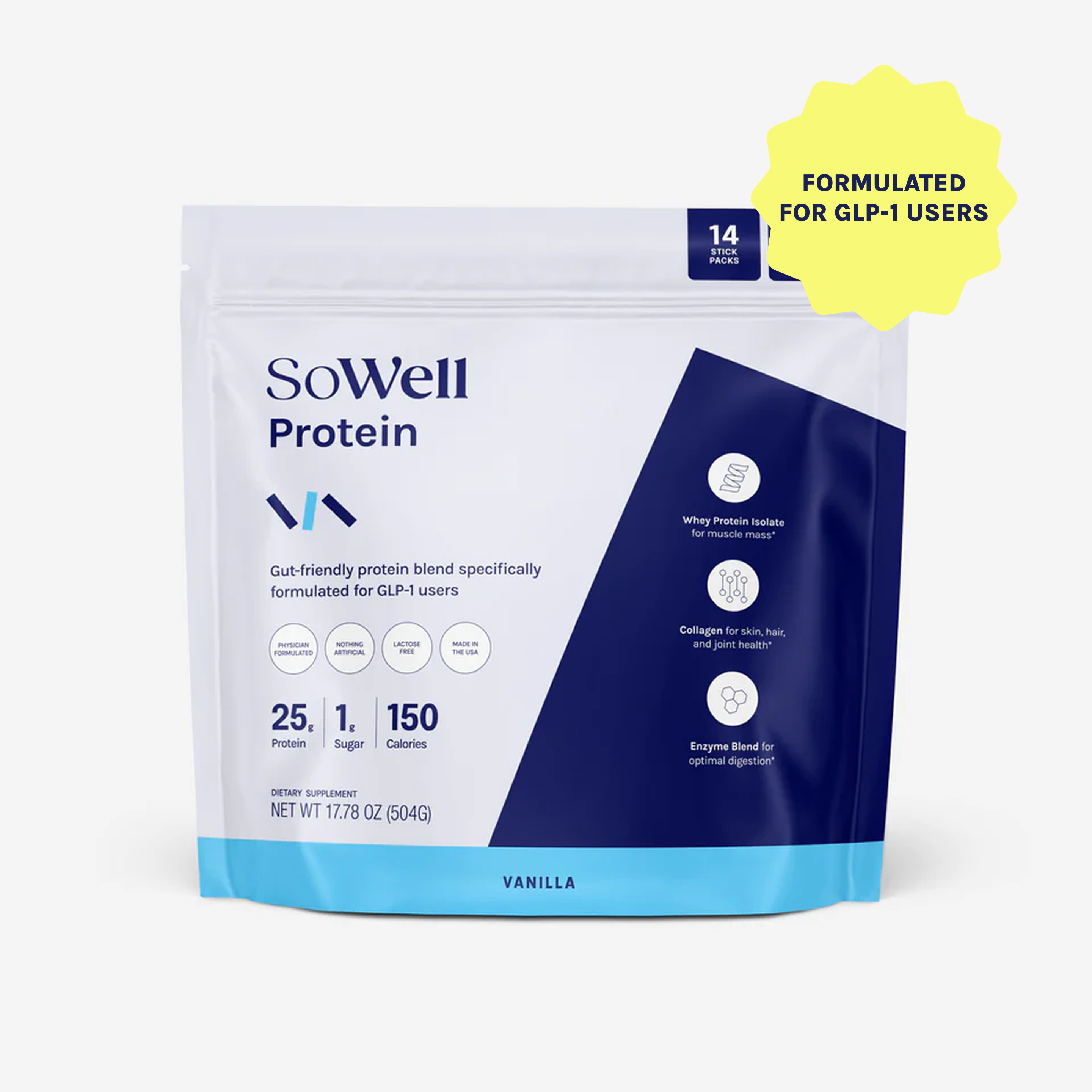
Count calories once, not forever. You don't need to track every day — you need one honest week. Most GLP-1 users are eating 800 to 1,100 fewer calories than they realize. Under-eating that severe will flatten your energy no matter how much you sleep. When appetite is low, nutrient-dense calories matter more than volume. SoWell Protein is the fastest way to add 20-30g of protein and real calories when the thought of chewing a full meal makes you want to lie down.
Check your B12. Slowed gastric emptying reduces the intrinsic factor pathway that pulls B12 out of food. If you've been on a GLP-1 longer than six months and your fatigue isn't responding to hydration and calories, ask your clinician for a serum B12 and methylmalonic acid test. Don't accept "it's probably fine" without the labs.
Stabilize your blood sugar with protein first. GLP-1s already flatten glucose curves, but if you're eating carbs on an empty stomach — coffee and a pastry, for example — you can still crash hard two hours later. Protein first, every meal. Non-negotiable. This alone fixes a surprising amount of mid-afternoon fog.
The fifth cause — sleep fragmentation from GI symptoms — deserves its own note. If nausea, reflux, or constipation are waking you up or keeping you from getting deep sleep, you're fighting a two-front war and losing both. Hydration and electrolyte balance help here too, because constipation is often a downstream symptom of electrolyte imbalance combined with slowed motility. Fix the GI side and the sleep usually follows within a week or two.
The Bottom Line
GLP-1 fatigue isn't a mysterious side effect you have to endure. It's the predictable result of eating less, drinking less, and absorbing less — all at once. The fix isn't pushing through. It's replacing what the medication is quietly pulling out of the system: electrolytes, calories, and the B vitamins that turn food into energy. Start with hydration that actually hydrates. Add protein when appetite won't cooperate. Get labs if it drags past six weeks. That's the order.
Your tiredness is data, not weakness. Read it, then fix it.