You started the shot. The scale moved. The compliments came in.
Then you caught yourself in a bathroom mirror under bad lighting and thought: wait, what happened to my face?
The internet calls it "Ozempic face." Your doctor probably hasn't mentioned it. And the fix isn't what the tabloids are selling you.
"Ozempic Face" Isn't a Drug Side Effect. It's a Body Composition Problem.
Let's clear this up before we go further. Ozempic face — the hollow cheeks, the sunken eyes, the skin that suddenly looks a size too big — isn't caused by semaglutide, tirzepatide, or any other GLP-1 molecule. It's caused by rapid weight loss of any kind. Bariatric surgery patients have dealt with it for decades. So have people who crash-diet.
What's new is the scale. GLP-1s are producing fast, dramatic weight loss in millions of people who weren't expecting their face to be part of the equation.
What's actually happening up there:
Your face has roughly 20–30 muscles, and they atrophy the same way your glutes do when you're in a calorie deficit without enough protein.
Subcutaneous fat in the cheeks and temples shrinks — that's the "hollowing."
Skin that stretched over years of weight gain doesn't snap back overnight. Collagen production slows, elasticity drops, and the result is sag and finer lines.
Dehydration makes every one of these things look worse in the mirror.
4.8 Stars (73 Reviews)
Trusted by thousands of GLP-1 users
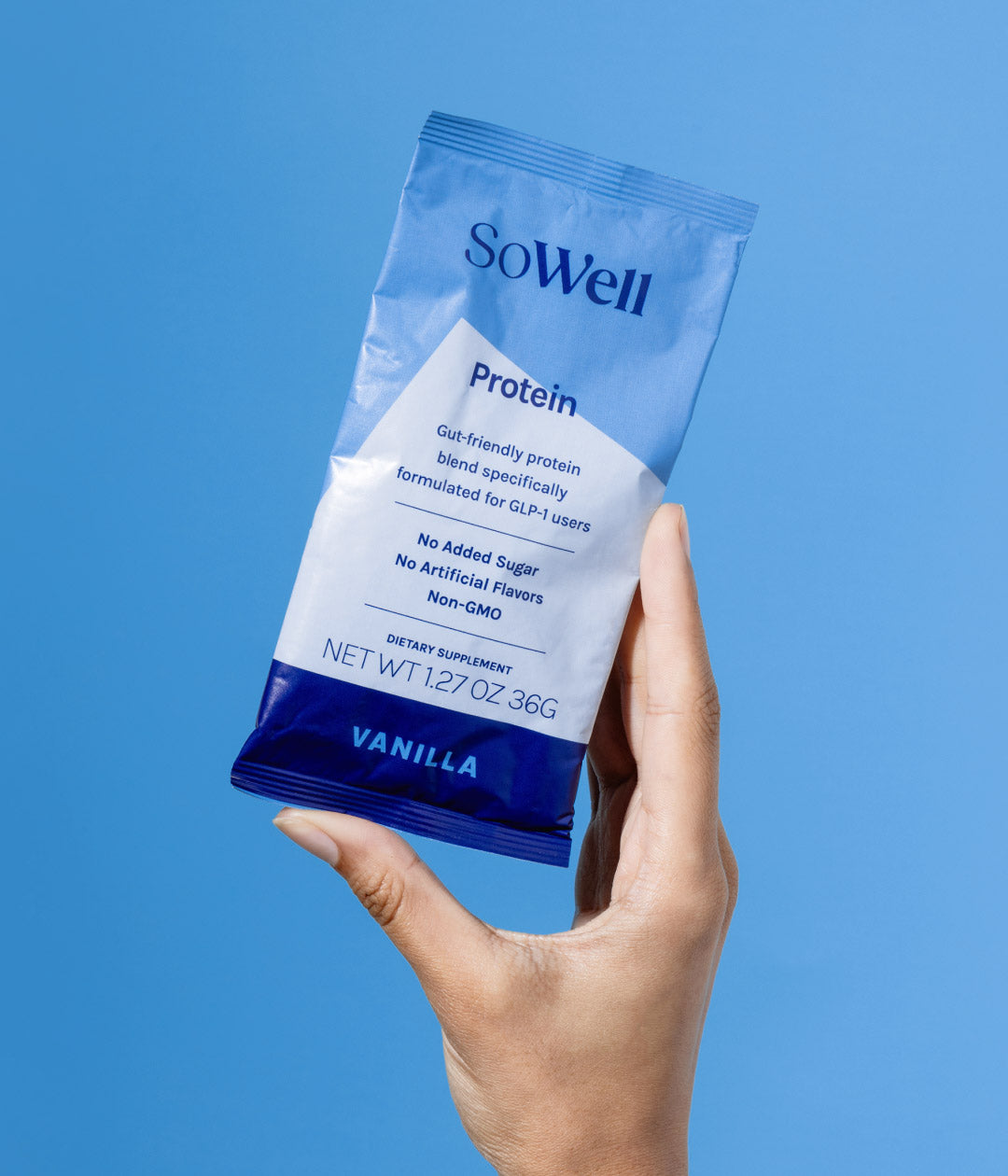
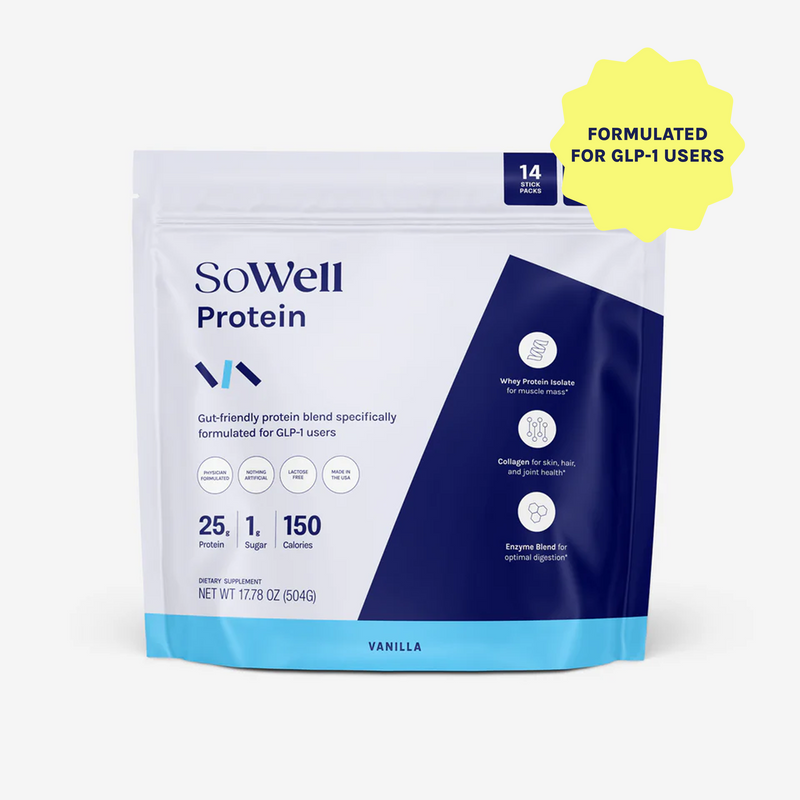
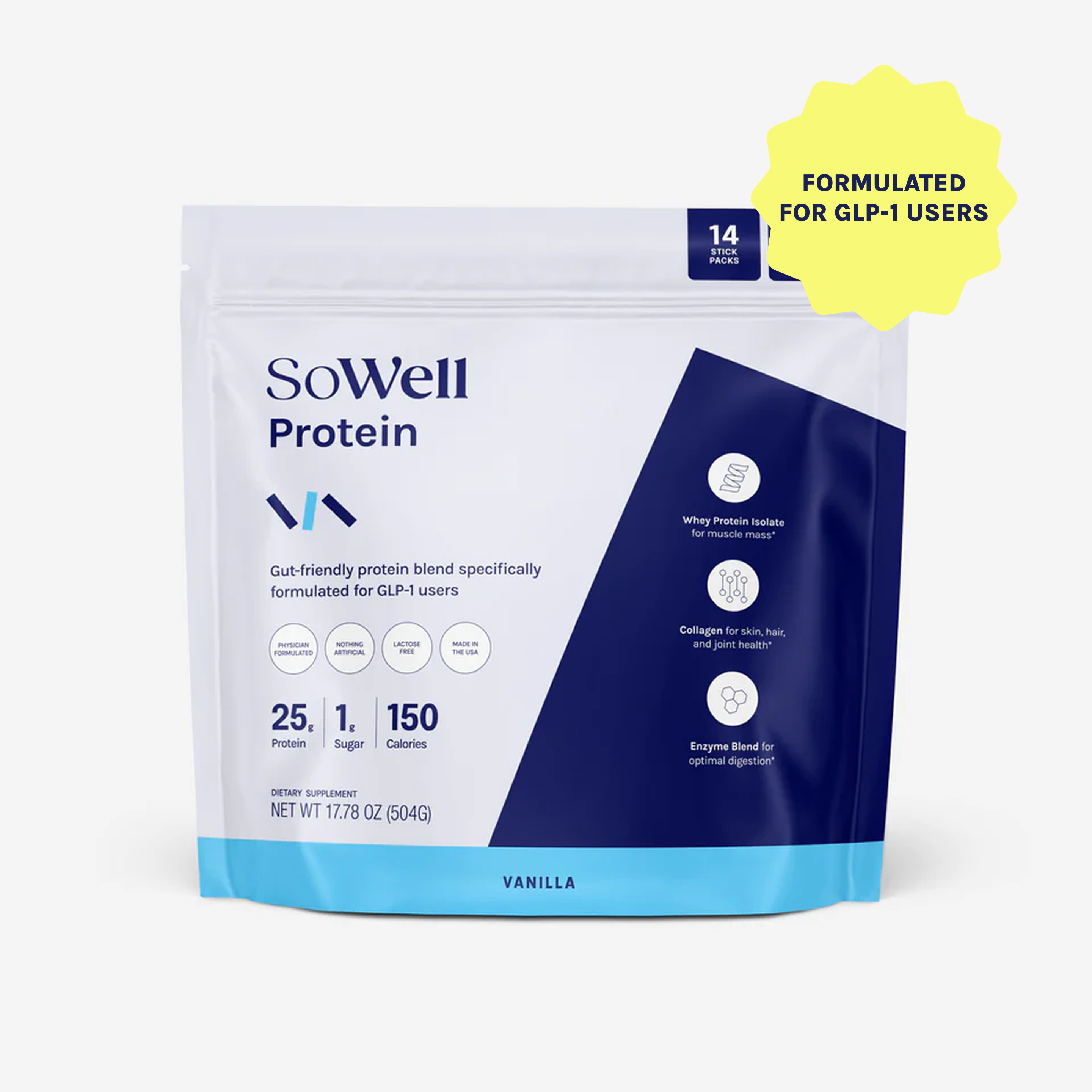
SoWell Protein
• Choose from 14 or 28 grab-and-go protein packets in a resealable, travel-friendly bag• Natural vanilla flavor mixes into anything• Easy-to-mix powder leaves no clumps•...
$89.98$44.99
Quantity:
The Real Problem: You're Losing Muscle Faster Than You Should Be
Here's the part most clinicians aren't telling GLP-1 patients. Research on semaglutide trials has found that somewhere between 25% and 40% of the total weight lost can be lean mass — muscle, organ tissue, bone density. That's not a minor footnote. That's a structural problem for how you'll age, how strong you'll be at 60, and yes, how your face looks at 45.
GLP-1s suppress appetite so effectively that most people end up eating half the protein they need without realizing it. Combine low protein with rapid weight loss and a sedentary routine, and your body does exactly what biology tells it to do: it breaks down muscle for fuel.
Your face is collateral damage.
"Just eat more" isn't the answer. Protein targets are the answer.
You can't out-salad your way out of muscle loss. When appetite is suppressed, every gram of food needs to pull its weight — and that means hitting a specific protein number per day, every day, measured in grams per kilogram of body weight. Not "more chicken." A number.
Most GLP-1 research on lean mass preservation points to the same target range: 1.0 to 1.2 grams of protein per kilogram of body weight, daily. For a 180 lb person, that's roughly 82–98 grams. For someone heavier or actively strength training, the number climbs higher.
What that actually looks like on a plate:
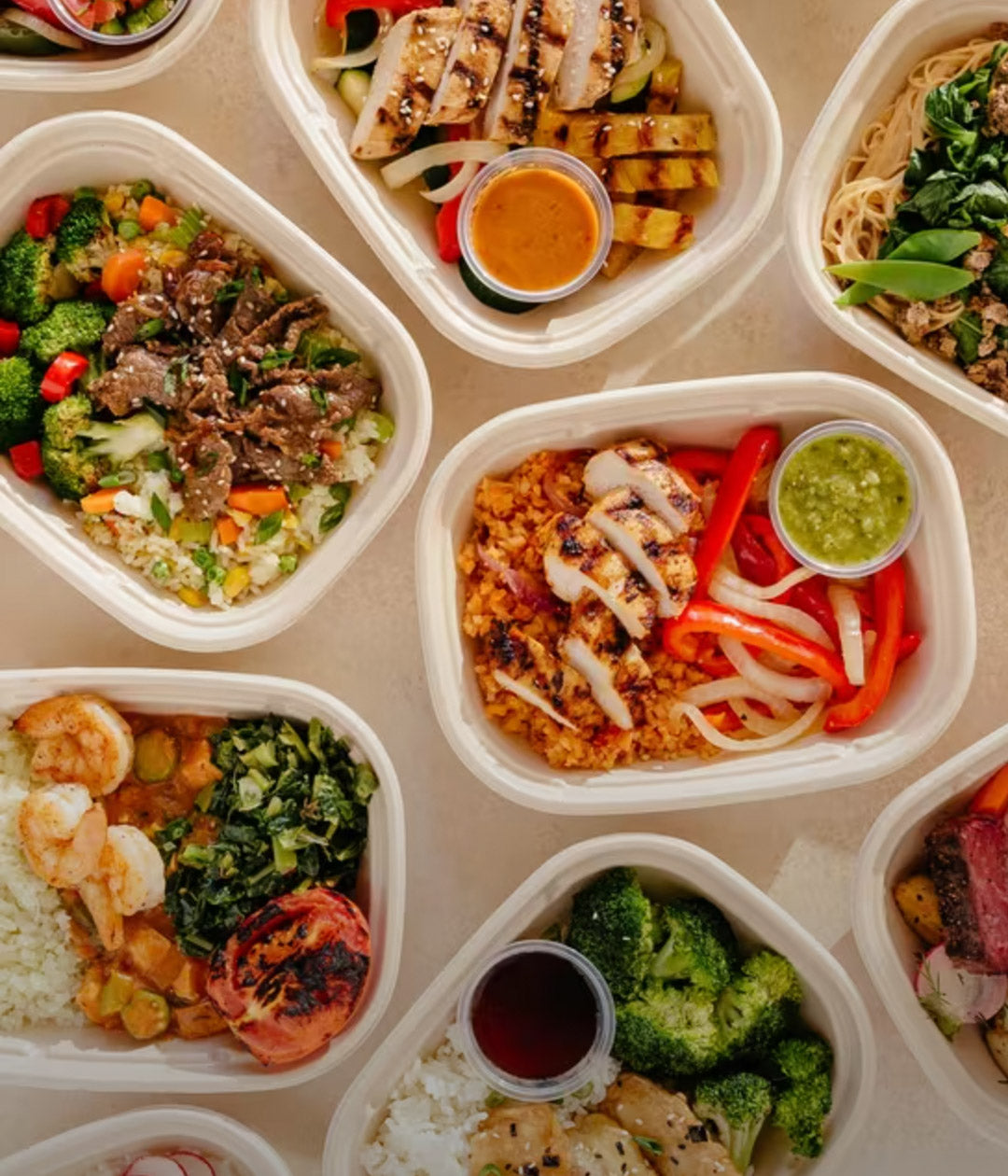
6 oz chicken breast ≈ 50g protein
2 large eggs ≈ 12g
1 cup Greek yogurt ≈ 20g
1 scoop quality whey + collagen blend ≈ 25–30g
Most "protein bars" ≈ lies. Check the label.
Free Resource
Get Dr. Sowa's GLP-1 Starter Guide
Weekly protocols, nutrition tips, and evidence-based guidance for your GLP-1 journey. Join 50,000+ readers.
★ Trusted by 50,000+ GLP-1 users · No spam, ever
The Four-Part Framework for Keeping Your Face (and Your Muscle)
What actually works, in order of impact:
1. Slow the weight loss down. Talk to your prescriber about aiming for 1–2 lbs per week, not 3+. Faster isn't better. Faster is how you lose the muscle and the face. If your dose is pushing you past that, a titration conversation is overdue.
2. Hit the protein number daily. 1.0–1.2g per kg of body weight. This is the single highest-leverage thing you can do. When whole food won't fit, a clean protein shake does. SoWell Protein was built for exactly this gap — whey isolate for muscle synthesis, hydrolyzed collagen peptides for skin and connective tissue, and no sugar crash.
3. Hydrate with electrolytes, not just water. GLP-1s change how you drink and eat, and plain water alone can dilute sodium and actually make the hollow-eyed look worse. Sodium, potassium, and magnesium keep skin plump and muscles working.
4. Lift something heavy, twice a week minimum. Resistance training is the signal that tells your body to keep the muscle you're feeding. Walking is wonderful. It is not a muscle-preservation strategy.
Why Collagen Deserves Its Own Paragraph
Dermatology research has been pretty consistent on this: oral collagen peptides, taken daily at around 10g or more, show measurable improvements in skin elasticity, hydration, and dermal density in controlled trials. That's not a TikTok claim. That's peer-reviewed data.
Collagen isn't magic. It's a specific type of protein that your body uses to rebuild the connective scaffolding in your skin — the scaffolding that takes the biggest hit during rapid weight loss. Pairing it with whey (which drives muscle protein synthesis) is why the smart formulations on the market include both. One protects the muscle under your skin. The other protects the skin itself.
What About Fillers, Sculptra, and Ultherapy?
External interventions exist and they work. Dermal fillers replace lost volume in cheeks and temples. Sculptra stimulates your own collagen production over months. Ultherapy uses ultrasound to tighten. A good dermatologist or plastic surgeon can walk you through the options.
But here's the thing nobody tells you upfront: none of those procedures address the underlying muscle loss. You can fill the face and still be losing lean mass everywhere else. The inside-out approach — protein, resistance training, hydration, sleep — is doing work that no needle can replicate. Use the external tools if you want. But build the foundation first, or you're just patching the symptom.
The Bottom Line
Ozempic face isn't a mystery and it isn't a reason to stop a medication that's working for you. It's the visible edge of a bigger issue: rapid weight loss without enough protein is stripping muscle from your whole body, and your face is just the part you see in the mirror every morning.
The fix is boring and it is specific. Slow the loss down. Hit 1.0–1.2g of protein per kg of body weight, every single day. Lift something. Drink electrolytes. Give your skin the collagen it needs to rebuild. If you can't get there with food alone — and on a GLP-1, most people can't — a whey-plus-collagen protein formulated for appetite-suppressed eaters is the difference between losing fat and losing yourself.
You're not supposed to disappear. You're supposed to get stronger.
Your Questions About Ozempic Face, Answered
Does Ozempic face go away?
Partially, yes. Some volume returns if weight stabilizes or you regain a small amount. Skin elasticity can improve over 6–12 months with adequate protein, collagen, and hydration. But lost muscle mass — in the face and elsewhere — doesn't come back on its own. You have to eat and train for it. The sooner you start protecting muscle, the less catching up you'll have to do.
Can I prevent Ozempic face entirely?
Mostly, yes — if you intervene early. The people who avoid the hollow look almost universally do the same four things: lose weight slowly (1–2 lbs/week), hit a real protein target daily, do resistance training at least twice a week, and stay hydrated with electrolytes. You may still see some volume change if you're losing significant weight, but the gaunt, sagging version is almost always downstream of losing muscle you didn't have to lose.
Is collagen actually good for Ozempic face?
The research is genuinely encouraging. Multiple controlled trials on hydrolyzed collagen peptides — typically 10g or more per day — show measurable improvements in skin elasticity, hydration, and dermal density over 8–12 weeks. Collagen alone won't preserve facial muscle; that job belongs to whey protein and resistance training. But paired together, whey for the muscle underneath and collagen for the skin on top, the combination addresses both layers of the problem.
How much protein do I actually need on a GLP-1?
Most clinicians working with GLP-1 patients recommend 1.0 to 1.2 grams of protein per kilogram of body weight per day to preserve lean mass during weight loss. For a 180 lb (82 kg) person, that's roughly 82–98 grams daily. If you're doing resistance training or you're older, the upper end of that range — or slightly above — is a better target. The hard part isn't the number. The hard part is hitting it when your appetite has been turned down to a whisper, which is exactly why protein supplementation exists.
4.8 Stars (73 Reviews)
Trusted by thousands of GLP-1 users
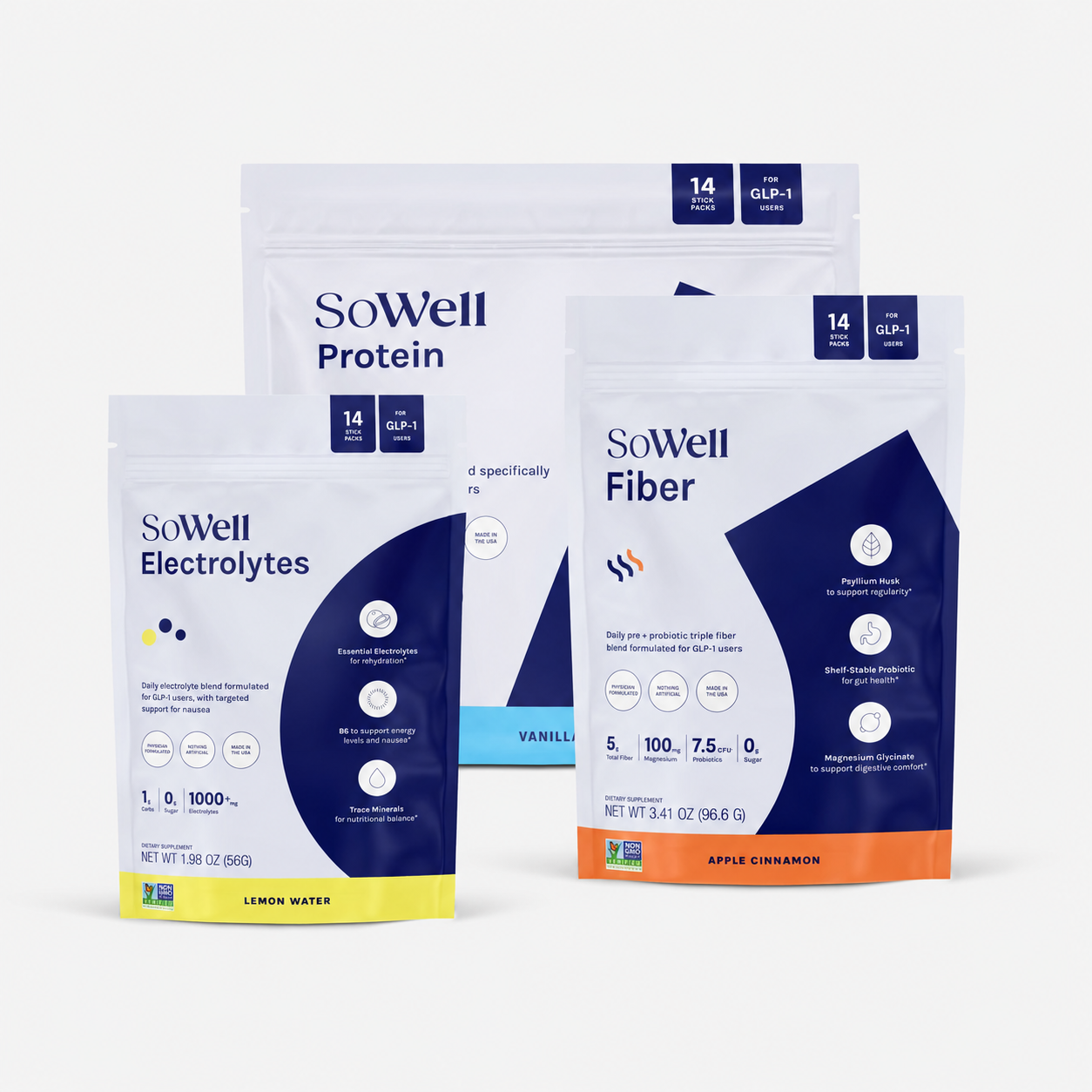
GLP-1 Support System Sample Pack
GLP-1 Support System Sample Pack
$19.99
4.8 Stars (73 Reviews)TRUSTED BY THOUSANDS OF GLP-1 USERS
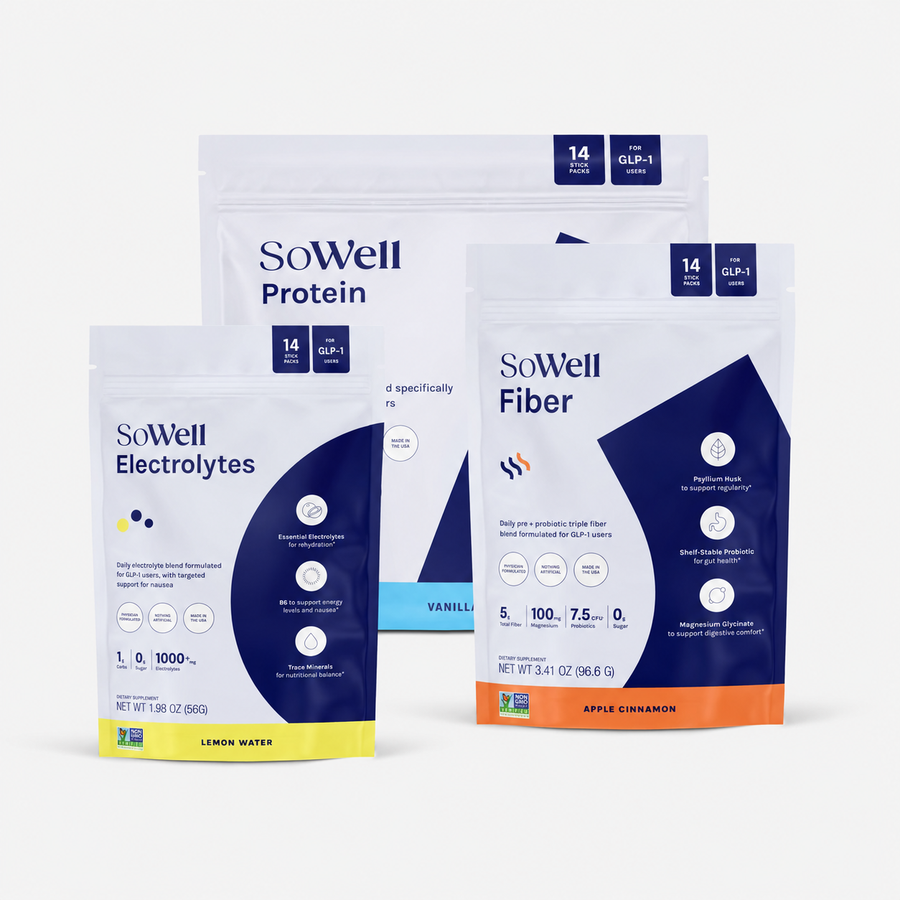
The GLP-1 Support System
Everything you need for a supported GLP-1 journey — fiber, protein, and essential micronutrients in one physician-formulated bundle. Save 20% vs. buying separately.
$104.97
$114.97
Quantity:
About the Author
Dr. Alexandra Sowa, M
Internal Medicine & Obesity Medicine Specialist · SoWell Medical Advisor
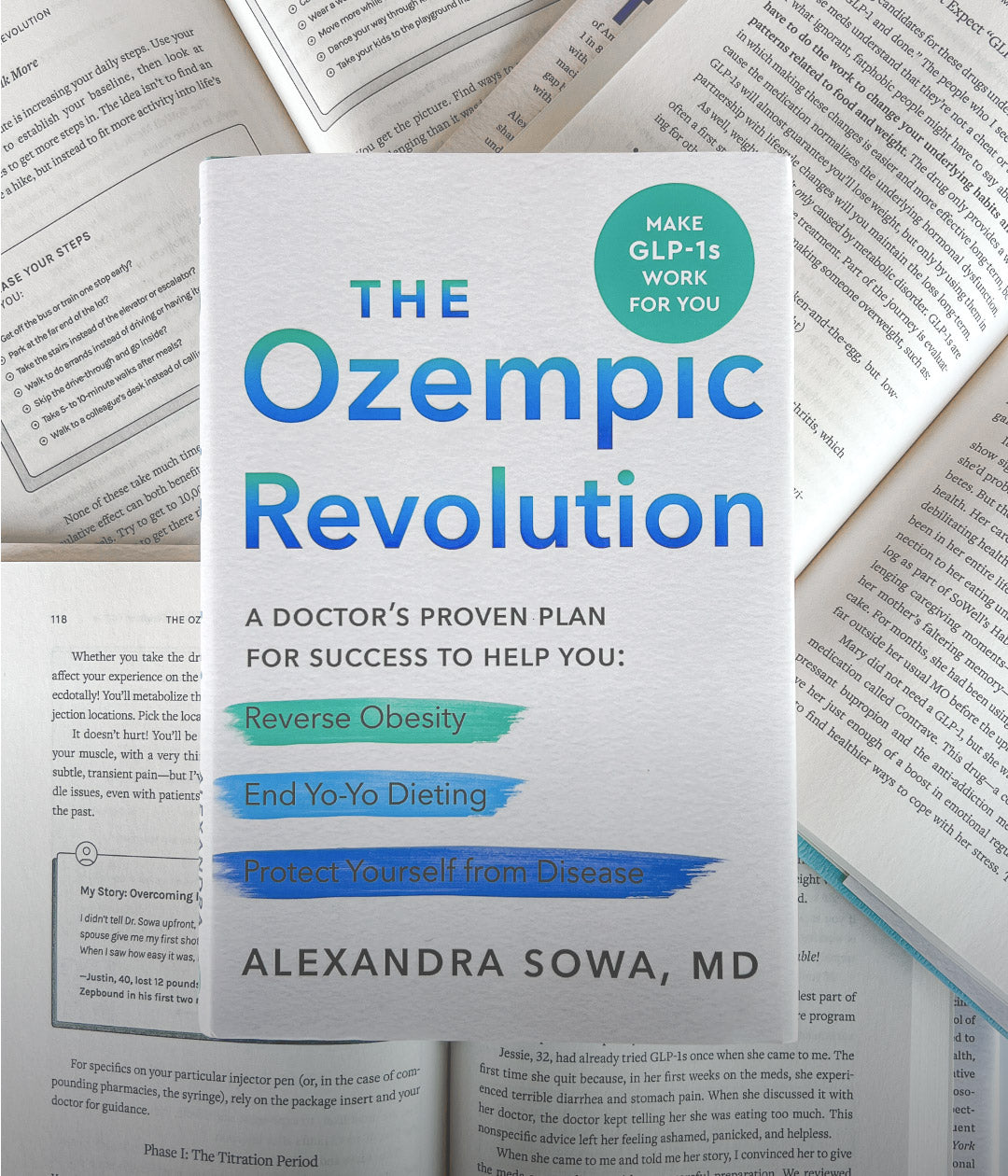
Dr. Sowa is a dual board-certified physician specializing in internal and obesity medicine. She is the founder of SoWell and the author of The Ozempic Revolution. Her practice focuses on evidence-based metabolic health and GLP-1 therapy, and she has been featured in The New York Times, Today Show, and Good Morning America.
*These statements have not been evaluated by the Food and Drug Administration. Products are not intended to diagnose, treat, cure, or prevent any disease.