That's how many people in the Wegovy clinical trials reported nausea. Not a small subset. Not an edge case. Nearly half of everyone on the medication — and the numbers for Ozempic, Zepbound, and Mounjaro aren't much kinder.
If you're reading this while white-knuckling your way through a wave of queasiness, wondering if you're going to have to quit the only medication that's ever actually worked — stop.
You're not broken. You're not weak. You're experiencing a predictable side effect of a drug that slows your stomach down on purpose. And there are specific, evidence-based things you can do about it tonight.
Why GLP-1 Nausea Isn't a You Problem
Here's what most people don't get told at the pharmacy counter: GLP-1 medications work partly by delaying gastric emptying. Your stomach holds food longer, you feel full sooner, you eat less. That's the feature. Nausea is the feature's shadow.
When your stomach empties at half-speed, a few things happen at once. Food sits longer. Acid builds. The vagus nerve — the one that tells your brain "something is off down here" — starts firing. Add the fact that GLP-1s also suppress thirst signals, and you've got a setup where mild dehydration quietly worsens the gastric slowdown that's already making you miserable.
The nausea cycle no one warns you about
GLP-1 slows stomach emptying
GLP-1 blunts your thirst cues, so you drink less
Mild dehydration further slows gastric motility
Food sits longer, nausea intensifies
You eat and drink even less — and the loop tightens
The good news: break one link in that chain and the whole cycle loosens.
4.8 Stars (73 Reviews)
Trusted by thousands of GLP-1 users
SoWell Electrolytes
Grab-and-go stick packs in a resealable, travel-friendly bag Light, refreshing, natural lemon water flavor Super dissolvable powder leaves no residue or grit 1g carbs...
$69.98$34.99
Quantity:
The Hydration Fix Most People Get Wrong
"Just drink more water" is the advice you've gotten from every forum, every TikTok, every well-meaning friend. It's also incomplete.
Plain water without electrolytes can actually make things worse when you're barely eating. You dilute the sodium, potassium, and magnesium your body needs to regulate fluid balance and nerve signaling — the same minerals you're already under-consuming because your appetite is suppressed. That's the sneaky part of GLP-1 dehydration: it's not just fluid loss, it's electrolyte loss layered on top of reduced intake.
And here's the piece almost nobody mentions: vitamin B6 is one of the oldest, most studied anti-nausea interventions in medicine. Obstetricians have been recommending it for pregnancy nausea for decades. The American College of Obstetricians and Gynecologists lists it as a first-line treatment. It's in the protocol because it works — and the mechanism (modulating how your brain processes nausea signals) translates directly to the GLP-1 context.
Just drink more water. Replace what your body is actually losing.
Water alone doesn't cut it when your appetite suppression is already starving you of the minerals that keep nausea at bay. You need sodium to hold fluid in your system, potassium and magnesium to keep smooth muscle (including your gut) functioning, and B6 to quiet the nausea signal at the source. Most electrolyte products on the market were designed for athletes losing minerals through sweat — not for someone whose entire intake just dropped by 40%.
What a GLP-1-ready electrolyte should have
Sodium in a meaningful dose (not a token amount)
Potassium and magnesium to support gut motility
Vitamin B6 at the clinically studied dose for nausea
No sugar bombs that spike glucose or trigger reflux
A taste you'll actually drink when you feel terrible
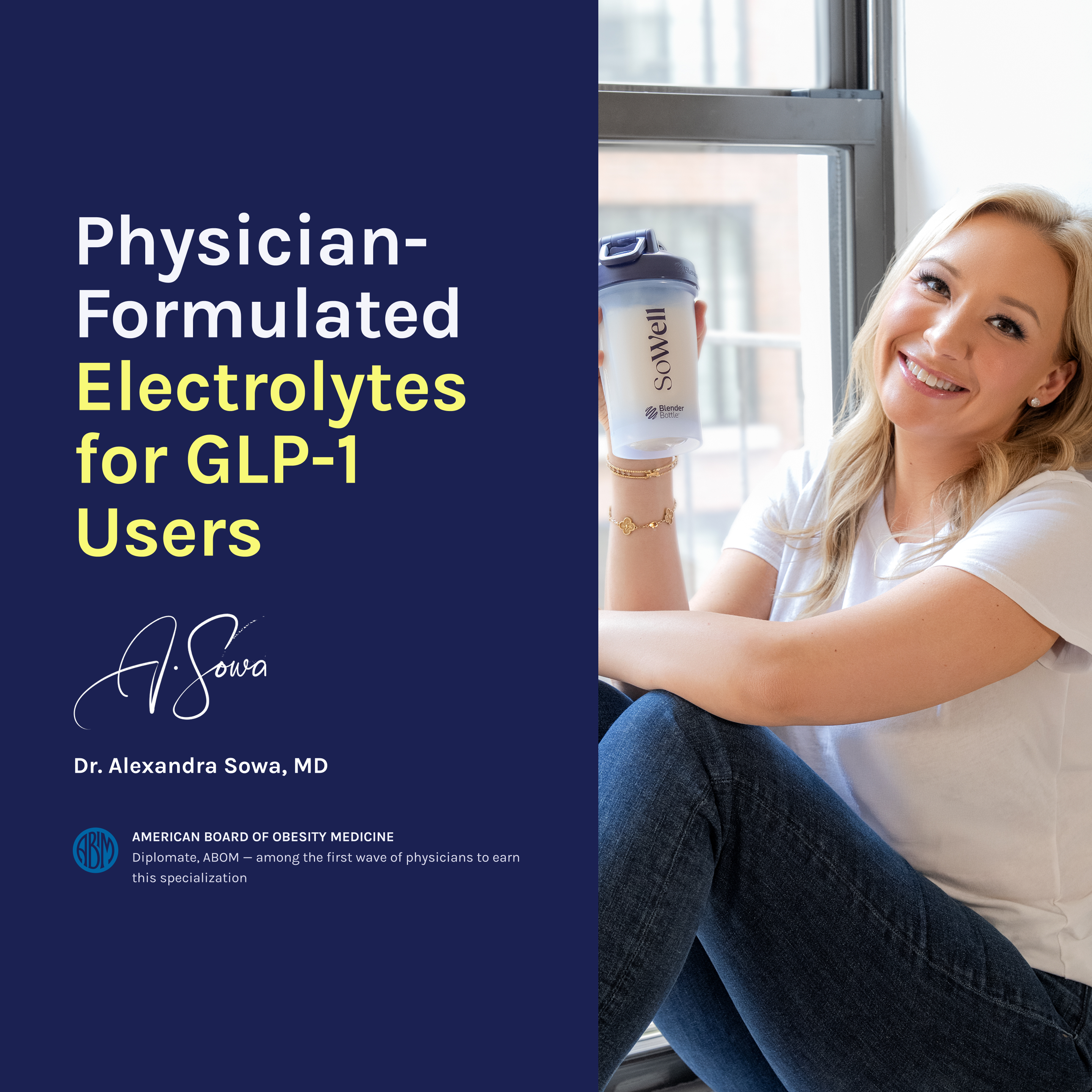
This is specifically why SoWell Electrolytes were formulated the way they were — as the only electrolyte product built by a doctor specifically for GLP-1 users, with vitamin B6 at the clinically studied dose baked into every stick pack. You're solving the hydration problem and the nausea problem in one move, instead of taking three separate supplements and hoping they cover it.
Drink one first thing in the morning, before the nausea has a chance to build. That's the protocol that changes people's weeks.
Free Resource
Get Dr. Sowa's GLP-1 Starter Guide
Weekly protocols, nutrition tips, and evidence-based guidance for your GLP-1 journey. Join 50,000+ readers.
★ Trusted by 50,000+ GLP-1 users · No spam, ever
Six More Strategies That Actually Move the Needle
The rest of your anti-nausea toolkit
Eat smaller, eat slower. Your stomach is working at half capacity. Treat it that way. Small plates, long pauses between bites, stop at 70% full. If a meal takes 30 minutes instead of 10, good. You're working with your gut instead of against it.
Cut the trigger foods. Greasy, fried, creamy, and highly processed foods are the worst offenders — they sit in your slowed stomach and ferment. Sugar spikes and alcohol are close behind. Lean protein, plain carbs, cooked vegetables. Bland is your friend right now.
Time your injection strategically. Nausea usually peaks 24-72 hours post-dose. If your worst days are Wednesday and Thursday, injecting Friday night means the peak hits over the weekend when you can rest. A small shift in timing can reclaim your whole work week.
Stay upright after eating. Don't lie down for at least two hours post-meal. Gravity is doing real work for you. Lying flat lets stomach contents slosh back toward the esophagus, and on a medication that's already slowing digestion, that's a nausea amplifier.
Try ginger or peppermint. Ginger tea, ginger chews, or peppermint after meals. Ginger has legitimate evidence behind it — multiple studies show it reduces nausea comparable to some prescription options. Not a miracle, but a real tool.
Know when to call your doctor. Nausea that prevents you from keeping fluids down for 24+ hours, vomiting multiple times a day, severe abdominal pain, or signs of dehydration (dizziness, dark urine, confusion) mean you stop managing at home and call. Pancreatitis is rare but real. So is dose adjustment.
That last one matters. There's a difference between the background hum of mild GLP-1 nausea and a symptom that's telling you something is wrong. If your gut is screaming, listen. Dose escalation schedules can be slowed. Medications can be switched. You are not failing by asking for an adjustment — you are using the tool correctly.
The Bottom Line
GLP-1 nausea is real, it's predictable, and it's largely manageable. The reason most people suffer longer than they need to isn't willpower or tolerance — it's that they were handed a prescription without a playbook. Hydration matters, but plain water is half the answer. Electrolytes plus B6 is closer to the whole one, which is why a GLP-1-specific electrolyte is the single highest-leverage change most people can make this week.
Add slower meals, smarter injection timing, and a willingness to call your doctor when something crosses the line, and you've got a protocol — not a prayer.
You don't have to choose between the medication that's working and feeling like yourself. The fix is specific. Start there.
Your Questions About GLP-1 Nausea, Answered
Does vitamin B6 help GLP-1 nausea?
Yes. Vitamin B6 is a well-established first-line treatment for nausea and has been used clinically for decades, including as a standard recommendation for pregnancy-related nausea. The mechanism — modulating how the brain processes nausea signals — applies directly to GLP-1-induced nausea. Clinicians commonly recommend B6 at 10-25 mg as part of a GLP-1 side effect protocol, which is why SoWell Electrolytes include it at a clinically relevant dose in every stick pack.
What are the best electrolytes for Ozempic or Wegovy?
The best electrolyte for a GLP-1 user is one with meaningful sodium, potassium, and magnesium, minimal sugar, and ideally vitamin B6 included for its anti-nausea effect. Most sports electrolytes were designed for sweat loss during exercise — a very different problem than the reduced intake and suppressed thirst that come with GLP-1s. SoWell Electrolytes were formulated specifically for this use case, which is why they're the go-to recommendation from doctors who treat GLP-1 patients.
Why am I so nauseous on Wegovy?
Wegovy (semaglutide) slows gastric emptying, meaning food sits in your stomach longer. This is part of how the drug produces fullness and reduces appetite, but it also triggers nausea — especially in the first weeks and after each dose increase. Around 44% of people in Wegovy clinical trials reported nausea. It typically peaks 24-72 hours after injection and improves as your body adjusts, though hydration, meal size, food choices, and injection timing all significantly affect severity.
How long does GLP-1 nausea last?
For most people, nausea is worst in the first four to eight weeks and after each dose escalation. It tends to improve significantly once you've stabilized on a consistent dose. Some people experience minimal nausea throughout; others have flares that last several days after each injection. If severe nausea persists beyond the first few months, if you can't keep fluids down, or if it's affecting your quality of life, talk to your prescriber about slowing the titration schedule or adjusting the dose — both are legitimate, common adjustments.
4.8 Stars (73 Reviews)
Trusted by thousands of GLP-1 users
GLP-1 Support System Sample Pack
GLP-1 Support System Sample Pack
$19.99
4.8 Stars (73 Reviews)TRUSTED BY THOUSANDS OF GLP-1 USERS
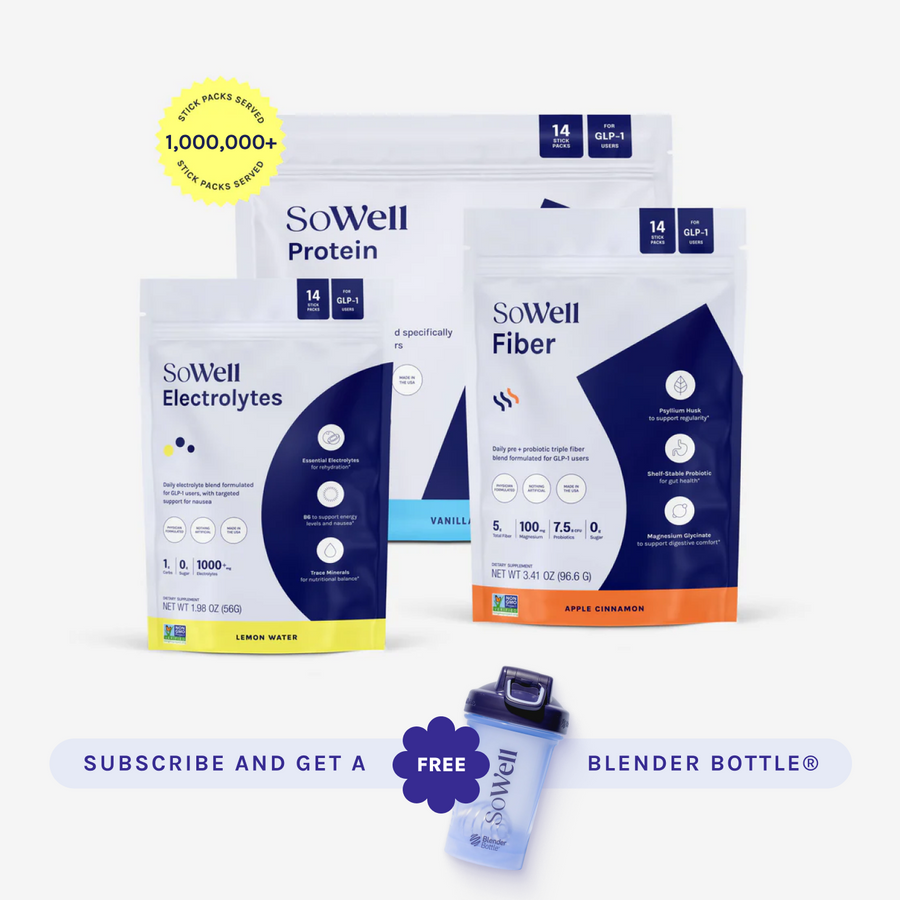
The GLP-1 Support System
Everything you need for a supported GLP-1 journey — fiber, protein, and essential micronutrients in one physician-formulated bundle. Save 20% vs. buying separately.
$104.97
$114.97
Quantity:
About the Author
Dr. Alexandra Sowa, M
Internal Medicine & Obesity Medicine Specialist · SoWell Medical Advisor
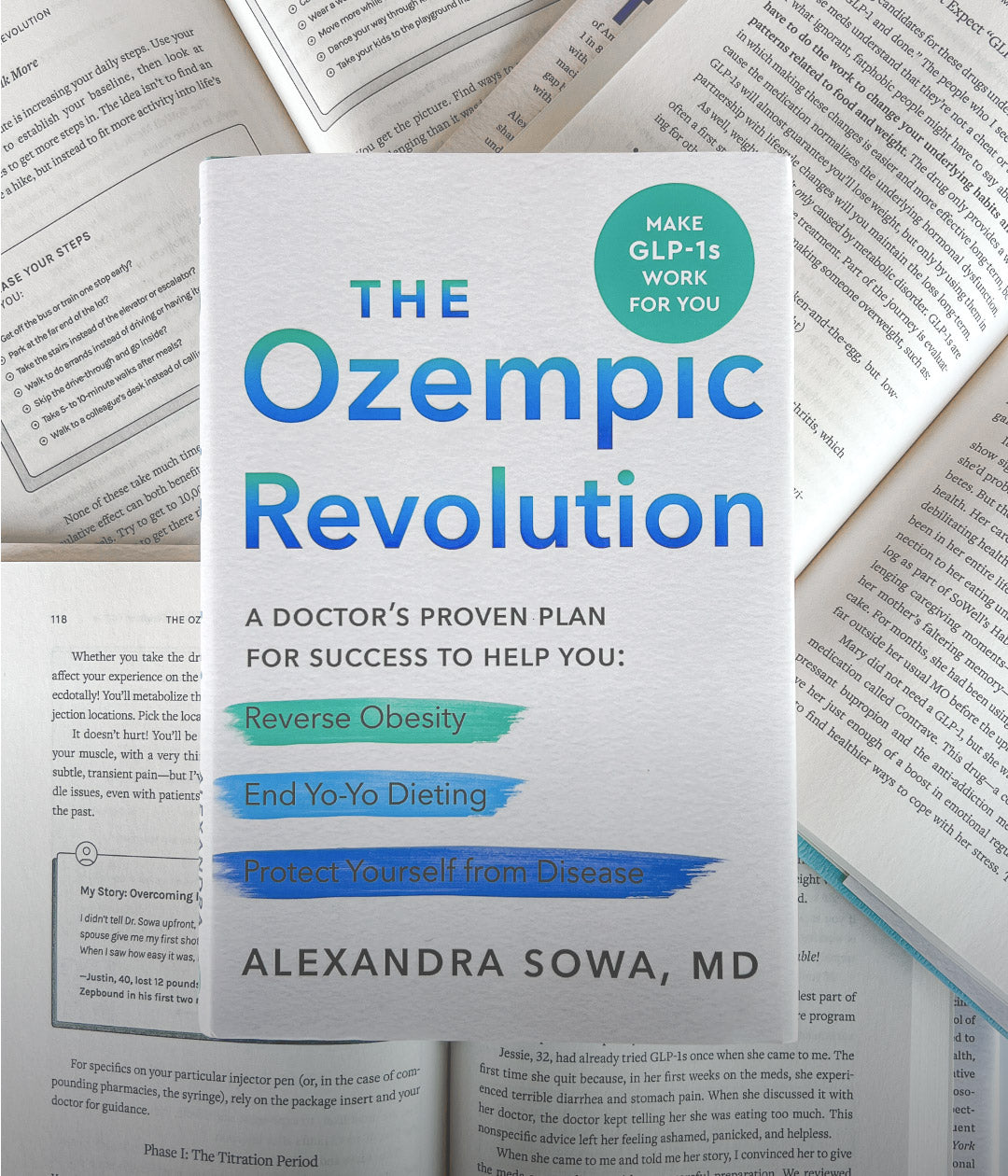
Dr. Sowa is a dual board-certified physician specializing in internal and obesity medicine. She is the founder of SoWell and the author of The Ozempic Revolution. Her practice focuses on evidence-based metabolic health and GLP-1 therapy, and she has been featured in The New York Times, Today Show, and Good Morning America.
*These statements have not been evaluated by the Food and Drug Administration. Products are not intended to diagnose, treat, cure, or prevent any disease.