You started the shot. Appetite dropped. The scale moved. And then — nothing moved.
Days pass. Your stomach feels full of cement. The bathroom trip you used to take without thinking is now a negotiation.
Welcome to the side effect nobody warned you about loudly enough.
Here's the good news: GLP-1 constipation is predictable, mechanical, and fixable. You don't have to white-knuckle it. You don't have to quit the medication. You do have to stop treating this like a mystery and start treating it like the plumbing problem it actually is.
The Constipation Nobody Prepped You For
Your prescriber probably mentioned nausea. Maybe fatigue. Possibly the sulfur burps. Constipation got a passing nod — if that. But clinicians who treat GLP-1 patients consistently report it's one of the most common complaints, and for some people, it's the symptom that makes them want to stop the drug entirely.
That's a shame, because this one has the clearest fix list of any GLP-1 side effect.
What's actually happening in your gut
- GLP-1 medications slow gastric emptying on purpose — that's how they blunt hunger and flatten blood sugar spikes
- Slower transit means more water gets reabsorbed from stool as it sits in your colon
- You're eating less food and often drinking less water to match the smaller appetite
- Less bulk + less water + slower movement = harder, drier, less frequent stools
It's not a bug. It's a direct consequence of the mechanism. Which means fixing it is about compensating for the biology, not overpowering it.
The Cascade: Why This Gets Worse Before You Notice
Here's the part most GLP-1 guides skip. Constipation on these medications isn't one problem — it's a cascade of three.
First, gastric emptying slows. Food sits longer in the stomach, which is the appetite-suppressing effect you were paying for. Second, because you're eating significantly less, you're producing significantly less stool. Small, dry, infrequent — that's just math. Third, your thirst cues get scrambled. GLP-1s can dull hunger and thirst in the same stroke, so you coast on half the water you used to drink without noticing.
Layer those over a few weeks, and the colon is running on minimal fiber, fluid, and bulk—so it responds exactly as you’d expect.
Just drink more water Water alone won't fix this
Every generic "how to relieve constipation" article starts with hydration, and it's not wrong — you do need water. But if you're on a GLP-1 and you've already tried chugging an extra two liters with zero results, you're not crazy and you're not failing at hydration. You’re missing the other two key components. Without enough fiber to retain water and sufficient electrolytes to help keep that water in your cells and tissues, fluids pass through without effectively supporting digestion.
The three-legged stool
-
Fiber — bulk and water retention in the stool itself
-
Fluid — the water the fiber actually holds
-
Electrolytes — what keeps the fluid balance working
Miss any one, and the other two can't compensate. Most GLP-1 users are short on all three.
Free ResourceGet Dr. Sowa's GLP-1 Starter Guide
Weekly protocols, nutrition tips, and evidence-based guidance for your GLP-1 journey. Join 50,000+ readers.
★ Trusted by 50,000+ GLP-1 users · No spam, ever
Six Fixes That Actually Move the Needle
Your GLP-1 Constipation Protocol
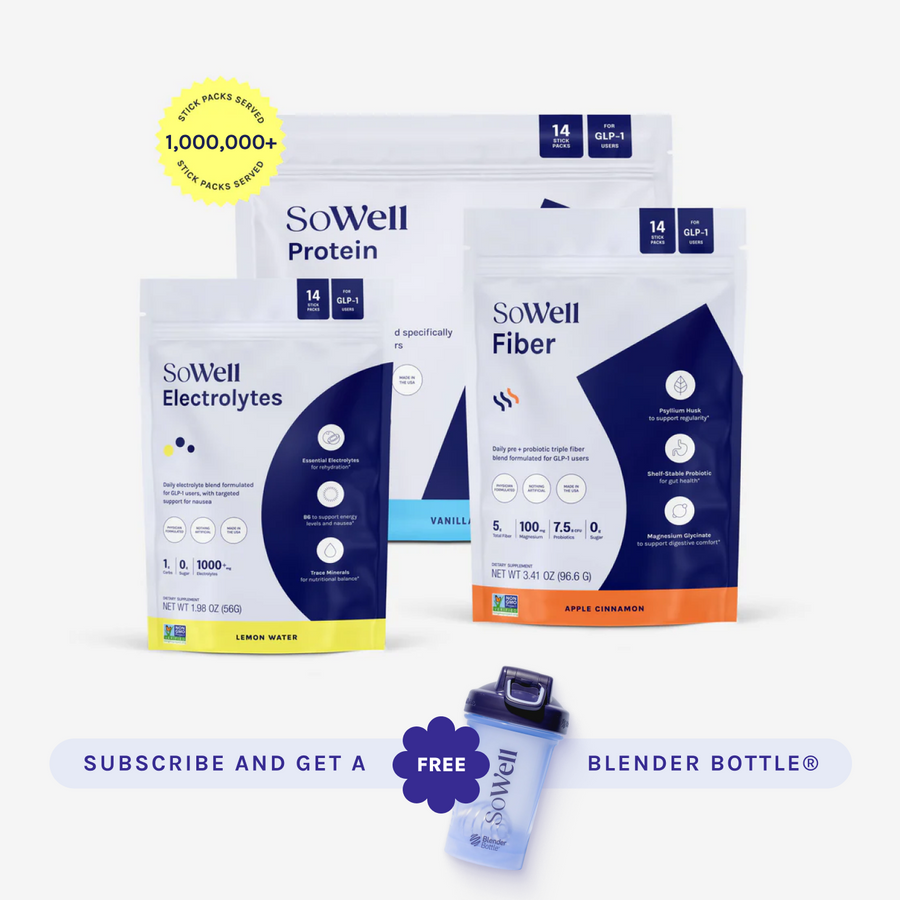
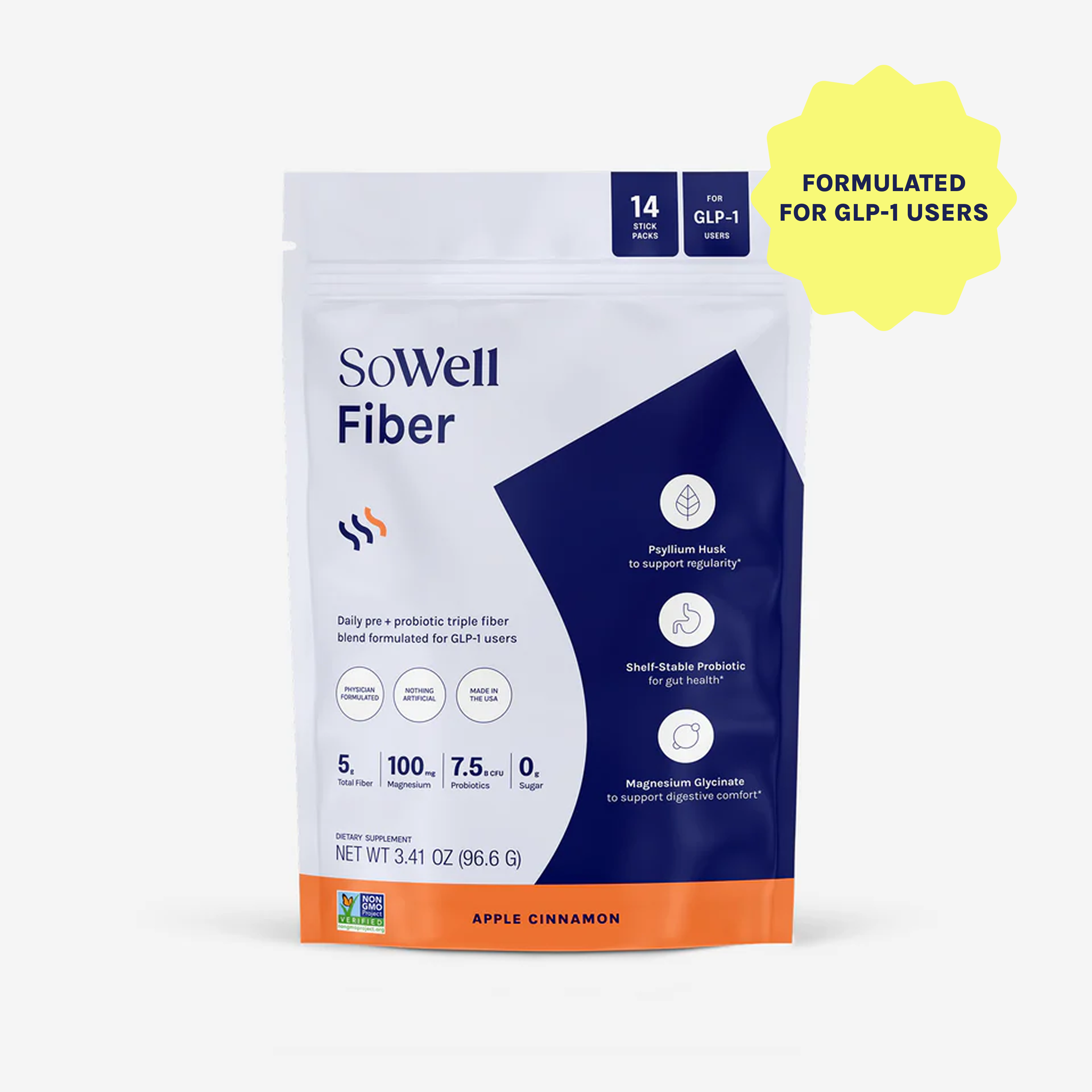
1. Make fiber non-negotiable. The guidelines say 25–38 grams a day. The average American eats around 15. On a GLP-1, you're probably eating less food overall, which means even less fiber unless you're deliberate. You need both soluble fiber (dissolves in water, forms a gel, softens stool) and insoluble fiber (adds bulk, speeds transit). Food first when possible — berries, beans, oats, chia, flax, leafy greens. When food math doesn't get you there, supplementation isn't cheating, it's engineering. SoWell Fiber was formulated specifically for this gap: a triple-blend of soluble and insoluble fibers plus probiotics and magnesium, designed to be drinkable when a plate of lentils isn't happening.
2. Hydrate with electrolytes, not just water. Plain water is necessary but often insufficient. Sodium, potassium, and magnesium help your gut pull water into the colon where you actually need it, instead of sending it straight to your bladder. This matters most during the first week of a new dose, when GI symptoms peak. A daily dose of SoWell Electrolytes alongside your water takes the guesswork out.
3. Walk. Even ten minutes. Your colon has a reflex called the gastrocolic response — eating and moving trigger it. Sitting all day suppresses it. A 10–15 minute walk after meals is one of the most under-prescribed constipation interventions in medicine. You don't need a workout. You need a gentle post-meal stroll.
4. Eat smaller, more often. Three big meals on a GLP-1 often stall out halfway through because your stomach is already slow. Four or five smaller meals keeps things moving and keeps your fiber and fluid intake steady. Bonus: it's gentler on nausea.
5. Magnesium glycinate at night. Magnesium pulls water into the bowel and relaxes the intestinal muscle wall. Glycinate is the gentler, better-absorbed form (citrate works too, and is slightly more laxative). 200–400 mg before bed is a common starting range — check with your clinician, especially if you have kidney issues.
6. Know the red flags. Going more than a week with no bowel movement, severe abdominal pain, vomiting, blood in stool, or a hard distended belly — stop troubleshooting and call your doctor. GLP-1s have rare but documented links to ileus (paralyzed gut) and bowel obstruction. Most constipation is not that. But when it is, it's an ER situation, not a supplement situation.
Most people who do the first five consistently see meaningful change inside two weeks. The ones who don't are usually doing one or two of the fixes and calling it a protocol. All five legs of the fix matter because all three legs of the problem matter.
The Bottom Line
GLP-1 constipation isn't a sign your body is rejecting the medication. It's a sign the medication is doing exactly what it was designed to do — slowing your gut — while your fiber, fluid, and electrolyte intake hasn't been recalibrated to match. That's a fixable gap, not a medical failure, and it doesn't require quitting the shot or suffering through it.
Start with fiber, because it's the leg of the stool most people are shortest on. A daily scoop of SoWell Fiber — three fiber types, probiotics, and magnesium in an apple-cinnamon drink — closes the gap without requiring you to reinvent your plate. Add electrolytes, add movement, add smaller meals. Give it two weeks of consistency before you decide it isn't working.
Your gut isn't broken. It's just waiting for you to send the supplies.