You're shedding. Not a little. Clumps in the shower drain, strands on your pillow, a ponytail that feels half its old thickness. And somewhere between the third Google search and the second doctor who shrugged, you started to wonder if Ozempic is doing this to you.
Short answer: not directly.
Longer answer: the drug isn't pulling hair out of your scalp. But what the drug enables — rapid weight loss on dramatically reduced calories — absolutely can. And the fix is more specific than "eat better."
The Myth: Ozempic Attacks Your Hair Follicles
It doesn't. There's no mechanism by which semaglutide, tirzepatide, or any GLP-1 medication directly damages hair follicles. The drug works on appetite signaling and gastric emptying. Your scalp is not in the chain of command.
What's actually happening has a name, and it's the same name dermatologists have been using for decades — long before Ozempic was a headline. It's called telogen effluvium, and it happens any time the body goes through significant nutritional or physical stress.
Crash diets cause it. Post-pregnancy causes it. Major surgery causes it. High fever causes it. And yes — losing 15, 30, 50 pounds in a few months on a fraction of your previous calorie intake causes it.
What telogen effluvium actually is
At any given time, about 85–90% of your hair follicles are in the active growth phase (anagen).
Under significant stress — caloric, nutritional, hormonal, physical — a larger percentage shift prematurely into the resting phase (telogen).
Those resting follicles hold onto their hair strands for about 2–3 months, then release them all at once.
That's why the shedding shows up two to three months after the triggering event, not during it.
This is why women who started Ozempic in January are panicking in April. The body is catching up to what the caloric deficit set in motion months ago.
4.8 Stars (73 Reviews)
Trusted by thousands of GLP-1 users
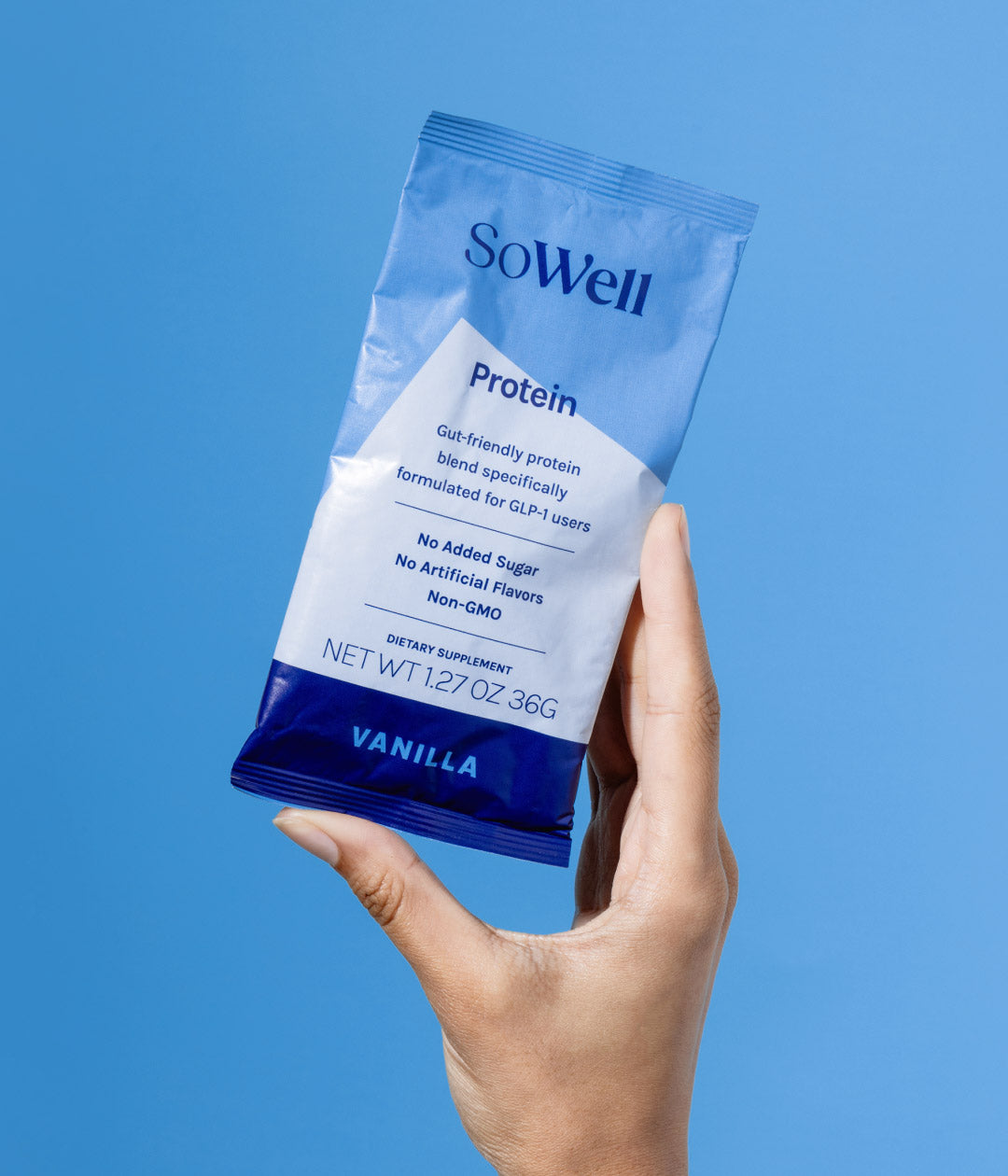
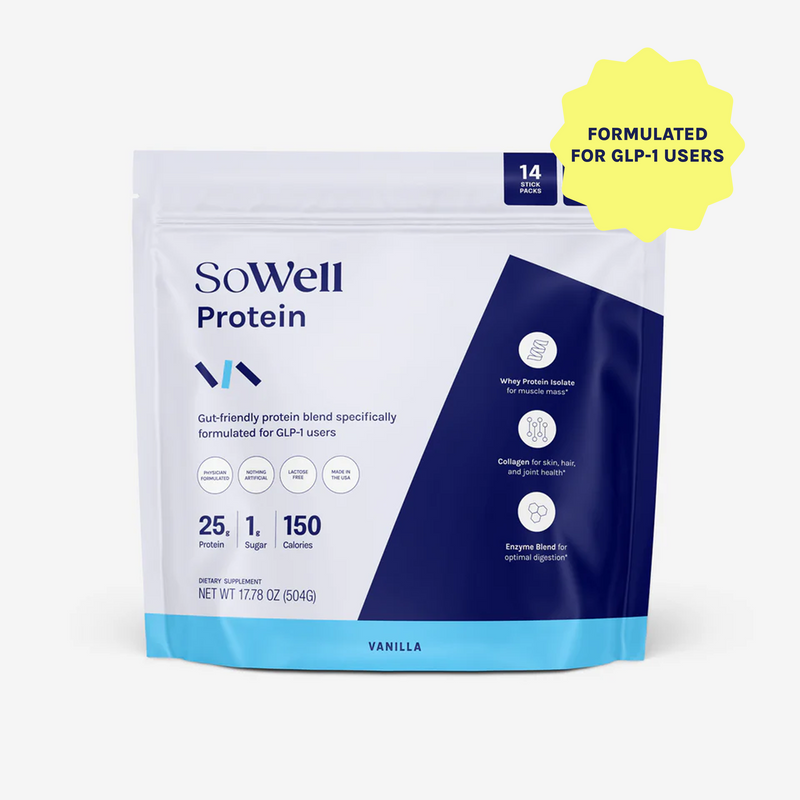
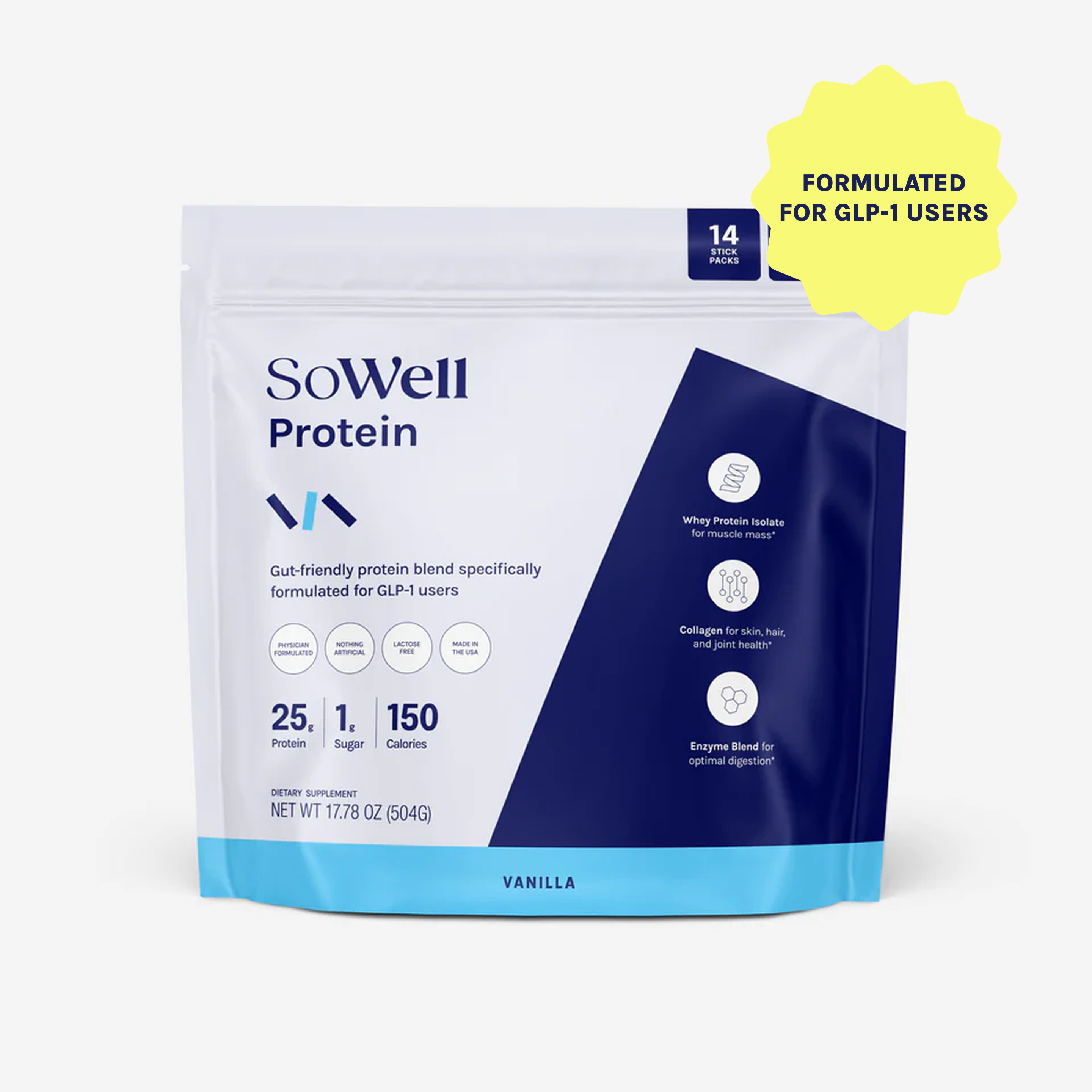
SoWell Protein
• Choose from 14 or 28 grab-and-go protein packets in a resealable, travel-friendly bag• Natural vanilla flavor mixes into anything• Easy-to-mix powder leaves no clumps•...
$89.98$44.99
Quantity:
The Real Culprits Behind GLP-1 Hair Loss
If the drug isn't the villain, what is? Three things, usually working together.
Protein deficiency. Hair is roughly 95% keratin, which is a structural protein. Your body builds it from the amino acids you eat. The standard recommendation is 0.8 grams of protein per kilogram of body weight for sedentary adults, and clinicians working with GLP-1 patients commonly push that to 1.0–1.2 g/kg to protect lean mass during weight loss. On a GLP-1, most people are eating 30–50% fewer calories than before. If you weren't tracking protein specifically, you're almost certainly under-hitting it. Hair is a non-essential tissue from your body's perspective — when protein is scarce, your scalp is the first place it gets deprioritized.
Micronutrient gaps. Iron, zinc, vitamin D, and B12 all play direct roles in hair growth. When you're eating significantly less food, you're also consuming less of everything dissolved in that food. Iron deficiency in particular shows up constantly in GLP-1 bloodwork — and it's a known driver of diffuse shedding independent of telogen effluvium.
Rapid weight loss itself. Even if your protein and micronutrients are dialed in, losing weight fast is a physiological stressor. The body reads a large, sustained caloric deficit as a signal that times are hard. Hair is expensive. Hair gets cut from the budget.
Ozempic is making my hair fall out Rapid weight loss on under-fueled protein is making my hair fall out
The distinction matters because the first framing leaves you with two options: keep the drug and lose your hair, or quit the drug and regain the weight. The second framing opens up a third path — stay on the medication, fix the nutritional inputs, and watch the shedding resolve on a predictable timeline. Your hair didn't sign up to be collateral damage. It doesn't have to be.
What actually drives the shedding
Under-eating protein (almost universal on GLP-1s)
Low iron, zinc, vitamin D, or B12
Losing weight faster than ~1% of body weight per week
Skipping meals entirely because you're "not hungry"
Free Resource
Get Dr. Sowa's GLP-1 Starter Guide
Weekly protocols, nutrition tips, and evidence-based guidance for your GLP-1 journey. Join 50,000+ readers.
★ Trusted by 50,000+ GLP-1 users · No spam, ever
How to Actually Stop It
The single highest-leverage intervention is protein. Not "eat more protein in general" — a specific daily target, hit every single day, regardless of whether you feel like eating.
For most women on a GLP-1, that's 80–120 grams a day. Aim for 1.0–1.2 grams per kilogram of goal body weight, or roughly 25–30 grams per meal across three meals plus a snack. This isn't optional. This is the difference between keeping your hair and watching it thin.
The problem: hitting that target is hard when a GLP-1 has shrunk your appetite to the size of a side salad. Chicken breasts feel like a chore. Steak sits in your stomach like a brick. Most protein bars are loaded with sugar alcohols that wreck GLP-1-slowed digestion. This is the exact gap SoWell Protein was built to close — 25 grams of whey isolate and collagen per stick pack, under 3 grams of carbs so it won't spike blood sugar, and digestive enzymes formulated for stomachs that empty slowly. You mix it into water or coffee, drink it in thirty seconds, and you've just hit a third of your daily protein floor without forcing down food you don't want.
The GLP-1 Hair Recovery Playbook
Hit your protein floor daily. Aim for 1.0–1.2g per kg of goal body weight. Every day, not just when you remember. If whole food won't fit, a GLP-1-formulated protein closes the gap in one drink.
Get bloodwork. Ask your provider for ferritin (not just hemoglobin), vitamin D, zinc, and B12. Correcting a deficiency you didn't know you had is the fastest win available.
Slow the descent. If you're losing more than 1% of body weight per week for months on end, the shedding will be worse. Talk to your clinician about dose pacing.
Give it time. Hair grows about half an inch a month. Once you fix the inputs, regrowth is real — but it shows up on the calendar, not on Tuesday.
The hair recovery timeline
Week 0 — you fix the inputs. Protein dialed, bloodwork corrected, weight loss pace reasonable.
Weeks 1–8 — shedding continues. This is the hard part. Hair already in the telogen phase will still fall out. This does not mean the interventions aren't working.
Months 2–3 — shedding slows. New follicles stop being pushed into the resting phase. The "rain" in the shower starts to ease.
Months 3–6 — regrowth visible. Short baby hairs at the hairline and part. Frustrating to style, wonderful to see.
Months 6–12 — thickness returns. Full recovery for most people, assuming the nutritional foundation stays solid.
The Bottom Line
Ozempic isn't your enemy, and your hair isn't a lost cause. What's happening is telogen effluvium triggered by rapid weight loss on under-fueled protein — and it's one of the most fixable nutritional problems in medicine. Hit your daily protein floor, get the common deficiencies checked, and give the follicles the 3-to-6 months they need to catch up. If whole-food protein is the wall you keep hitting, a GLP-1-formulated protein stick pack is the single most useful tool you can carry in your bag.
You don't have to choose between your body and your hair. You just have to feed both.
Your Questions About Ozempic and Hair Loss, Answered
Is Ozempic hair loss permanent?
For the vast majority of people, no. Telogen effluvium is a reversible condition. Once the underlying trigger — most often protein under-fueling and rapid weight loss — is addressed, follicles return to their normal growth cycle and hair regrows over 6 to 12 months. Permanent hair loss from GLP-1 use has not been established in the research. If shedding continues past 9 months after you've corrected your nutrition, that's a signal to see a dermatologist and rule out a separate underlying cause like pattern hair loss, thyroid dysfunction, or autoimmune conditions.
How much protein do I actually need on Ozempic?
Clinicians working with GLP-1 patients commonly recommend 1.0 to 1.2 grams of protein per kilogram of goal body weight per day. For a woman targeting 150 pounds, that's roughly 70 to 80 grams daily at minimum, and many practitioners push closer to 100 grams to preserve lean muscle during active weight loss. Spread it across meals — 25 to 30 grams per sitting is ideal, because your body can only use so much protein at once for tissue building.
When does GLP-1 hair loss stop?
Shedding typically peaks 2 to 4 months after the triggering event, which for GLP-1 users often means 2 to 4 months after the most aggressive phase of weight loss or the biggest dose escalation. Once you stabilize — steady weight, adequate protein, corrected micronutrients — shedding usually slows within 2 to 3 months. Visible regrowth follows by month 3 to 6, and full thickness typically returns between months 6 and 12.
Will stopping Ozempic reverse the hair loss faster?
Not necessarily, and often not at all. Coming off the medication doesn't instantly reverse telogen effluvium — the follicles already in the resting phase still need to complete their cycle. What actually fixes the shedding is correcting the nutritional inputs, and you can do that while staying on the medication. For most people, quitting GLP-1s to save their hair means regaining weight without solving the underlying issue. Fix the protein floor first. Keep the drug if it's working for your metabolic health.
4.8 Stars (73 Reviews)
Trusted by thousands of GLP-1 users
GLP-1 Support System Sample Pack
GLP-1 Support System Sample Pack
$19.99
4.8 Stars (73 Reviews)TRUSTED BY THOUSANDS OF GLP-1 USERS
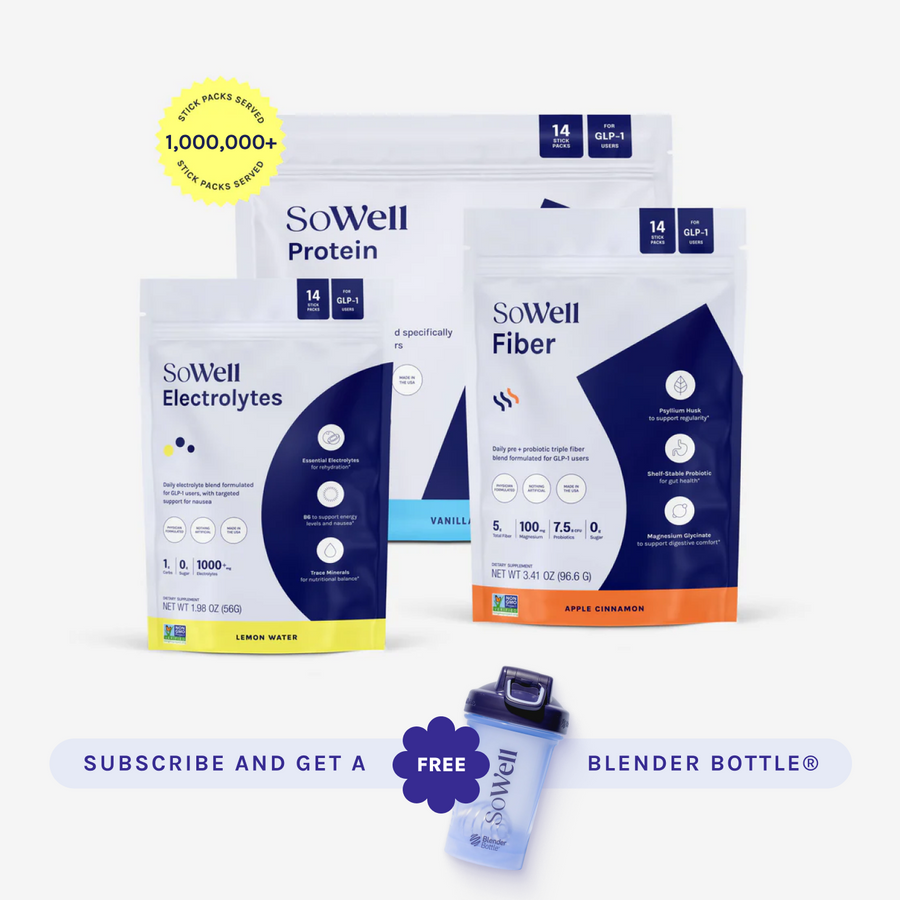
The GLP-1 Support System
Everything you need for a supported GLP-1 journey — fiber, protein, and essential micronutrients in one physician-formulated bundle. Save 20% vs. buying separately.
$104.97
$114.97
Quantity:
About the Author
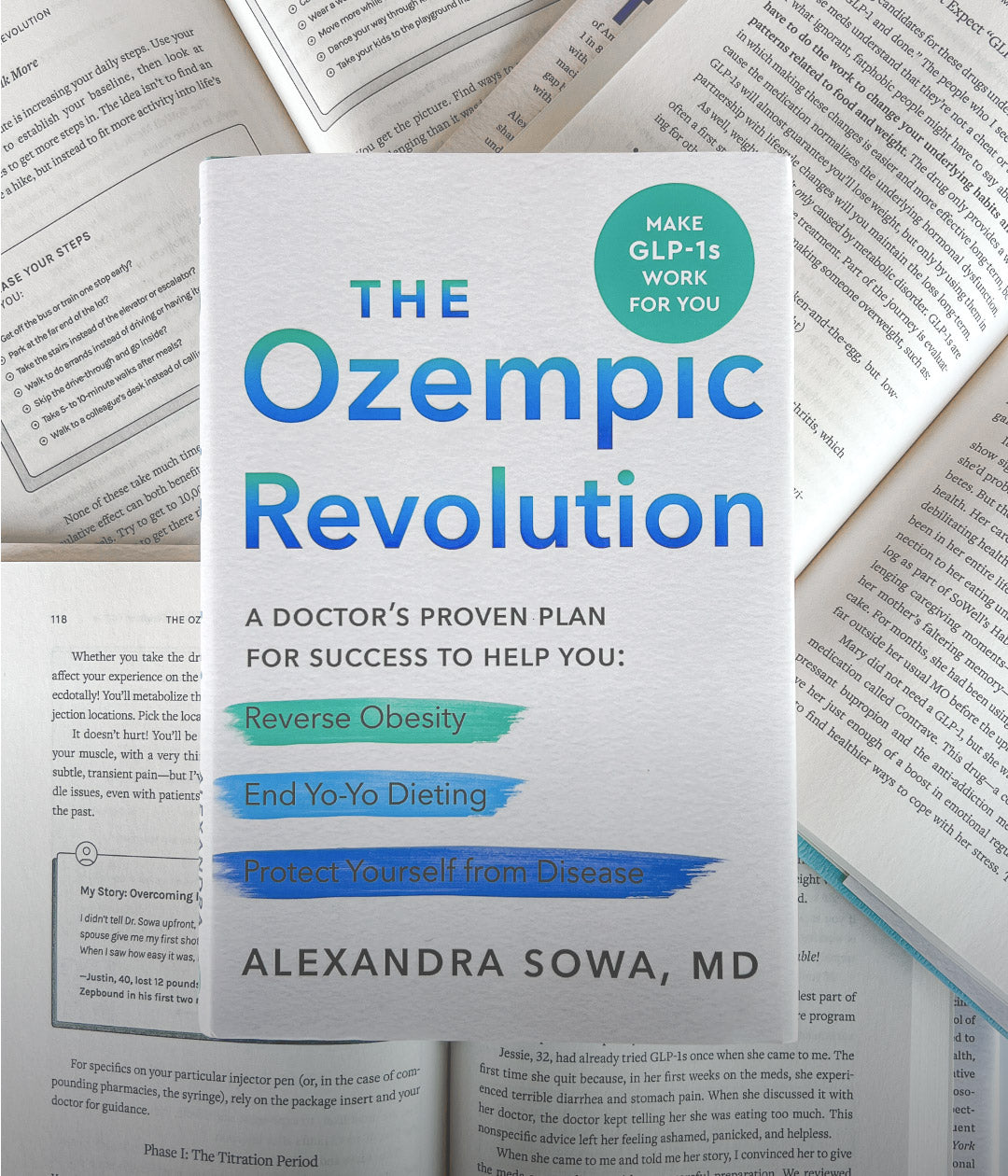
Dr. Alexandra Sowa, M
Internal Medicine & Obesity Medicine Specialist · SoWell Medical Advisor
Dr. Sowa is a dual board-certified physician specializing in internal and obesity medicine. She is the founder of SoWell and the author of The Ozempic Revolution. Her practice focuses on evidence-based metabolic health and GLP-1 therapy, and she has been featured in The New York Times, Today Show, and Good Morning America.
*These statements have not been evaluated by the Food and Drug Administration. Products are not intended to diagnose, treat, cure, or prevent any disease.