Open TikTok and you'll find berberine crowned "nature's Ozempic." Bold claim. The kind that moves bottles and racks up millions of views.
It's also wrong — at least the way most people mean it.
Berberine is a real compound with real metabolic research behind it. But "works like a GLP-1" and "supports healthy blood sugar" are two very different sentences, and the gap between them is where a lot of money — and a lot of hope — gets wasted.
So let's separate the molecule from the marketing.
The "Nature's Ozempic" Myth
The nickname stuck because both berberine and GLP-1 medications touch blood sugar. That's roughly where the similarity ends. GLP-1 drugs are receptor agonists that mimic a gut hormone, slow gastric emptying, and act on appetite signaling in the brain. They produce the dramatic appetite suppression and weight loss you've heard about. Berberine is a plant alkaloid that research suggests works largely through a different pathway — activating an enzyme called AMPK that influences how cells use and store energy.
Different mechanism. Different magnitude. Calling them the same thing isn't a helpful shortcut — it's a category error that sets you up to expect a prescription-level result from a supplement.
That doesn't make berberine useless. It makes the nickname a lie. And once you drop the nickname, you can actually evaluate what berberine does and doesn't do — which is the only way to decide whether it belongs in your routine.
What berberine is actually being studied for
- Modest improvements in fasting blood glucose in some studies of people with metabolic dysfunction
- Support for insulin sensitivity as part of a broader metabolic picture
- Effects on certain lipid markers that researchers are still mapping
- A complementary role alongside diet and lifestyle, not a replacement for either
Notice the hedging. That's not caution for its own sake — it's that the research base, while genuinely promising, is smaller and more variable than the viral videos imply. Studies differ in dose, form, population, and quality. "Research suggests" is the honest verb here, and any brand using stronger language than that is telling you more about its marketing than its science.
“
"Most GLP-1 supplements weren't designed for GLP-1 users. They were designed for general wellness shoppers and rebranded when semaglutide went mainstream."
ASDr. Alexandra Sowa, MDInternal Medicine & Obesity Medicine Specialist
How Berberine Actually Behaves in the Body
That AMPK pathway berberine activates is sometimes called a "metabolic master switch." It's involved in how your cells respond to insulin and manage glucose, which is the most plausible reason berberine shows up in blood-sugar studies at all. When that switch is engaged, cells may take up glucose more efficiently and the body may handle energy a little better. That's a real, mechanistically grounded effect.
But activating a useful pathway and replacing a prescription medication are not the same achievement. A GLP-1 reshapes appetite and gastric emptying in a way berberine simply does not. So the realistic frame is this: berberine may nudge your metabolic markers in a helpful direction, particularly if they're not where you want them, while doing little to the appetite-crushing effect people associate with Ozempic. Useful nudge, not a swap.
There's also the matter of who berberine is for. The research is most interesting in people working on insulin sensitivity and blood-sugar regulation — exactly the metabolic territory many people care about. For someone whose only goal is rapid weight loss, berberine is likely to underwhelm. For someone focused on supporting their metabolism over time, it's a more reasonable fit.
It's worth being clear-eyed about timeline, too. The viral framing implies a dramatic, visible change — the kind you'd notice on a scale within days. That's not how a metabolic-support compound tends to work. Any effect berberine has builds quietly over weeks as part of a broader pattern of diet, movement, and consistency, and it shows up in markers and how you feel rather than in a number that drops overnight. People who expect the former and get the latter conclude it "didn't work," when in reality they were measuring the wrong thing on the wrong schedule. Matching your expectations to how the compound actually behaves is half of using it well.
And then there's the comparison nobody likes to make out loud: berberine versus simply doing the basics well. Protein, fiber, sleep, walking, and resistance training all influence insulin sensitivity, often more powerfully than any single supplement. Berberine is best understood as something layered on top of those fundamentals once they're in place — not a substitute that lets you skip them. A capsule will never out-work a foundation you haven't built.
Nature's Ozempic A Metabolic Support Tool
Reframe it and berberine gets more useful, not less. As a complementary support for people working on insulin sensitivity — alongside diet, movement, and where appropriate, medication — it has a legitimate place. As a swap for a GLP-1, it's set up to disappoint, and disappointment is what fuels the next round of "it didn't work for me" reviews.
The honest pitch is quieter than the viral one. It's also the one that won't waste your money or your expectations.
Where berberine may fit
- You're focused on metabolic and blood-sugar support, not rapid weight loss
- You want a complement to lifestyle changes, not a replacement for care
- You've talked to your clinician, especially if you take other medications
- You're choosing a properly formulated version, not the cheapest capsule online
- You're bringing realistic, "nudge not miracle" expectations
Free ResourceGet Dr. Sowa's GLP-1 Starter Guide
Weekly protocols, nutrition tips, and evidence-based guidance for your GLP-1 journey. Join 50,000+ readers.
★ Trusted by 50,000+ GLP-1 users · No spam, ever
How to Use Berberine Without Falling for the Hype
If you're going to try it, do it right
Set honest expectations. Think "metabolic support," not "weight-loss drug in a capsule." Research suggests modest effects, and modest is not nothing — it's just not a miracle, and treating it like one guarantees disappointment.
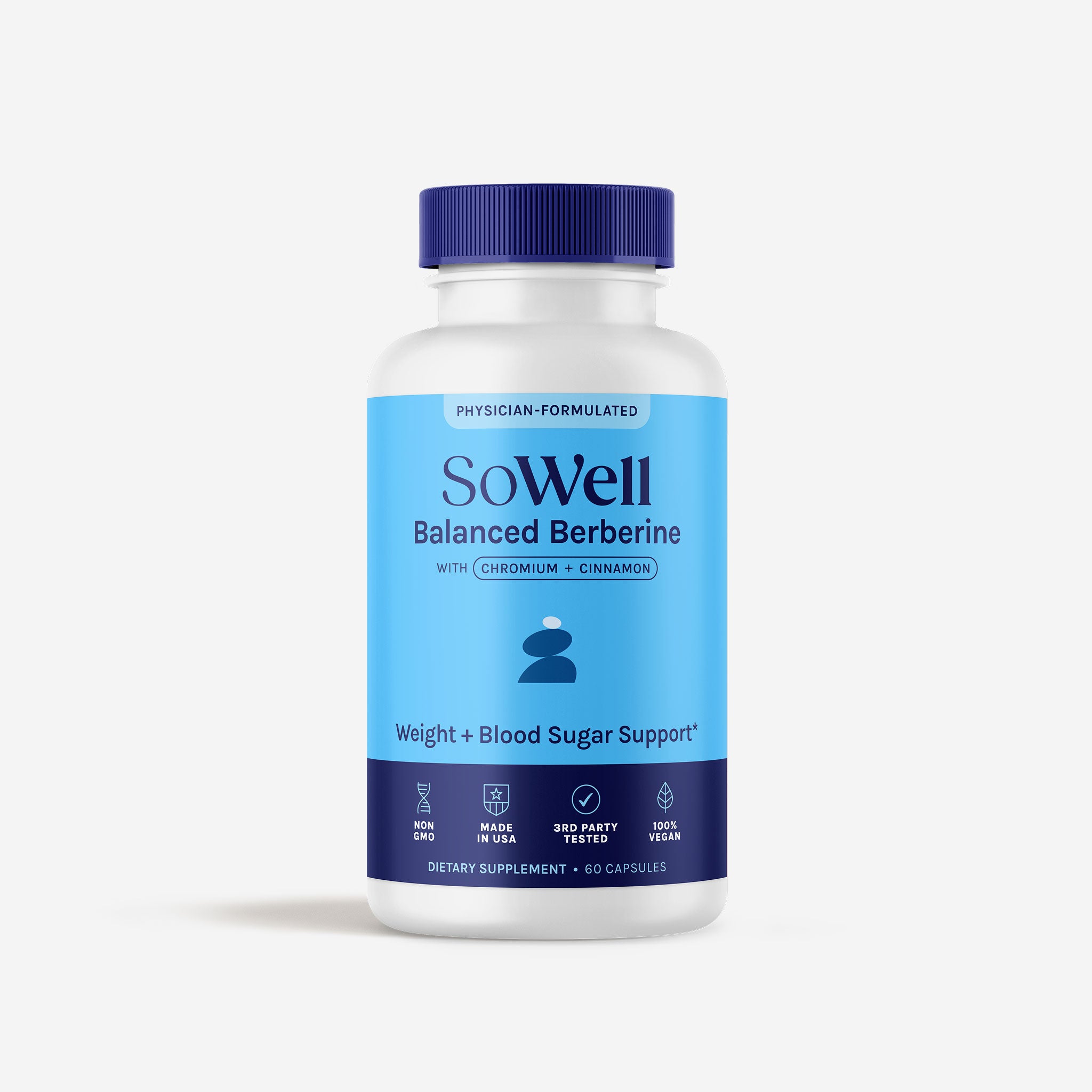
Mind the formulation. A thoughtfully formulated product like Balanced Berberine matters far more than the number printed on a bargain-bin bottle.
Pair it with the basics. Berberine works best as one input among many — protein, fiber, sleep, and movement all move the same metabolic needle. It's a supporting actor, not the lead.
Loop in your clinician. Especially if you're on blood-sugar or other medications, berberine can interact. This is a conversation to have, not a solo experiment to run.
The Bottom Line
Berberine isn't a fraud and it isn't a GLP-1. It's a researched metabolic-support compound with real but modest effects — which means the version you choose and the expectations you bring decide whether it's worth it. If metabolic and blood-sugar support is your goal, a properly formulated Balanced Berberine is a reasonable place to start, ideally as part of a broader weight and metabolic support approach rather than a lone capsule carrying impossible expectations.
Berberine can support your metabolism. It was never going to replace your prescription — and anyone telling you otherwise is selling, not explaining.