You're eating less. That's the whole point. GLP-1 medications are doing exactly what they're supposed to do — quieting appetite, slowing digestion, reducing how much you put on your plate. But here's what nobody told you at the pharmacy: when you eat 30–50% less food, you absorb 30–50% fewer micronutrients.
That's not a side effect. It's arithmetic. And it explains why so many people a few weeks or months into their GLP-1 journey start feeling subtly, persistently off — foggy, tired, shedding more hair than usual, running out of energy by 2pm. They're not imagining it. They're running low on the raw materials their body needs to function.
The fix isn't complicated. But it is specific.
“
"Most GLP-1 supplements weren't designed for GLP-1 users. They were designed for general wellness shoppers and rebranded when semaglutide went mainstream."
ASDr. Alexandra Sowa, MDInternal Medicine & Obesity Medicine Specialist
Why GLP-1 Users Are a Different Case for Nutrition
Standard nutritional advice assumes you're eating a roughly normal volume of food. GLP-1 users aren't. And the biology of what changes when you dramatically reduce intake matters a lot before you reach for anything from a pharmacy shelf.
GLP-1 medications slow gastric emptying — the rate at which food moves from your stomach into your small intestine. That's partly why they're so effective at reducing hunger. But slower gastric emptying also means longer transit time, altered gut pH, and changed absorption dynamics for several nutrients. B12 is the clearest example: its absorption requires a protein called intrinsic factor, and that process is sensitive to gastric acid levels and transit timing. Research suggests GLP-1 use may impair B12 absorption specifically, independent of how much you're eating.
Layer reduced intake on top of altered absorption, and the nutrient math gets worse fast.
Just eat more nutrient-dense foods The density math doesn't work at this volume
Yes, prioritizing salmon, leafy greens, and eggs is always the right move. But if your total daily intake has dropped from 2,000 calories to 1,100 — which is common during GLP-1 dose escalation — you'd need near-perfect dietary execution every single day to hit adequate levels of every nutrient on this list. Most people, even motivated ones, have days where a protein shake and some crackers is what they managed. The food-first principle doesn't break down. The volume-required-to-execute-it does.
What makes GLP-1 nutrition different
- Caloric intake often drops 30–50% from baseline
- Gastric emptying is actively slowed by the medication
- Nausea and food aversions can sideline entire food groups
- Protein prioritization leaves less room for micronutrient-dense foods
- Deficiencies develop slowly — symptoms arrive weeks after the deficit began
The 6 Nutrients GLP-1 Users Are Most Likely Missing
These aren't speculative. Clinicians working with GLP-1 patients commonly flag these six as the highest-risk gaps — a combination of what's hardest to get at reduced intake and what GLP-1 biology specifically disrupts.
1. Vitamin B12
The standout on this list. B12 absorption is mechanistically linked to gastric function, and GLP-1 medications alter that function directly. Signs of deficiency include fatigue that sleep doesn't fix, brain fog, numbness or tingling in hands and feet, and mood changes. Daily target is around 2.4 mcg, but absorption is the variable — not just intake. The supplement form to look for is methylcobalamin, the active form the body can use without conversion. Cyanocobalamin (the cheap form in most multivitamins) requires a conversion step that not everyone's body handles efficiently.
2. Vitamin B6
B6 is involved in over 100 enzymatic reactions, including neurotransmitter synthesis and protein metabolism. If you're prioritizing protein (which you should be on a GLP-1), your B6 demand actually increases. Deficiency shows up as irritability, low mood, and that specific fatigue that feels more mental than physical. Food sources are solid — chicken, fish, potatoes, chickpeas — but hitting adequate levels gets harder when total food volume drops. Daily target is 1.3–1.7 mg for adults. Look for pyridoxal-5-phosphate (P5P) on supplement labels, the active form.
3. Magnesium
Magnesium is involved in over 300 biochemical reactions, including muscle function, sleep regulation, and glucose metabolism. It's also one of the most commonly depleted minerals in the general population even without GLP-1 use — add reduced intake and you have a reliable gap. Signs include muscle cramps, poor sleep, constipation, and anxiety that ratchets up for no clear reason. Target is 310–420 mg daily. The supplement form matters significantly: magnesium glycinate has the best absorption and tolerability. Magnesium oxide (the form in cheap supplements) is largely excreted.
4. Iron
Iron deficiency is the world's most common nutritional deficiency, and GLP-1 users face compounded risk: red meat often becomes aversive early in treatment, and heme iron from animal protein is far more bioavailable than non-heme iron from plants. Low iron presents as fatigue (again), cold hands and feet, hair shedding — which overlaps with several other deficiencies on this list, making self-diagnosis unreliable. Women of reproductive age are at highest risk. Daily targets are 8 mg (men) to 18 mg (premenopausal women). A ferritin blood test is the clearest way to assess actual stores, not just intake.
5. Vitamin D
Vitamin D is fat-soluble, which means it requires dietary fat for absorption. If fat intake has dropped (or meals are smaller and less varied), D absorption suffers. It's also synthesized from sunlight exposure, which most people don't get enough of regardless of diet. Deficiency shows up as fatigue, low mood, weakened immune function, and — particularly relevant for GLP-1 users preserving muscle mass — reduced muscle strength. Target is 600–800 IU daily from food and supplementation combined, though many clinicians recommend 1,000–2,000 IU for those with confirmed deficiency. Vitamin D3 (cholecalciferol) is more effective at raising blood levels than D2.
6. Potassium
Potassium is the electrolyte that keeps muscle contractions smooth, heart rhythm regular, and blood pressure stable. It's found in fruits, vegetables, beans, and dairy — all foods that tend to shrink in volume when someone's appetite is suppressed. Early deficiency is subtle: fatigue, muscle weakness, cramping. The daily adequate intake is 2,600–3,400 mg, which is genuinely hard to hit even on a normal diet. On a GLP-1 diet, it requires deliberate effort. Potassium supplements are capped at low doses (99 mg) in most over-the-counter products, so food sources and electrolyte formulas are the practical way to fill the gap.
Free ResourceGet Dr. Sowa's GLP-1 Starter Guide
Weekly protocols, nutrition tips, and evidence-based guidance for your GLP-1 journey. Join 50,000+ readers.
★ Trusted by 50,000+ GLP-1 users · No spam, ever
Should You Just Take a Multivitamin?
Here's where the supplement industry's standard answer fails GLP-1 users specifically.
A standard multivitamin is designed for an average person eating an average diet with average absorption. GLP-1 users are none of those things. They have altered gastric emptying, sharply reduced food volume, specific absorption disruptions for B12, and elevated needs for certain nutrients (like B6, which scales with protein intake). A one-size-fits-all multi doesn't know any of that.
The specific problems with the multivitamin default:
-
Forms matter, and multis cut corners. Cyanocobalamin instead of methylcobalamin. Magnesium oxide instead of glycinate. These aren't equivalent. The cheaper form goes mostly to waste.
-
Doses are often too low. Most multis provide RDA-level nutrients — the floor for preventing deficiency in a healthy adult, not the therapeutic target for someone absorbing significantly less than usual.
-
Competition for absorption. Fat-soluble vitamins (A, D, E, K) and minerals compete for absorption pathways when taken together. A multi dumps everything in at once.
-
The gaps it fills aren't your gaps. Multis are loaded with vitamins you're probably not deficient in and light on the ones GLP-1 users actually run low on — particularly B12, B6, magnesium, and potassium.
The case for targeted supplementation isn't about being anti-multivitamin in principle. It's about the mismatch between what a multi provides and what a GLP-1 user's body actually needs.
How to Build a Practical GLP-1 Supplement Strategy
Start with labs, not guesses. A basic blood panel covering B12, ferritin, vitamin D (25-OH), and a metabolic panel (for potassium and magnesium) gives you actual data. Symptoms overlap enough between deficiencies that guessing which one is driving your fatigue wastes time and money.
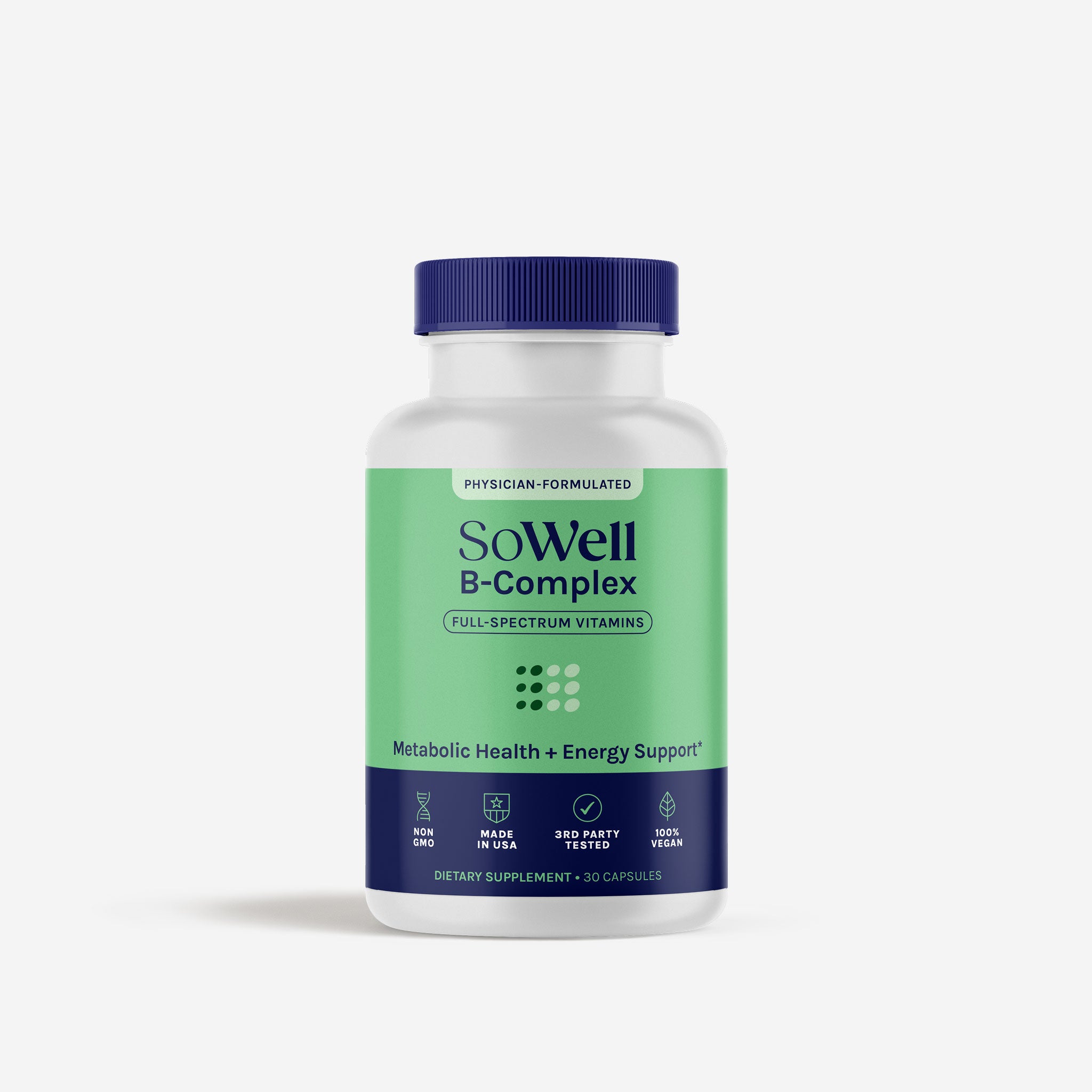
Cover B6 and B12 together. These two B vitamins are deeply linked in GLP-1 users — B12 for absorption-related risk, B6 for protein metabolism demand. A quality B-Complex with active forms (methylcobalamin, P5P) handles both without the absorption competition you get in a full multi.
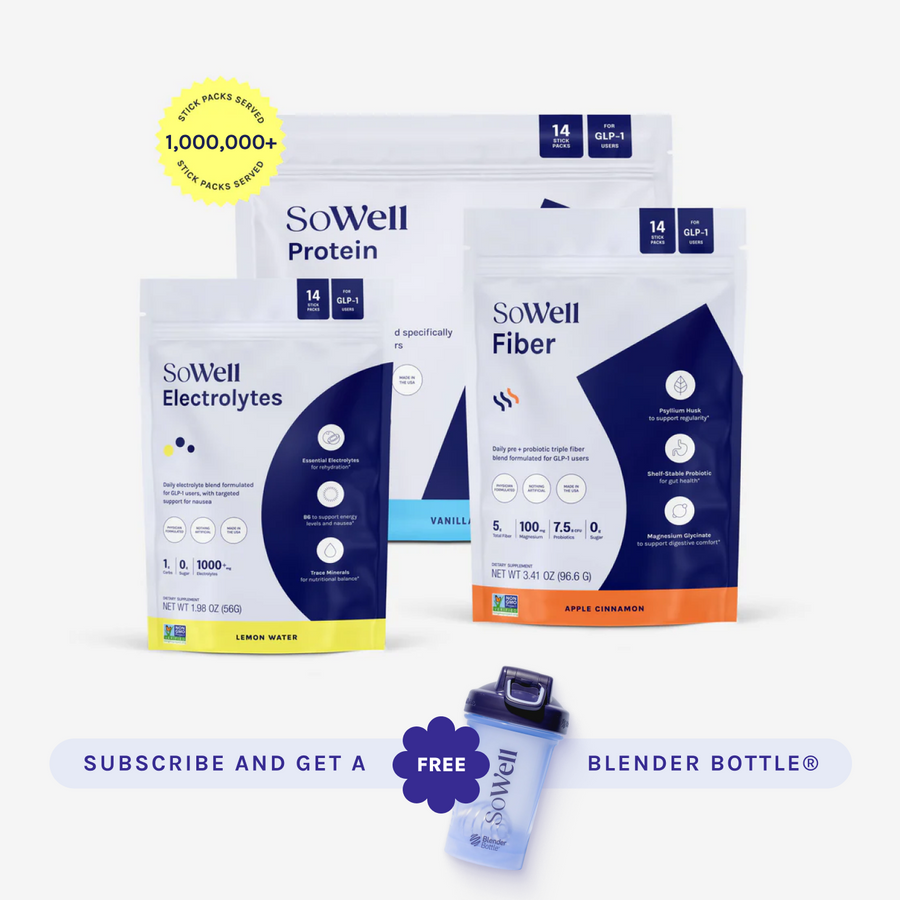
Treat electrolytes as a daily non-negotiable. Potassium and magnesium are the two most reliably depleted electrolytes on a GLP-1 diet, and they're both responsible for the muscle and energy symptoms most people write off as "just the medication." An electrolyte formula built for GLP-1 users — not endurance athletes — delivers both at meaningful doses daily.
Don't try to fix everything at once. Add one supplement category at a time, with a two-week interval. If you start five things simultaneously, you won't know what's working — or what's causing a problem. Sequence matters.
The Bottom Line
GLP-1 medications reduce how much you eat, and that reduction has a direct and predictable effect on the nutrients your body takes in. B12 gets the additional hit of altered absorption mechanics. B6 demand goes up as protein intake becomes the priority. Magnesium, iron, potassium, and vitamin D fill out the gap — not because something is wrong with the medication, but because the math of eating significantly less simply doesn't add up to adequate micronutrient intake without deliberate supplementation.
A generic multivitamin, in the wrong forms at the wrong doses without targeting the right gaps, isn't the answer here. For most GLP-1 users, the practical starting point is two things: a B-Complex built with active forms to address the highest-risk absorption deficits, and a GLP-1 Support System to cover the electrolyte and protein gaps that quietly drive the fatigue and brain fog you've been attributing to the medication itself.
You're not imagining it. You're not eating enough of the right things, through no fault of your own. Now you know exactly where to start.