The supplement industry discovered GLP-1 users about five minutes ago. Since then, the shelves have filled with "Ozempic-support" gummies, generic multivitamins with a fresh label, and protein powders that have nothing to do with what semaglutide actually does to your body.
Here's what's actually happening: GLP-1 medications create a predictable set of nutritional gaps. Less food in. Less water in. Suppressed thirst signals. Slowed digestion. Accelerated lean muscle loss when weight drops fast. Those gaps don't close on their own — and a standard supplement routine built for someone eating 2,200 calories a day won't close them either.
The right stack isn't about taking more. It's about taking what your biology actually needs right now.
Why GLP-1 Users Need a Different Supplement Framework
Most supplement advice assumes a baseline: normal hunger, normal hydration drive, normal digestion speed, normal caloric intake. GLP-1 medications systematically disrupt every one of those baselines. Semaglutide and tirzepatide slow gastric emptying, blunt appetite signals, and — because you're drinking and eating significantly less — create chronic low-grade deficits across multiple nutrient categories simultaneously.
That's not a flaw in the medication. It's a feature with side effects that a targeted supplement stack can address directly. The seven categories below aren't random additions. Each one maps to a specific mechanism GLP-1 therapy affects. Priority order reflects clinical urgency: the top categories address symptoms that hit hardest and earliest, while later categories support longer-term outcomes.
The GLP-1 Nutritional Gap Map
-
Less total food intake → insufficient protein, fiber, B vitamins, and magnesium
-
Suppressed thirst + reduced fluid intake → electrolyte depletion, nausea, headaches
-
Slowed gastric motility → constipation, bloating, reduced nutrient absorption
-
Rapid weight loss → accelerated lean muscle breakdown alongside fat loss
-
Caloric deficit over months → collagen loss, skin elasticity changes, fatigue
The 7 Supplement Categories, Ranked by Priority
Take fewer supplements on a GLP-1 Take the right ones
The instinct to simplify makes sense — you're eating less, so surely you need less? The opposite is true. A smaller food volume means fewer opportunities to absorb nutrients through diet. The supplements that matter most aren't additions to a full diet; they're replacements for what a reduced diet can no longer provide. Precision beats reduction here.
What "right" means for GLP-1 users
- Formulated for reduced-intake, not performance or general wellness
- Dosing that accounts for impaired absorption during dose escalation
- Forms the body can use without requiring a full stomach
- No unnecessary fillers or stimulants that worsen nausea
1. Electrolytes — The First-Line Priority
Nausea. Headaches. That inexplicable fatigue two days after your injection. Most GLP-1 users chalk these up to the medication itself. Often, they're electrolyte depletion symptoms wearing a disguise.
When you eat and drink significantly less, sodium, potassium, and magnesium intake drops sharply. GLP-1 receptor agonists also promote mild diuresis in some users. The result is a depletion spiral: less intake, more loss, more symptoms, less desire to eat or drink. Targeted electrolyte replacement — not a sports drink loaded with sugar — breaks that cycle.
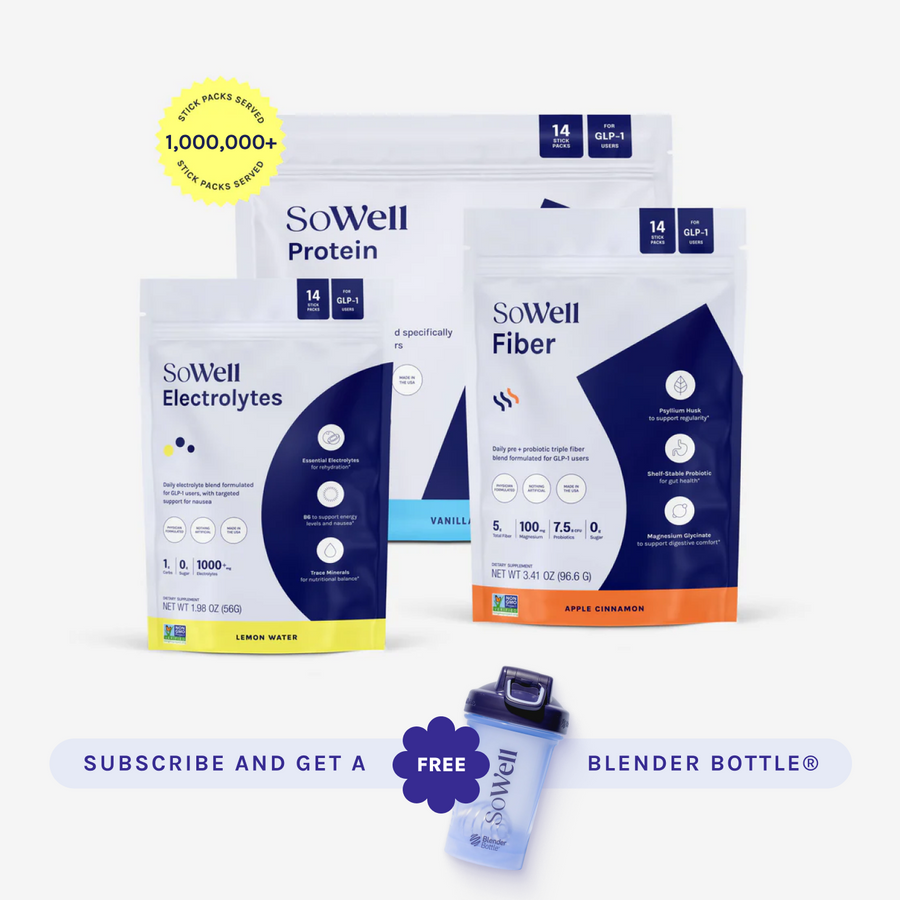
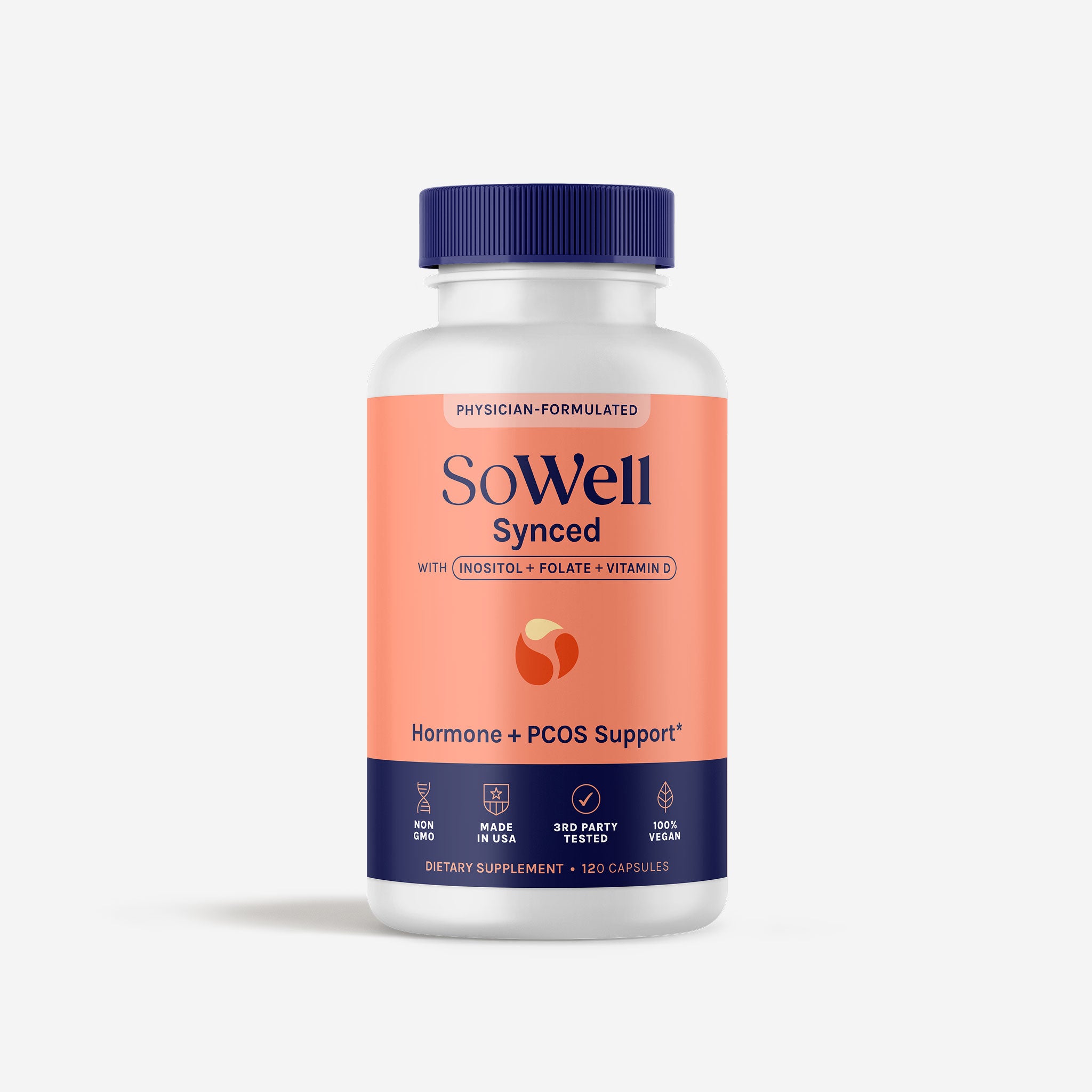
What to look for: sodium 500–1,000mg per serving, potassium 150–300mg, magnesium 50–100mg. No sugar. No artificial colors. Minimal flavoring. SoWell's GLP-1 Support System leads with electrolytes formulated for exactly this profile — not for endurance athletes, not for hangovers, but for the specific depletion pattern GLP-1 therapy creates.
What to avoid: "enhanced water" products with trace minerals and 20g of sugar. You're not replacing a workout sweat; you're compensating for a sustained intake deficit.
2. Protein — The Muscle Preservation Imperative
This one is non-negotiable, and most GLP-1 users are underestimating it.
Rapid weight loss — regardless of how it's achieved — breaks down lean muscle tissue alongside fat. Research on GLP-1 therapy consistently shows that 25–40% of weight lost can come from lean mass rather than fat, particularly without adequate protein intake and resistance training. That's not a small number. Muscle loss affects metabolic rate, long-term weight maintenance, physical strength, and insulin sensitivity. You can't eat your way to adequate protein on 800–1,200 calories a day without protein supplementation.
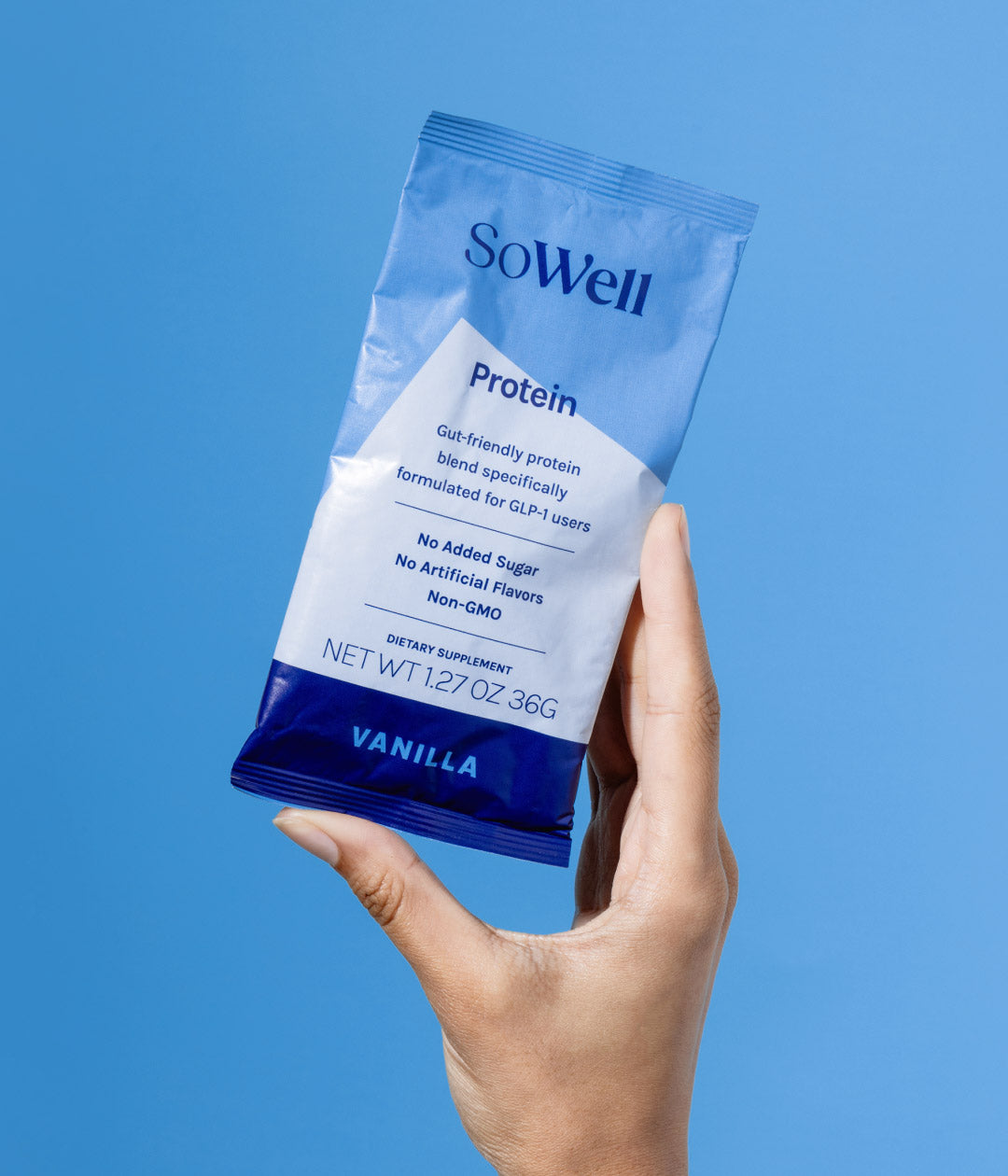
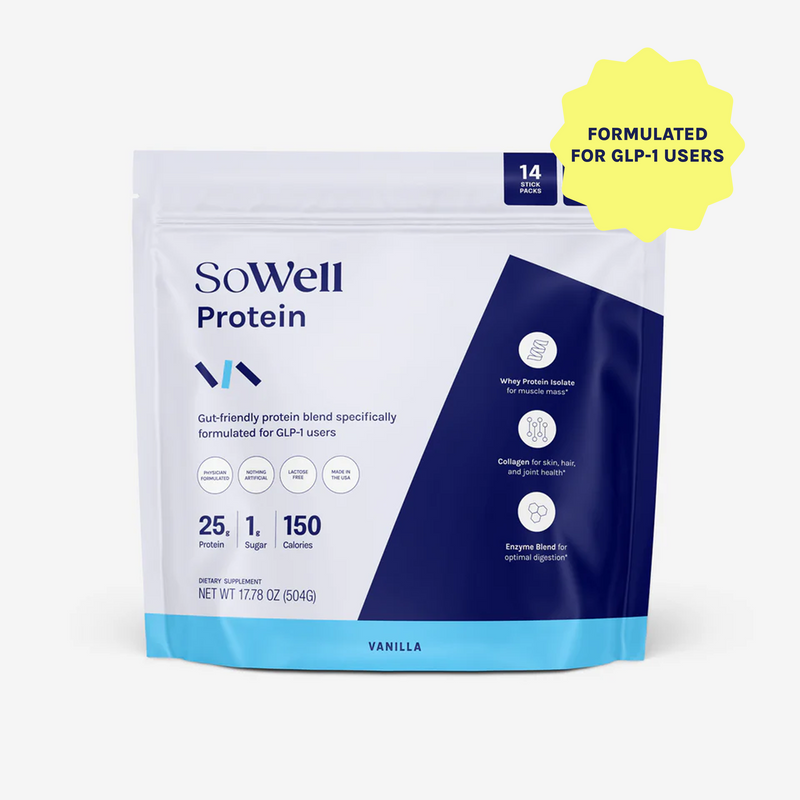
What to look for: 20–30g of complete protein per serving, low in lactose (which worsens GLP-1 nausea for many users), minimal added sugar, and fast-absorbing forms (whey isolate or plant-based blends with leucine). The SoWell protein stick packs are designed for portability and reduced-stomach tolerance — no heavy shakes, no bloat-inducing fillers.
What to avoid: protein bars high in sugar alcohols (they wreck digestion on a slowed GI system), and low-quality blends that list "protein blend" without specifying sources or amino acid profiles.
3. Fiber — The Constipation Solution Nobody Wants to Talk About
Slowed gastric emptying is a primary mechanism of GLP-1 medications. It's why you feel full longer. It's also why constipation affects a significant portion of users, particularly during dose escalation.
Dietary fiber intake drops dramatically when total food volume drops. Supplemental fiber — specifically soluble fiber like psyllium husk or partially hydrolyzed guar gum — helps maintain regularity without stimulating the gut in ways that worsen nausea. It also supports the gut microbiome and helps stabilize post-meal glucose curves, which complements what your GLP-1 medication is already doing.
What to look for: 5–10g of soluble fiber per serving, unflavored or mildly flavored, mixable without becoming thick and unpleasant. Take it with adequate water — critical for GLP-1 users who are already underhydrating. The GLP-1 Support System bundle pairs fiber with electrolytes precisely because hydration and fiber function together, not independently.
What to avoid: fiber supplements that are primarily insoluble (like wheat bran) — they can worsen bloating on a slowed GI system. Avoid anything with added sugar alcohols.
4. B-Complex — Sustained Energy Without the Stimulants
B vitamins — B1, B2, B6, B12, folate, niacin, pantothenic acid — are water-soluble, which means your body doesn't store them. You get them through food, consistently, or you go without. On a significantly reduced-calorie diet, B vitamin intake reliably drops. The result: fatigue, brain fog, and low mood that have nothing to do with your medication and everything to do with cellular energy production running on empty.
B12 deserves special attention. It's primarily found in animal products, its absorption requires intrinsic factor in the stomach, and absorption efficiency can be affected by slower gastric motility. Sublingual B12 bypasses this problem entirely.
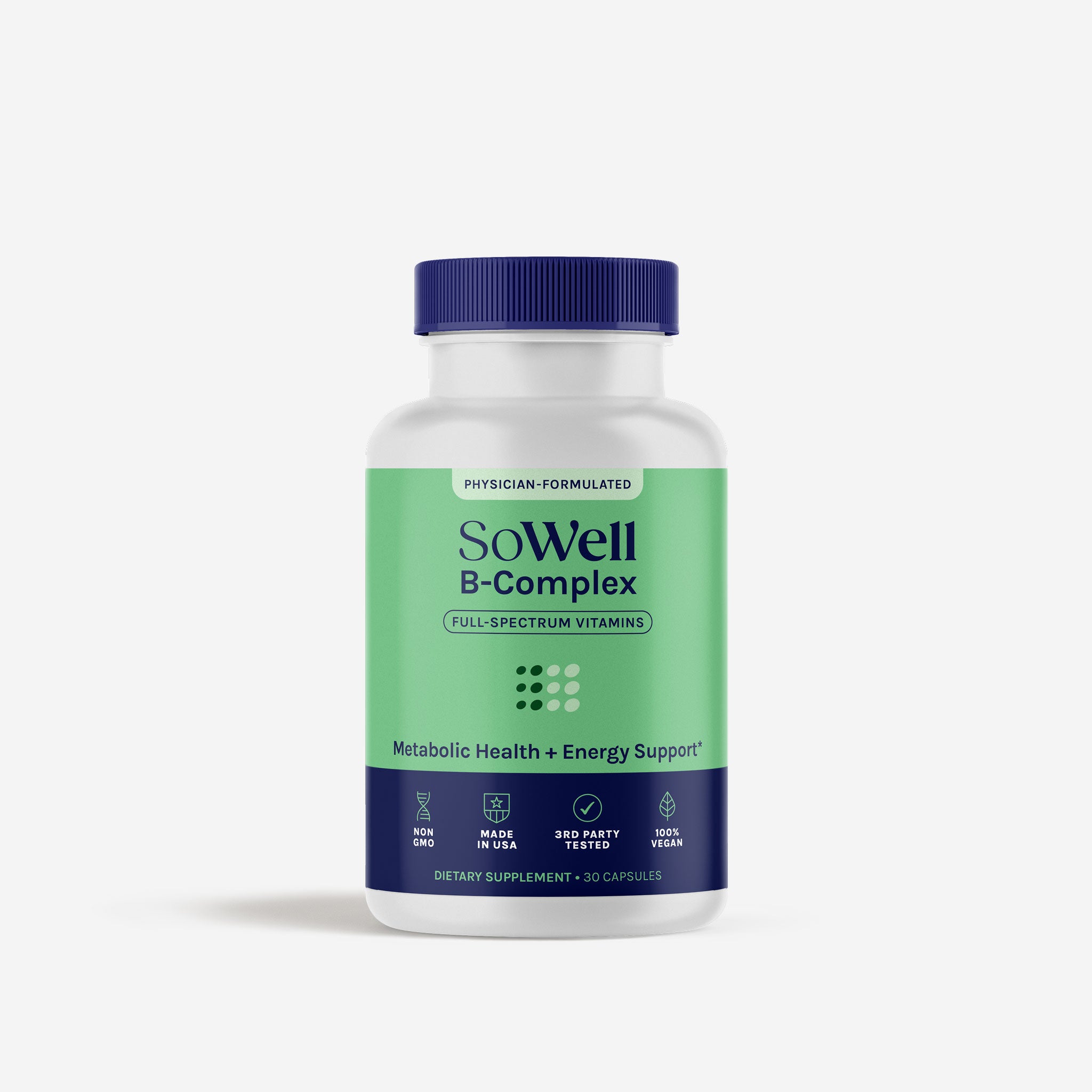
What to look for: methylated forms (methylcobalamin for B12, methylfolate for folate) — these are bioavailable without conversion steps. Avoid formulas with massive megadoses that create "flush" nausea. SoWell's B-Complex uses methylated forms at clinical doses, not the 10,000% RDA showmanship common in lower-quality products.
What to avoid: gummy formats with high sugar content, and non-methylated B12 (cyanocobalamin) in people with MTHFR variants or absorption issues.
5. Magnesium — Sleep, Cramps, and the Recovery Loop
Magnesium is involved in over 300 enzymatic processes — including muscle function, sleep regulation, nerve transmission, and blood sugar control. It's also one of the first minerals depleted when dietary intake drops and diuresis increases. GLP-1 users commonly report muscle cramps, disrupted sleep, and increased anxiety. All three are classic low-magnesium symptoms.
What to avoid: magnesium oxide — it's cheap, poorly absorbed, and causes diarrhea. Also avoid stacking multiple products that all contain magnesium without checking your total dose (upper tolerable limit is 350mg supplemental per day for adults).
6. Berberine — Blood Sugar Synergy
Berberine is the most evidence-backed non-prescription option for blood sugar support. It activates AMPK (the same cellular energy sensor activated by metformin) and has shown clinically meaningful effects on fasting glucose, HbA1c, and insulin sensitivity in multiple trials. For GLP-1 users who are specifically targeting metabolic health — not just weight loss — berberine works synergistically rather than redundantly.
The caveat: berberine can interact with medications, including diabetes medications and blood thinners. This is a category where a conversation with your prescriber matters before you add it.
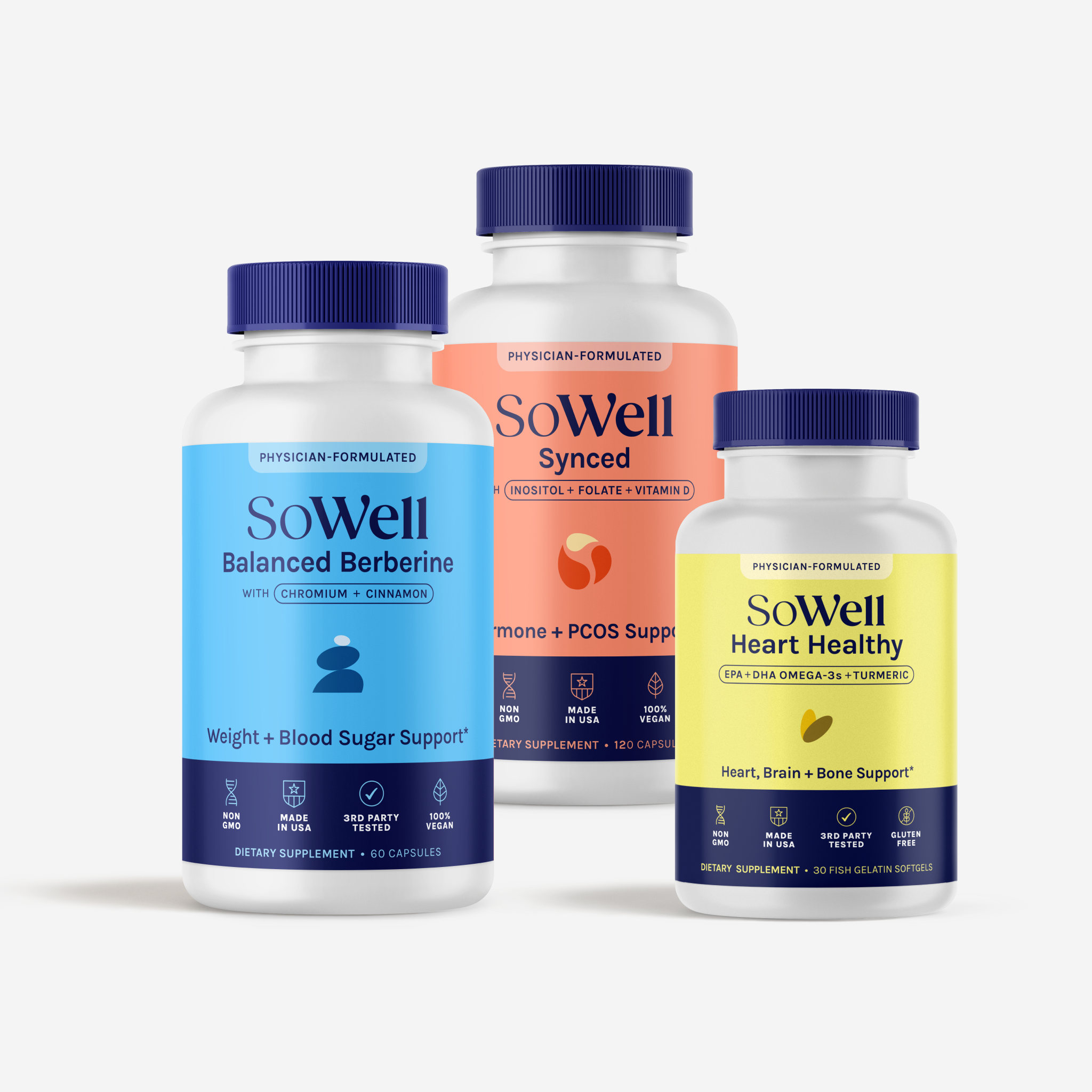
What to look for: 500mg berberine HCl, taken with meals, 2–3 times daily. Look for standardized extract with verified berberine content. SoWell Balanced Berberine uses a formulation designed to reduce the GI side effects that make standard berberine difficult to tolerate — important when GI sensitivity is already elevated on a GLP-1.
What to avoid: "berberine complex" products that dilute the active compound with fillers to hit a price point. Check the actual mg of berberine HCl, not the total capsule weight.
7. Collagen — The Long Game for Skin and Joints
"Ozempic face" — the skin laxity and facial volume loss that some users experience with rapid weight loss — is real. It's also not exclusively a GLP-1 problem. Rapid weight loss by any means depletes the collagen scaffold in skin and connective tissue. The difference is that GLP-1 medications can produce weight loss fast enough that the skin doesn't adapt gradually.
Collagen peptides (specifically types I and III) support skin elasticity, joint integrity, and connective tissue recovery. The evidence for skin outcomes is moderate but consistent; the evidence for joint support is stronger. Start early — collagen synthesis is a slow process and preventive use outperforms reactive use.
What to look for: hydrolyzed collagen peptides, 10–15g per serving, with vitamin C (which is required for collagen synthesis). Bovine or marine sources are both well-studied. Unflavored versions mix cleanly into protein shakes or coffee.
What to avoid: collagen products without a vitamin C co-factor, and "collagen boosters" that contain collagen precursors but no actual collagen peptides.