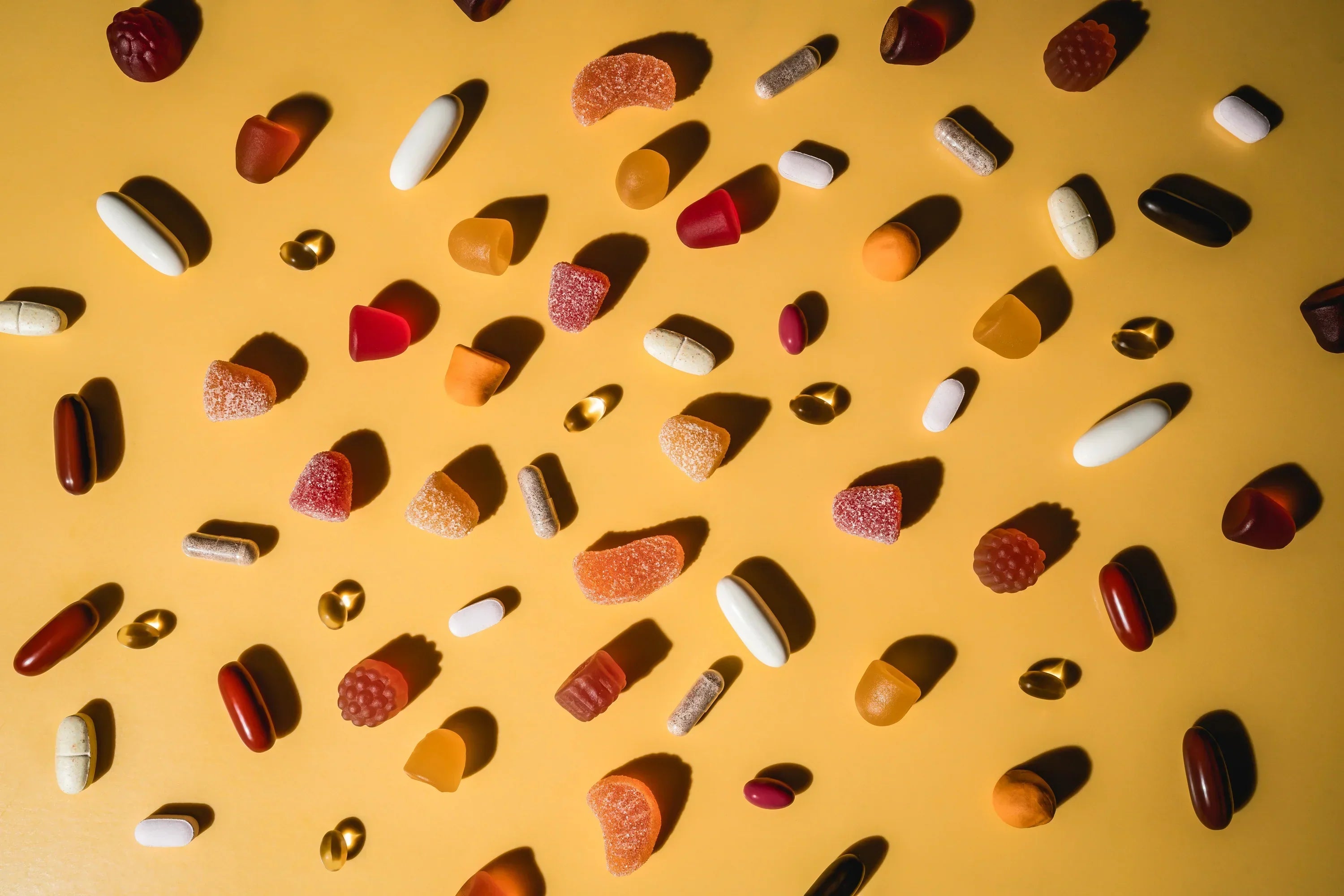
Someone on TikTok is selling you a GLP-1 gummy. It has a pastel label and a celebrity co-sign and a name like "Daily Glow" or "Crave Less." It also has 5 grams of sugar per serving and approximately one-tenth of the active dose you actually need. You've already seen it three times this week.
The supplement industry figured out that GLP-1 is a search term people trust right now, and it did what it always does: it attached that term to whatever format was cheapest to manufacture and easiest to market. The result is a gummy-shaped sugar delivery vehicle sold to people whose medication is actively working to regulate blood sugar.
The format is the product. And most GLP-1 supplement formats are wrong for GLP-1 users by design.
Why Format Is the First Decision — Not the Last
Most supplement buying goes like this: find something with good ingredients, pick the format that's convenient, buy it. Format is an afterthought — a preference, like tablet vs. capsule. For the average person, that logic is mostly fine.
GLP-1 medications change the equation at the physiological level. Three things happen to your body on a GLP-1 that matter enormously for how you absorb supplements:
What GLP-1 medications actually change
-
Gastric emptying slows significantly. Food — and anything you swallow with it — moves through your stomach at a fraction of its normal speed. A large pill or capsule sits longer, absorbs slower, and can feel genuinely uncomfortable when your stomach is already suppressed.
-
Appetite drops, often dramatically. You're eating less. That means fewer opportunities to take supplements with food, smaller windows for absorption, and less tolerance for anything that adds nausea or a sense of fullness.
-
Taste perception shifts. Clinicians and patients consistently report that flavors that seemed normal before GLP-1 now register as cloying, artificial, or just wrong. The hyper-sweet flavor profile of most gummies lands differently when your palate has recalibrated.
“
"Most GLP-1 supplements weren't designed for GLP-1 users. They were designed for general wellness shoppers and rebranded when semaglutide went mainstream."
ASDr. Alexandra Sowa, MDInternal Medicine & Obesity Medicine Specialist
The Format Criteria Framework for GLP-1 Users
Here's the honest version of what each format can and cannot do for someone on a GLP-1 medication. Not the version that sells product — the version based on what the formats actually are.
Format doesn't matter, just take something. Format determines whether what you're taking can actually work.
On a GLP-1, dose density is the constraint that exposes everything. A single stick pack can carry 25 grams of protein or 5 grams of functional fiber. A gummy can carry roughly 2–3 grams of anything before it becomes structurally unsound. A capsule tops out around 800–1,000 mg, which means any nutrient requiring multi-gram doses needs you to swallow a handful of them — with a stomach that's already slowed and suppressed. Format isn't a preference. It's a ceiling.
The six criteria that actually matter
-
Dose density: Can it carry a therapeutically meaningful amount?
-
Absorption on slowed digestion: Does it dissolve and absorb without sitting in a suppressed stomach?
-
Sugar content: Does it spike the blood sugar the medication is working to regulate?
-
Taste profile: Does it work for a palate that's rejecting artificial sweetness?
-
Ingredient flexibility: Can it combine protein, electrolytes, or fiber in one dose?
-
Practical ease: Can it be taken at low energy, with minimal food, on the go?
| What GLP-1 users need |
SoWell Stick Packs |
Lemme GLP-1 Daily (Gummy) |
Hum Counter Cravings (Capsule) |
Generic GLP-1 Capsule Supplements |
| High dose density (protein, fiber, electrolytes) |
✓ 20–25g protein per pack; multi-gram electrolyte doses |
✗ <500mg active per serving; structural limits |
✗ ~800mg per capsule; requires multiple caps for any meaningful dose |
✗ Variable; rarely exceeds 1g of any single ingredient |
| Zero or minimal sugar |
✓ No added sugar |
✗ 5g sugar per serving — from glucose syrup |
✓ Capsule format; no sugar |
✓ Typically no sugar |
| Formulated for GLP-1 taste shifts (not hyper-sweet) |
✓ Mild flavor profiles designed for changed palates |
✗ High-sweetness gummy format; palate rejection common |
✓ Unflavored capsule; no taste issue |
✓ Unflavored; no taste issue |
| Designed specifically for GLP-1 users |
✓ Formulated around GLP-1 nutritional gaps |
Partial — branded for GLP-1 but not formulated for nutritional gaps |
Partial — appetite/craving focus only; not a full-gap solution |
✗ Generic; not GLP-1 specific |
| Multiple nutrients per dose (protein + electrolytes + fiber) |
✓ Full ecosystem; each pack targets a specific gap |
✗ Single-ingredient focus (Supresa/white kidney bean extract) |
✗ Single-category focus |
✗ Single-category; no ecosystem |
| Ease of use at low energy and low appetite |
✓ Dissolves in water; no swallowing large pills |
✓ Gummy is easy to consume — best-in-class here |
Partial — small capsule but still requires swallowing |
✗ Often multiple large capsules per serving |
Free ResourceGet Dr. Sowa's GLP-1 Starter Guide
Weekly protocols, nutrition tips, and evidence-based guidance for your GLP-1 journey. Join 50,000+ readers.
★ Trusted by 50,000+ GLP-1 users · No spam, ever
What Each Format Actually Delivers (and Costs You)
Gummies: the format built for marketing, not for you
Gummies are structurally limited by what keeps them in gummy form: sugar, gelatin or pectin, and flavoring. Remove too much sugar and you lose the texture. Add more than a gram or two of active ingredient and the whole thing falls apart — literally. The therapeutic ceiling is built into the candy matrix.
Brands like Lemme and Hum have recognized that "GLP-1" is a category search term and have launched gummies that carry the language without carrying the dose. Lemme GLP-1 Daily leads with Supresa (white kidney bean extract) at a dose that research suggests requires 500–1,500mg to have meaningful carb-blocking effect — then delivers it alongside 5 grams of glucose syrup. You're partially countering the carbs you just consumed to swallow the thing. The irony would be funny if people weren't spending $30 a bottle on it.
There's one honest thing to say about gummies: they're the easiest format to physically take. If swallowing anything is a challenge — which it genuinely is for some people on GLP-1s — a gummy requires no water and no effort. That's real. It just doesn't make the formula any better.
Pills and capsules: the multi-cap problem
Capsules are legitimate pharmaceutical delivery vehicles. They're precise, they don't require sugar, and for single-ingredient supplements at low doses — vitamin D, magnesium glycinate, berberine — they work fine. The problem for GLP-1 users is that almost nothing you actually need comes at low doses.
Protein? You need 20–30 grams, minimum, to move the muscle-preservation needle. You'd need to swallow somewhere between 20 and 40 capsules to approach that. Electrolytes? Sodium, potassium, and magnesium in therapeutic amounts across three nutrients means a handful of pills. On a day when your appetite is suppressed, your stomach is slowed, and you have low energy — because that's what dose escalation weeks feel like — you're not taking a handful of anything.
Slowed gastric emptying also means capsules sit in the stomach longer. For most nutrients that's not a disaster, but it does mean the absorption timeline stretches. If you're already eating less and timing supplements around small meals, a slow-release capsule is adding lag you don't need.
Powder in a stick pack: the format that matches the constraint
A single stick pack is roughly 10–15 grams of powder. In that volume, you can dissolve 25 grams of protein, 5 grams of functional fiber, or a full-spectrum electrolyte panel — because powder lets you pack nutrient density that no other format can match. It mixes into water, not food, so it works even on low-appetite days. It dissolves and absorbs without the mechanical burden of a large pill in a slowed stomach. And the flavoring can be dialed to mild — not zero, not candy — which is where GLP-1-shifted palates actually land.
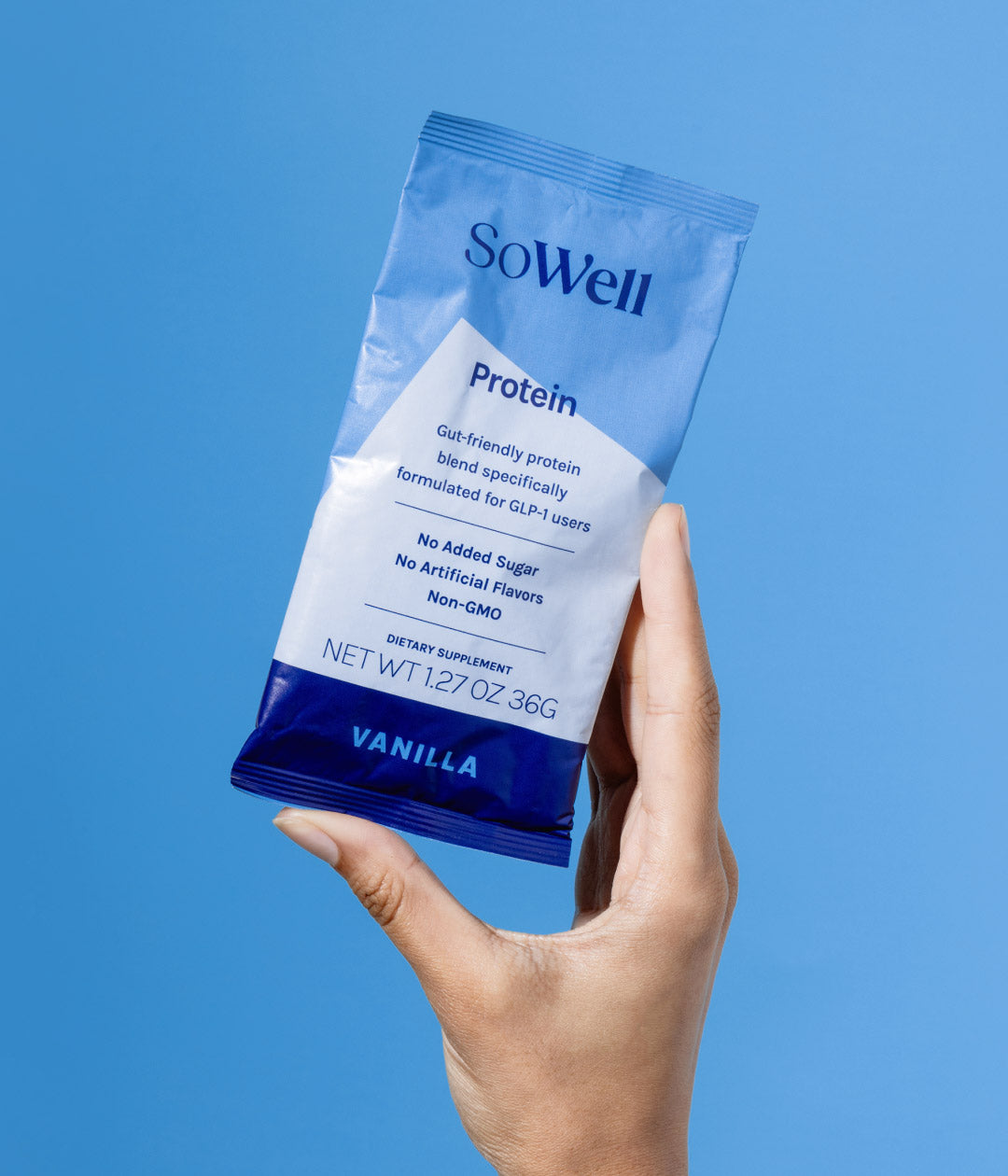
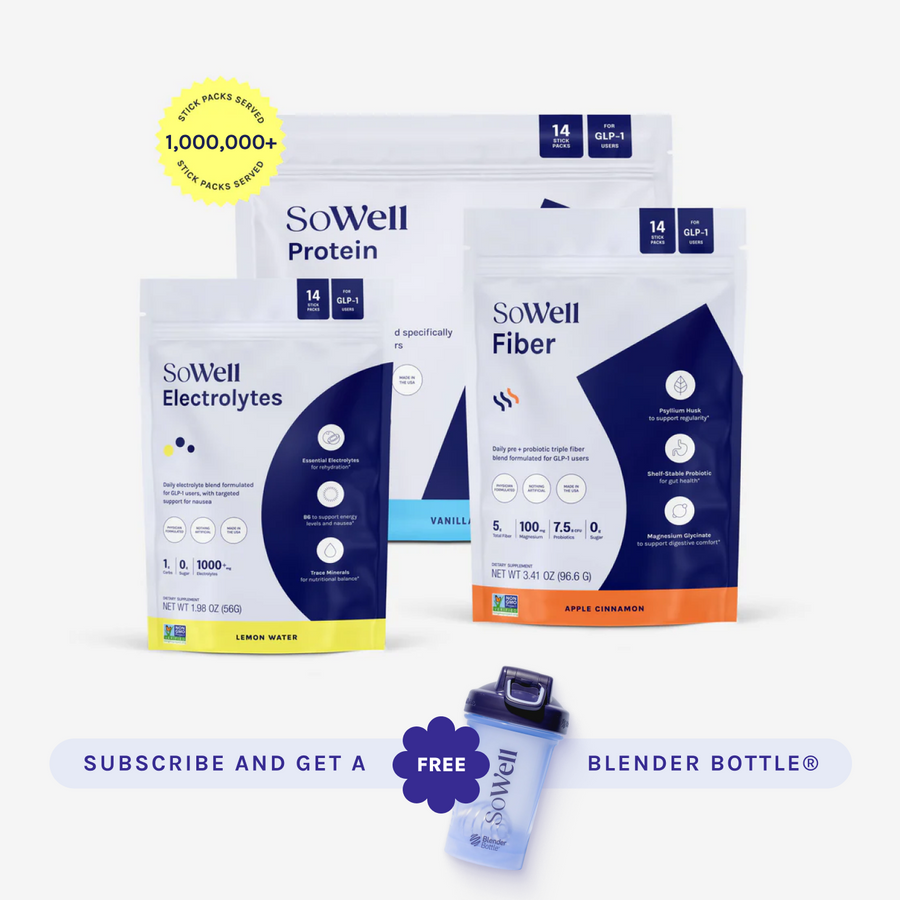
The SoWell GLP-1 Support System is built on this logic. Each pack targets a specific nutritional gap that opens up on GLP-1 therapy: the protein gap (muscle preservation when calories drop), the electrolyte gap (fluid and mineral loss during early rapid weight loss), the satiety gap. The format isn't incidental. It's what makes any of this possible at a dose that can actually do something.
How to evaluate any GLP-1 supplement before you buy
Check the active dose, not just the ingredient list. A supplement that mentions protein, electrolytes, or fiber is meaningless without the serving size. If you can't find the gram amount on the label, that's the answer.
Count the sugar. Any GLP-1 supplement with more than 1–2g of added sugar per serving is working against your medication. Check the nutrition facts panel, not just the marketing copy.
Taste-test before committing to a subscription. GLP-1 palate shifts are real and unpredictable. A flavor that worked before your medication may not work now. Try a single serving before buying a month's supply of anything.
Ask: does the format match the dose I actually need? If the supplement targets protein or electrolytes or fiber — nutrients that require multi-gram doses — and it's in a gummy or a single capsule, the math doesn't work. Don't rationalize it.
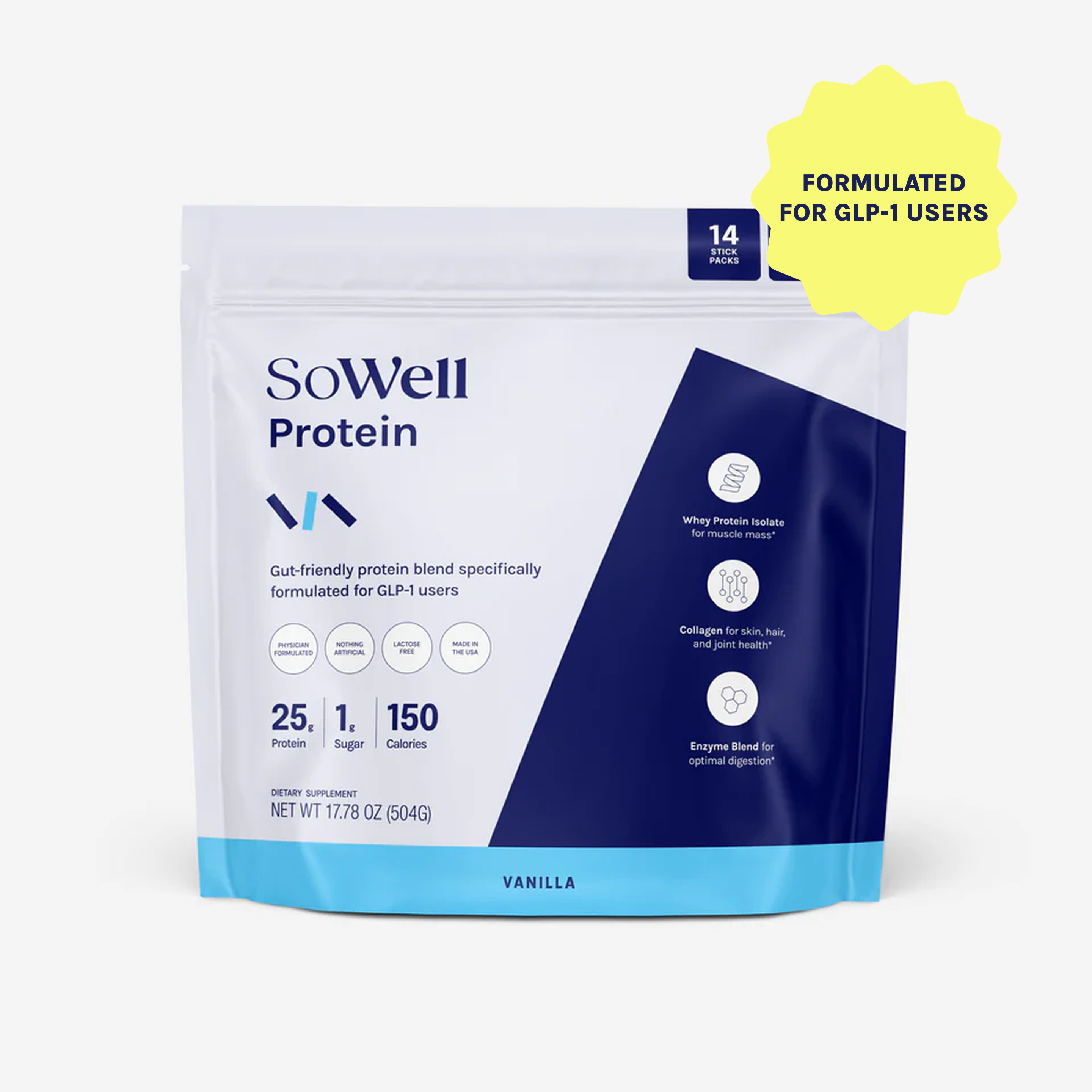
The protein question is worth stopping on. If you're losing weight on a GLP-1 and not actively protecting muscle mass, a meaningful portion of what you lose isn't fat — it's lean tissue. Research suggests GLP-1 users may lose 25–40% of their total weight loss as lean mass without adequate protein intake. Hitting 25 grams of protein in a single SoWell Protein stick pack, mixed into water, on a day when eating feels impossible — that's not a supplement choice. That's a muscle-preservation strategy.
The Bottom Line
The GLP-1 gummy wave is a marketing phenomenon, not a formulation innovation. If a supplement can't carry a therapeutic dose of the thing it's supposed to deliver — because the format physically won't allow it — then the ingredient list is theater. Your medication is doing real, specific, measurable things to your physiology. The supplements you take with it should be able to pass the same test: real dose, real format, real gap it's designed to close. Start with the SoWell GLP-1 Support System — it's built around the three gaps that matter most, in the only format that can actually deliver them.
The format is the product. Choose accordingly.