You're already paying for the medication. Maybe a membership, maybe labs, maybe a coach. And now there's a supplement system on top of it.
The honest question deserves an honest answer: is a GLP-1 support system actually worth the money, or is it just more stuff to buy?
Let's break down the value without the sales gloss.
The Myth: "If the Medication Works, I Don't Need Anything Else"
It's tempting to think the prescription does all the work, so everything else is optional fluff. The medication is powerful, but it creates specific, predictable gaps it doesn't fill. Appetite suppression means you eat less, which puts protein and nutrients at risk. Slowed digestion drives constipation or diarrhea. Suppressed thirst leads to dehydration and nausea. The drug causes these; it doesn't solve them.
So the real question isn't "medication vs. supplements." It's whether addressing those gaps is worth it: in comfort, in results, and in protecting what you're working for.
The gaps a GLP-1 leaves behind:
Protein shortfall, risking muscle loss.
Constipation or diarrhea from slowed digestion.
Dehydration and nausea from suppressed thirst.
Nutrient gaps from eating less overall.
4.8 Stars (73 Reviews)
Trusted by thousands of GLP-1 users
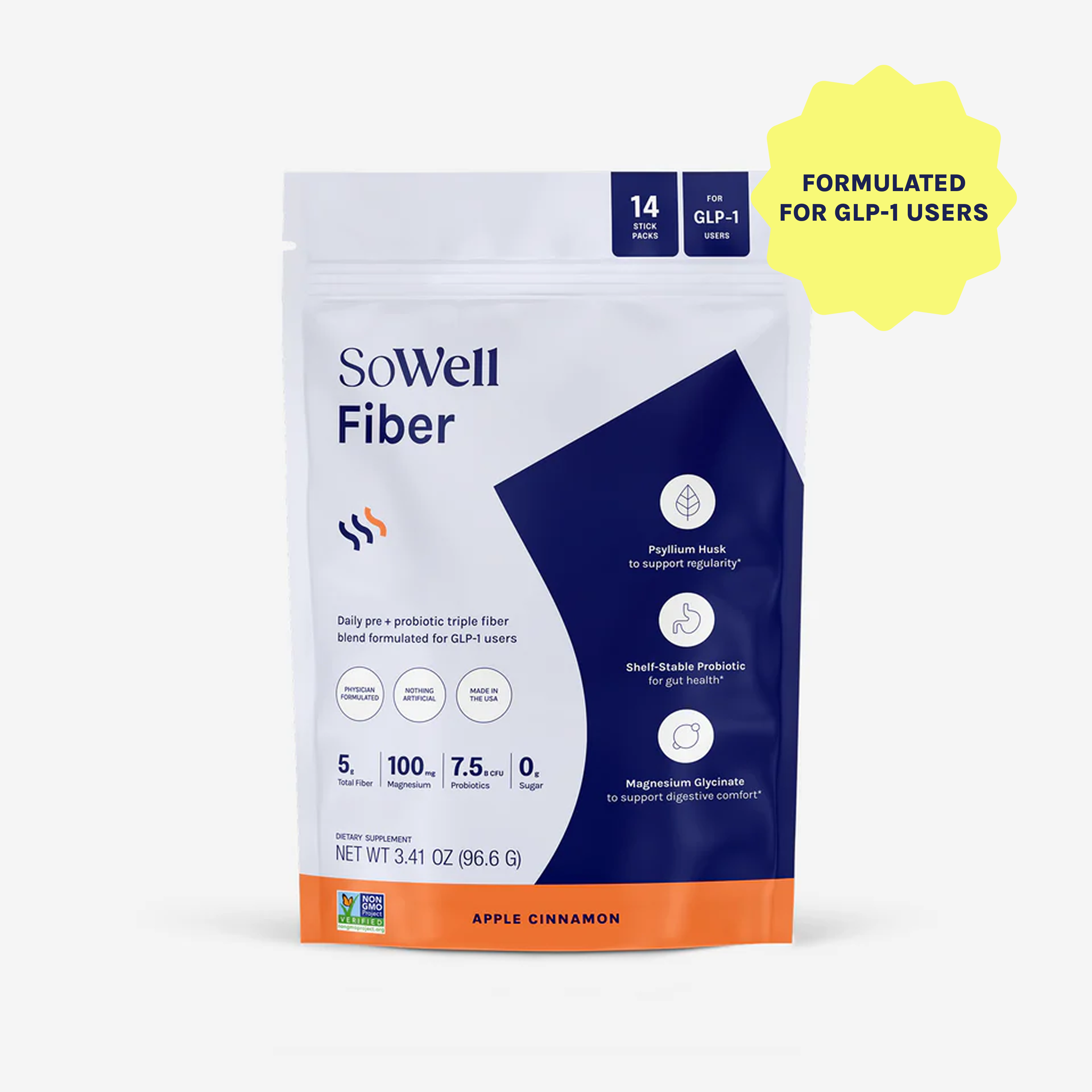
SoWell Fiber
Get 14 grab-and-go stick packs in a resealable, travel-friendly bag Natural, fan-favorite Apple Cinnamon flavor Dissolvable powder leaves no clumps or grit when mixed...
$69.98$34.99
Quantity:
The Value Breakdown: What You're Actually Buying
A GLP-1 support system isn't buying more medication effect. It's buying coverage of the side effects and gaps that otherwise undercut your experience. Frame it as cost versus consequence. The cost is the price of the system. The consequence of skipping it can be worse nausea, ongoing constipation or diarrhea, muscle loss that affects your metabolism, and fatigue from nutrient gaps. For a lot of people, the math favors prevention.
There's also a consolidation argument. Buying electrolytes, protein, and fiber separately, each chosen correctly for GLP-1 physiology, adds up in money and effort. A system that bundles the three core supports designed for GLP-1 users can be both more cost-effective and far easier to stay consistent with than assembling it piecemeal. And consistency is where supplements actually pay off; the best formula does nothing sitting unused because the routine was too complicated.
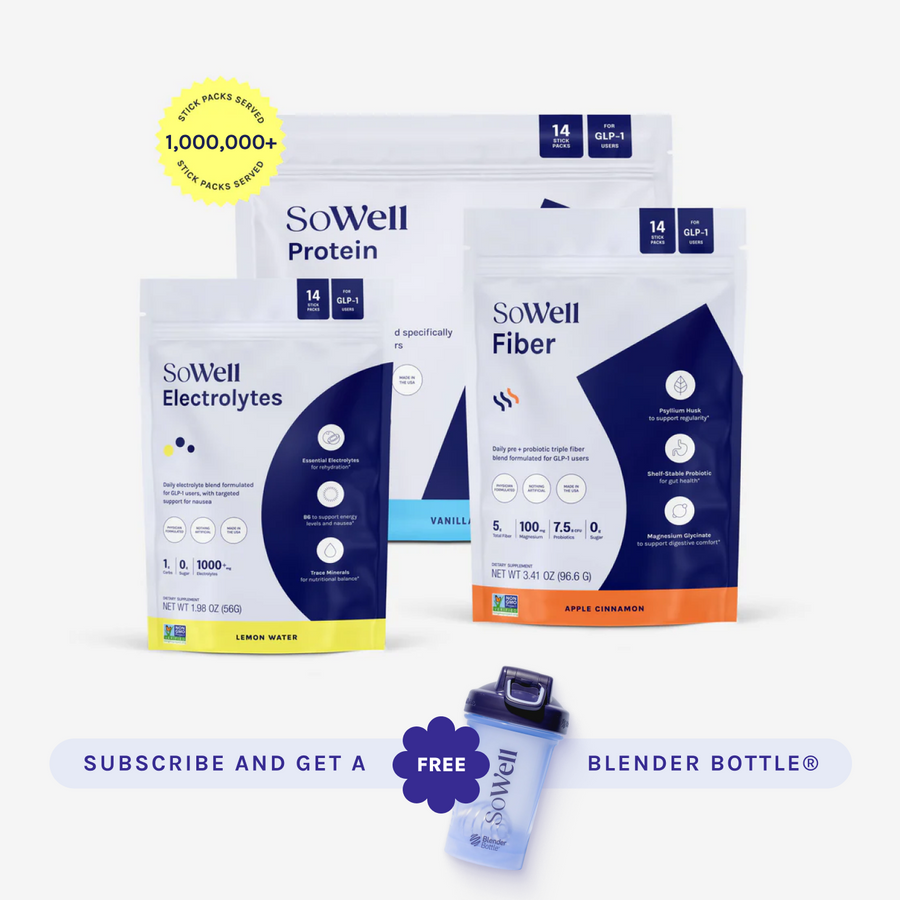
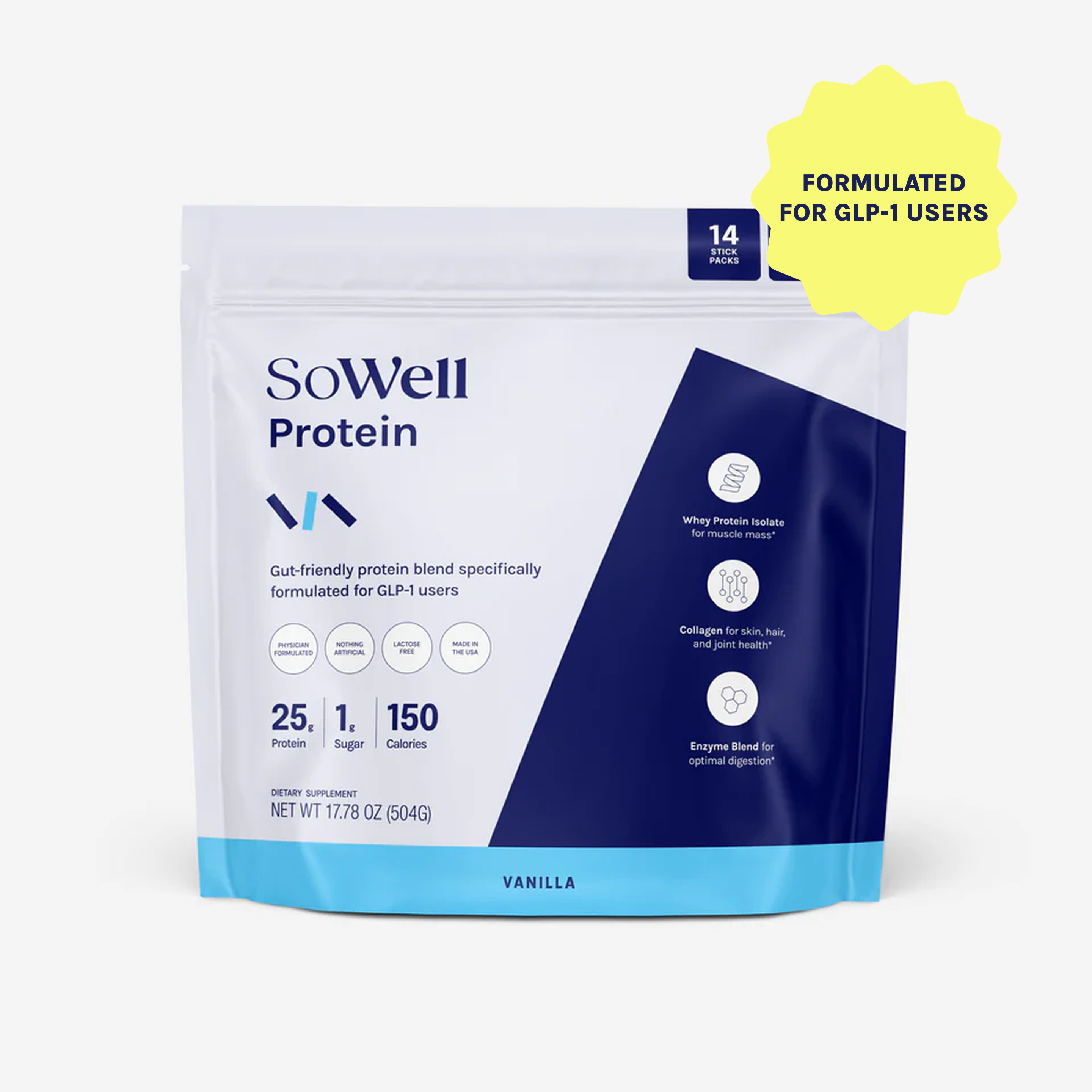
It's also not just three products stacked together. SoWell Electrolytes is built around vitamin B6 and trace minerals for nausea and hydration support. SoWell Protein pairs whey isolate with collagen and a papaya-derived digestive enzyme blend for muscle support and easy digestion. SoWell Fiber adds magnesium glycinate and probiotics on top of its triple-fiber blend to help manage constipation and diarrhea while supporting long-term gut health. Matching that ingredient-for-ingredient by shopping separately means researching and buying several specialty products instead of one.
When the system is worth it vs. when it isn't
Worth it: if you're dealing with the side effects it addresses, if you value preserving muscle and feeling functional, and if consolidating into one routine helps you stay consistent. For most active GLP-1 users managing real symptoms, the value case is strong.
Maybe not: if you've genuinely got your protein, hydration, fiber, and nutrients covered another way you'll actually sustain. No one needs to double up. The system earns its cost by solving problems you actually have.
What a core system covers
Electrolytes: hydration and nausea support, with vitamin B6 and trace minerals
Protein: muscle preservation, satiety, with collagen and digestive enzymes
Fiber: constipation, diarrhea, and gut health, with magnesium glycinate and probiotics
GLP-1-specific formulation throughout
One routine you can actually keep
Free Resource
Get Dr. Sowa's GLP-1 Starter Guide
Weekly protocols, nutrition tips, and evidence-based guidance for your GLP-1 journey. Join 50,000+ readers.
★ Trusted by 50,000+ GLP-1 users · No spam, ever
How to Decide If It's Worth It For You
Run your own cost-versus-consequence math
List your actual gaps. Struggling with nausea, constipation, low protein, or fatigue? Each is a gap a system is built to close. Match cost to your real needs.
Compare to buying piecemeal. Pricing electrolytes, protein, and fiber separately, each chosen for GLP-1 fit, often costs more and is harder to maintain.
Weigh the consequence of skipping. Muscle loss, ongoing side effects, and nutrient gaps have their own costs. Prevention is often the better deal.
Prioritize consistency. The best supplement is the one you actually take. A simple, bundled routine beats a complicated one you abandon.
The Bottom Line
A GLP-1 support system is worth it when it solves problems you actually have: the protein shortfall, constipation or diarrhea, dehydration, and nutrient gaps the medication causes but doesn't fix. The honest frame is cost versus consequence: the price of the system against the cost of muscle loss, lingering side effects, and fatigue. For most people managing real symptoms, consolidating the core supports into one GLP-1-specific routine is both more cost-effective and easier to sustain than piecing it together. Your next step is to run your own math: list your gaps, weigh the consequence of skipping, and decide based on the problems you're actually facing.
It's not about buying more. It's about protecting what the medication started.
Your Questions About GLP-1 Support System Value, Answered
Do I really need supplements if my GLP-1 is working?
The medication is powerful, but it creates specific gaps it doesn't fill: reduced appetite puts protein and nutrients at risk, slowed digestion causes constipation or diarrhea, and suppressed thirst leads to dehydration and nausea. Supplements address those gaps rather than duplicating the medication's effect. Whether you need them depends on whether you're experiencing those issues or have genuinely covered them another way you'll sustain.
Is a GLP-1 support system worth the cost?
The value comes down to cost versus consequence. The cost is the system's price; the consequence of skipping support can be worse nausea, ongoing constipation or diarrhea, muscle loss that affects metabolism, and fatigue from nutrient gaps. For people managing real side effects, addressing those issues is often worth it. It's also frequently more cost-effective and easier to maintain than buying electrolytes, protein, and fiber separately.
Is buying a bundle cheaper than individual products?
Often, yes. Purchasing electrolytes, protein, and fiber separately, each chosen correctly for GLP-1 physiology, tends to add up in both money and effort. A bundled system can be more cost-effective and, importantly, easier to stay consistent with. Since supplements only help when actually taken, a simpler routine that you maintain often delivers more real-world value than a piecemeal approach you abandon.
When is a support system NOT necessary?
If you've genuinely got your protein, hydration, fiber, and key nutrients covered through other means you'll actually sustain, you don't need to double up. The system earns its cost by solving problems you have: managing side effects, preserving muscle, closing nutrient gaps. If those are already handled in a way that works for you, that's a perfectly valid reason to pass.
4.8 Stars (73 Reviews)
Trusted by thousands of GLP-1 users
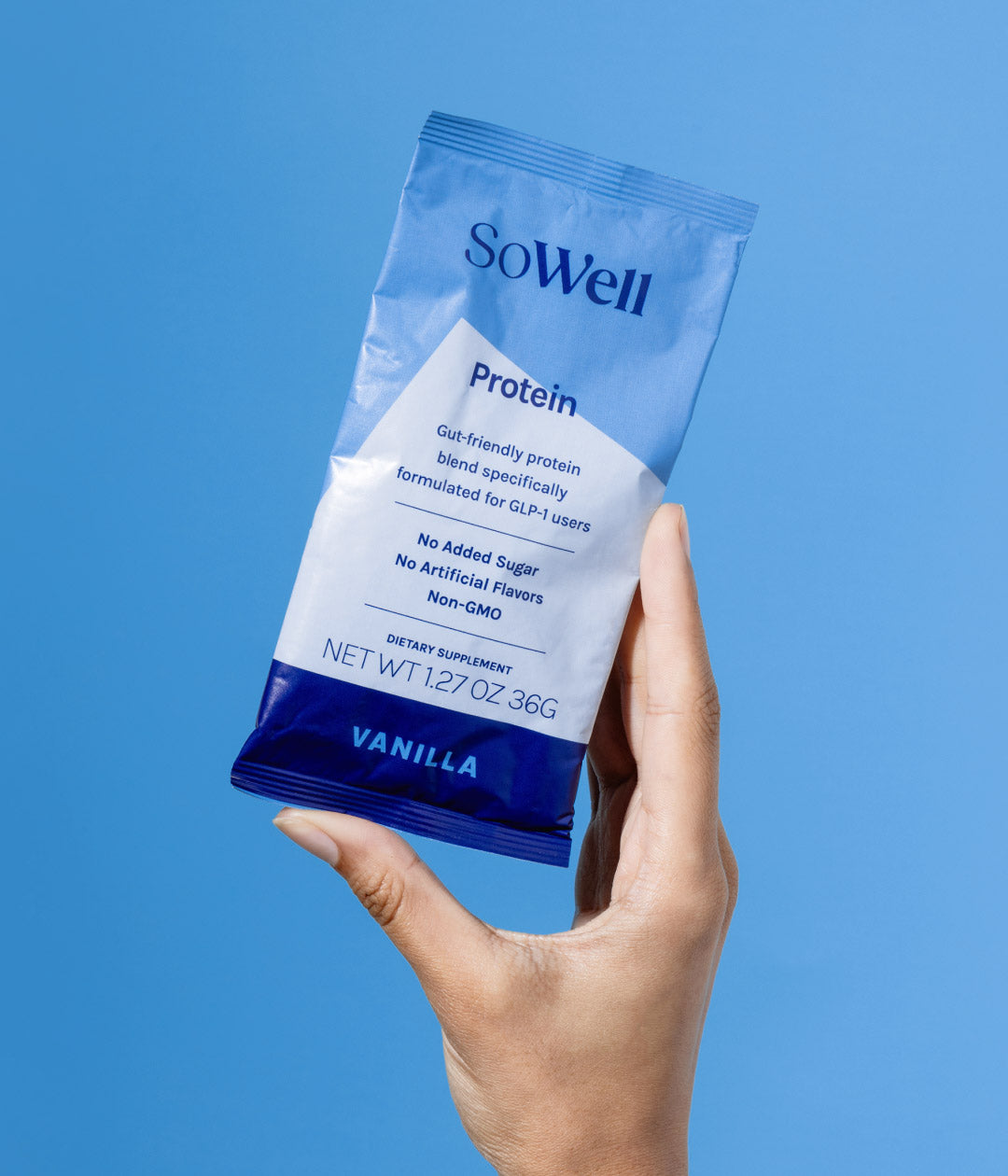
GLP-1 Support System Sample Pack
GLP-1 Support System Sample Pack
$19.99
4.8 Stars (73 Reviews)TRUSTED BY THOUSANDS OF GLP-1 USERS
The GLP-1 Support System
Everything you need for a supported GLP-1 journey — fiber, protein, and essential micronutrients in one physician-formulated bundle. Save 20% vs. buying separately.
$104.97
$114.97
Quantity:
About the Author
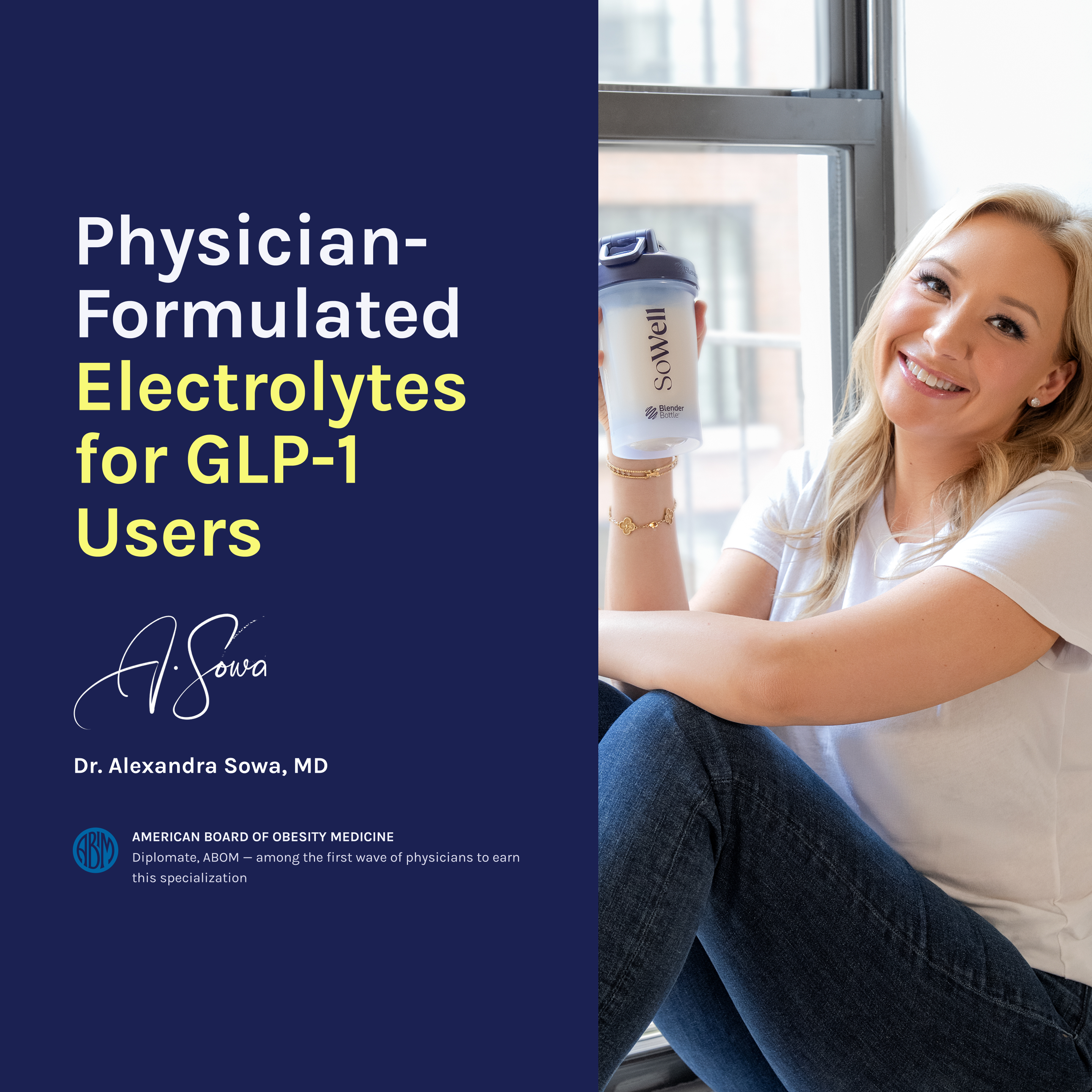
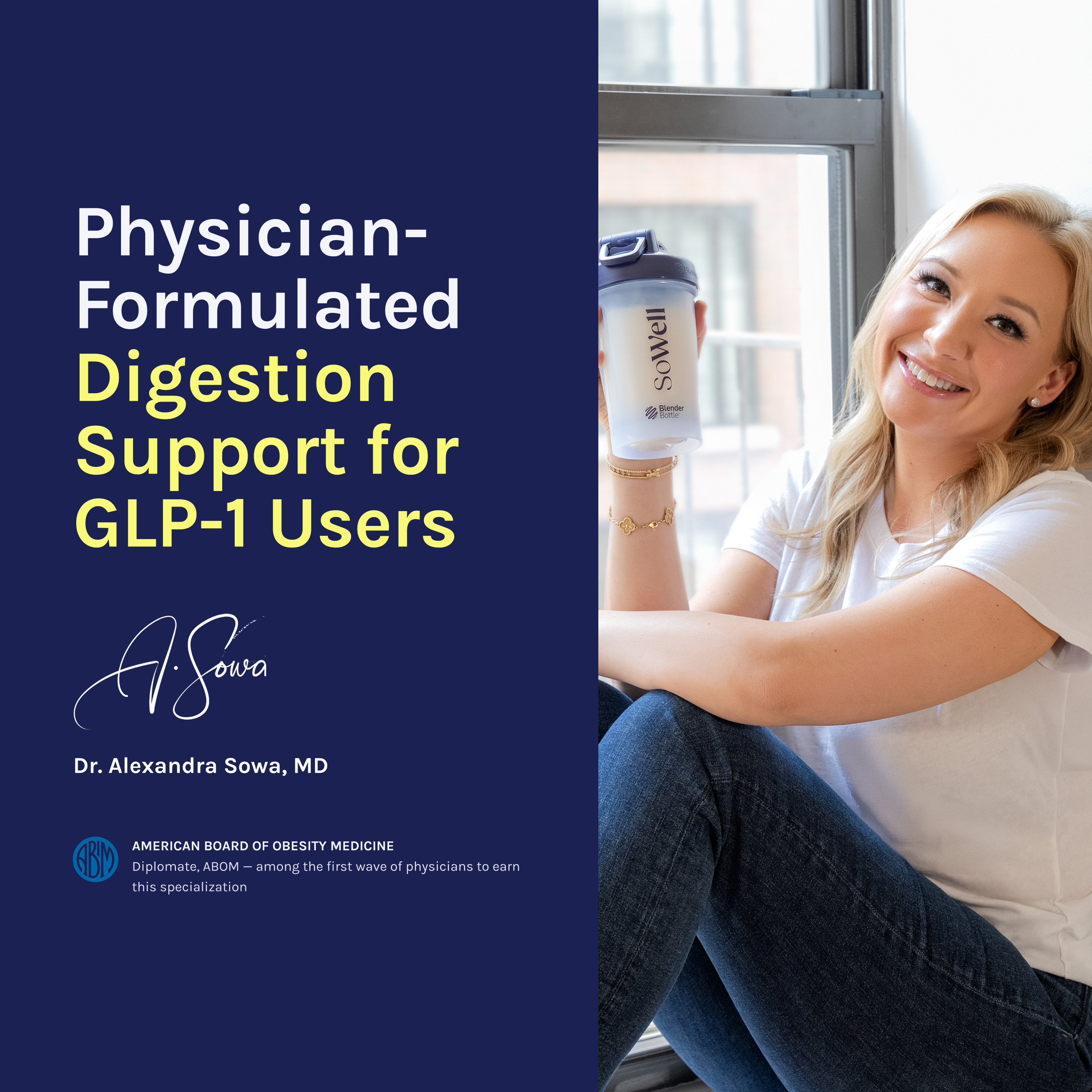
Dr. Alexandra Sowa, M
Internal Medicine & Obesity Medicine Specialist · SoWell Medical Advisor
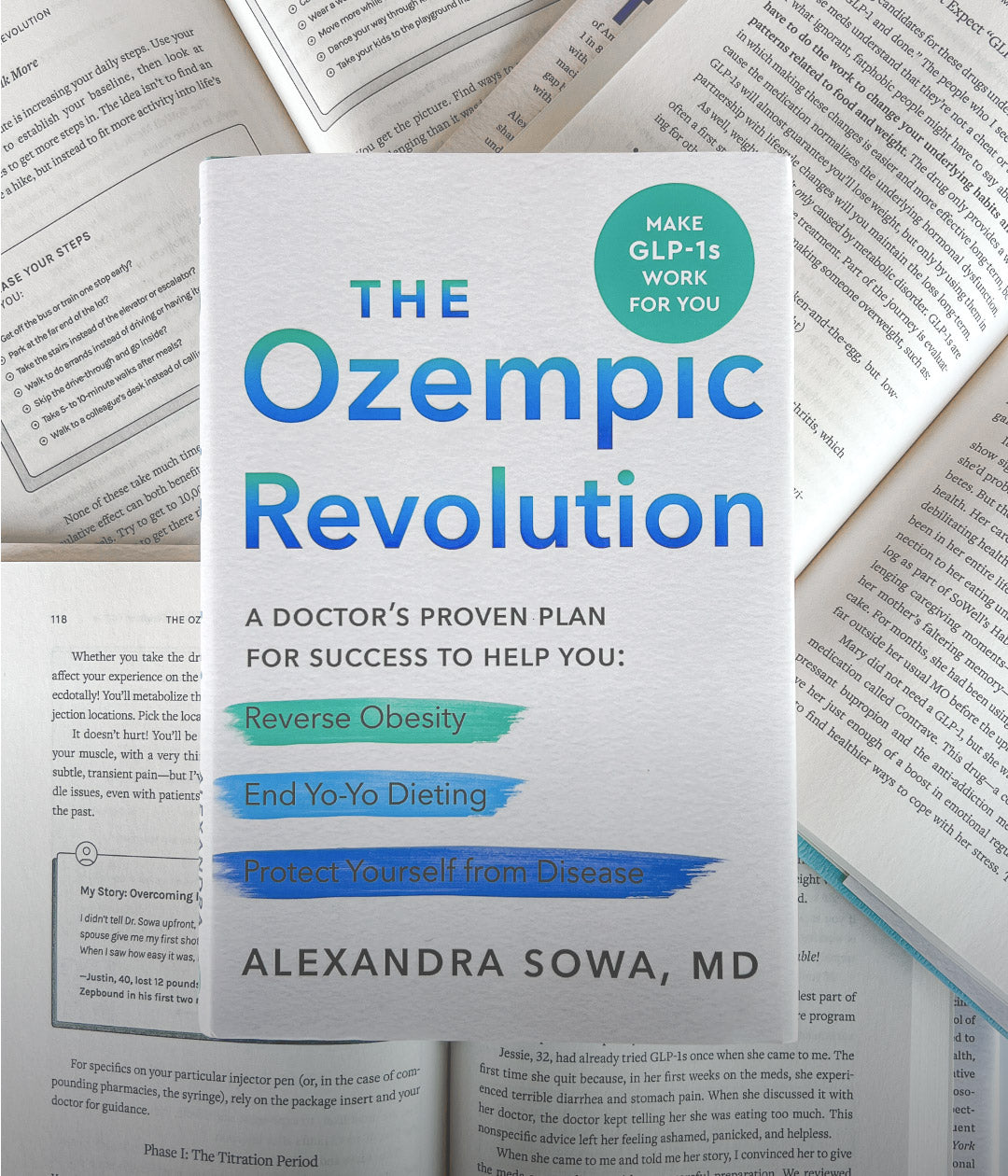
Dr. Sowa is a dual board-certified physician specializing in internal and obesity medicine. She is the founder of SoWell and the author of The Ozempic Revolution. Her practice focuses on evidence-based metabolic health and GLP-1 therapy, and she has been featured in The New York Times, Today Show, and Good Morning America.
*These statements have not been evaluated by the Food and Drug Administration. Products are not intended to diagnose, treat, cure, or prevent any disease.