Nobody tells you this part: you can be fully committed to your GLP-1 journey and still feel like you're failing every single day because you don't know what to take, when to take it, or why any of it matters.
The supplement industry hasn't caught up to you. The shelves are still stocked with products designed for athletes, dieters, and people who eat three full meals a day. You're eating maybe one. Your stomach empties slowly. Your appetite is suppressed by 7 AM. And you're supposed to figure out how to fit protein, fiber, electrolytes, B vitamins, and magnesium into a body that barely wants breakfast.
That confusion costs people real results. Not commitment. Confusion.
This is the stack. Hour by hour, with the timing science behind every piece — built specifically for how GLP-1 medications actually work inside your body.
Why Timing Is the Whole Game on GLP-1s
GLP-1 receptor agonists — semaglutide, tirzepatide, and their relatives — work by slowing gastric emptying, increasing satiety signaling, and blunting appetite. The result is that your body's relationship with food, absorption, and nutrient timing shifts completely. What worked before (eating breakfast, popping a multivitamin with dinner, chugging a protein shake post-workout) may now actively backfire.
Gastric emptying slows by 30–50% on GLP-1 medications, according to research published in journals like Diabetes Care. That matters for supplements because things that hit an already-slow stomach the wrong way — large capsules, fiber taken too close to meals, fat-soluble vitamins without fat to carry them — either cause nausea or simply don't absorb properly.
The enemy here isn't your willpower, your discipline, or your consistency. It's a supplement system that was never designed for your physiology right now.
What changes on GLP-1s that affects supplement absorption
- Gastric emptying is significantly slower — large doses of anything taken at once increases nausea risk
- Appetite suppression peaks in the morning — solid food and large supplement loads are hardest to tolerate before noon
- Reduced food volume means fewer naturally occurring electrolytes, B vitamins, and fiber from diet
- GLP-1-related sleep disruption is clinically documented — recovery nutrition timing matters more than most people realize
- Dose escalation weeks amplify every one of these effects temporarily
“
"Most GLP-1 supplements weren't designed for GLP-1 users. They were designed for general wellness shoppers and rebranded when semaglutide went mainstream."
ASDr. Alexandra Sowa, MDInternal Medicine & Obesity Medicine Specialist
The Doctor-Designed Daily Stack: Hour by Hour
Here's how a clinician-informed GLP-1 supplement routine actually maps to a day. Each timing decision has a reason. None of it is guesswork.
Take everything in the morning and be done with it Distribute your stack across the day, matched to your body's tolerance windows
The instinct to front-load supplements is completely logical — but on GLP-1s, it's the fastest route to nausea, missed doses, and quitting. A suppressed stomach in the morning cannot handle a fistful of capsules and a protein shake. The fix isn't fewer supplements. It's distribution.
Why distribution wins on GLP-1s
-
7 AM — Electrolytes first: Hydration before food sensitivity peaks. Dissolve in 12 oz water before coffee. GLP-1 users lose more electrolytes through reduced food intake and the mild diuretic effect of some formulations — replacing them before appetite-suppressed morning sets the foundation for the whole day.
-
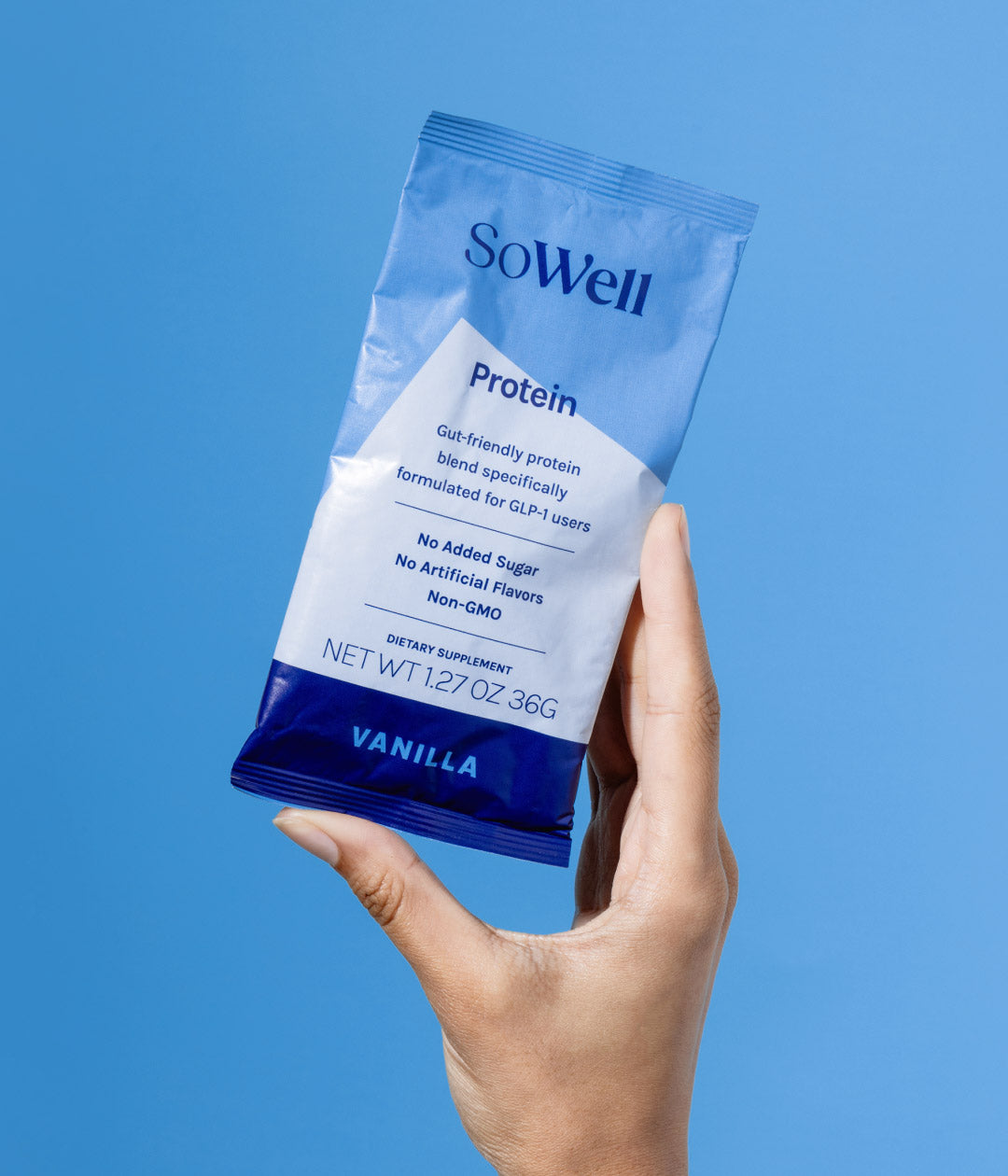
12 PM — Protein in something liquid: Solid food is hardest before noon. Stir into coffee, blend into a smoothie, mix into yogurt. The goal is 20–25g of protein without challenging a slow stomach. SoWell Protein stick packs are designed for exactly this — no heavy texture, no artificial sweetener crash, mixable into almost anything.
-
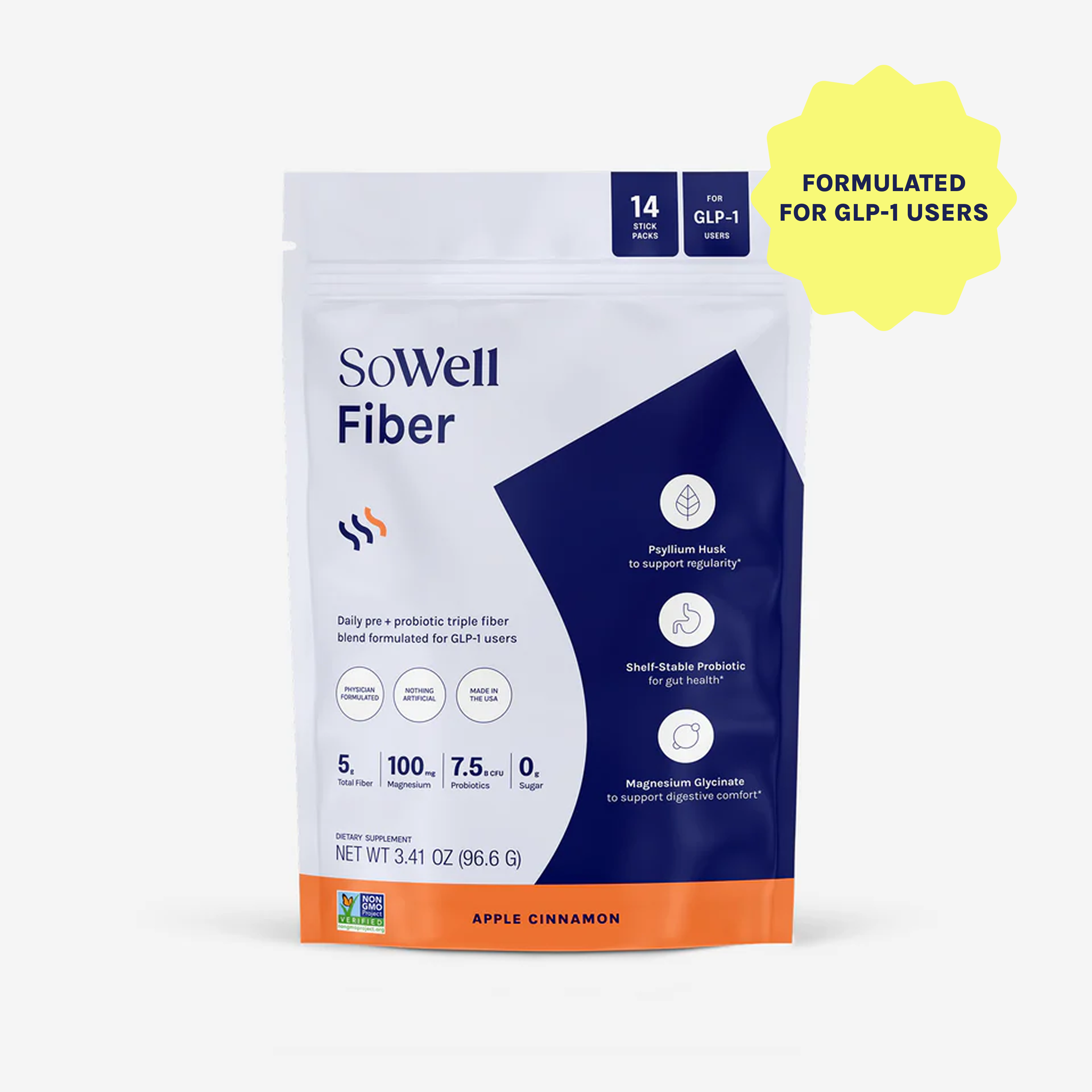
3 PM — Fiber, 30 minutes before lunch: GLP-1-related constipation is one of the most common and least-discussed side effects. Fiber taken 30 minutes before your midday meal gives it time to move through your stomach without competing with food for space — and prevents the bloating that comes from fiber on top of an already-full GLP-1 stomach.
-
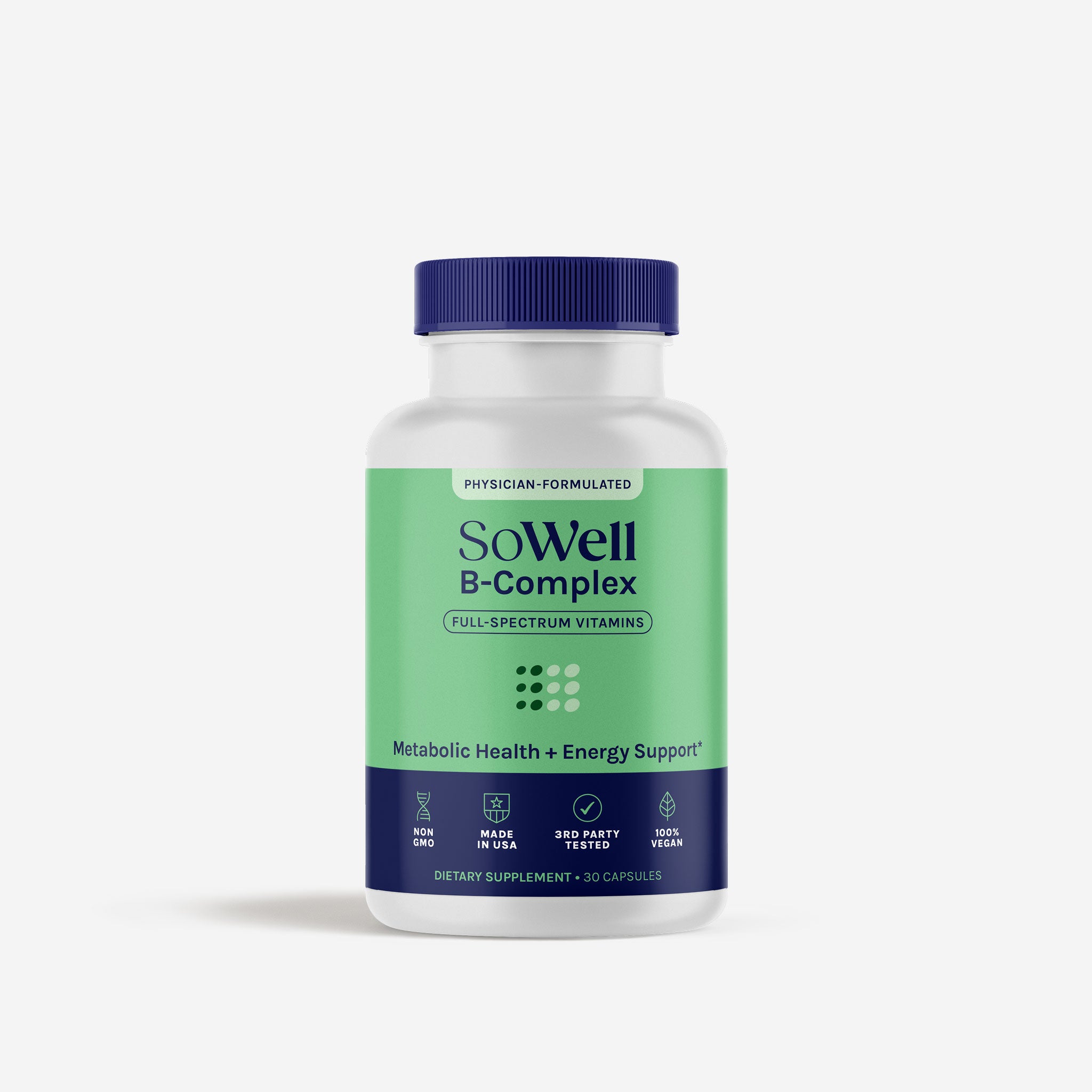
6 PM — B-Complex with dinner: B vitamins are water-soluble and absorb best with food. Evening works because you're more likely to have something in your stomach by dinner than at any other point in the day. SoWell B-Complex covers B12, B6, folate, and the full chain — nutrients that get quietly depleted when food volume drops.
The First 28 Days: One Product Per Week
Here's what derails most people who try to build a supplement stack: they start everything at once, their GI system rebels, and they blame the supplements instead of the sequencing. On GLP-1s, your gut is already adapting to a slower transit time and different food volume. Stacking five new products on Day 1 is a reliable recipe for nausea — which is the last thing anyone on this medication needs more of.
The solution is a staged introduction. One product per week, starting with the one your body needs most urgently.
Week 1 — Electrolytes. Your body is adjusting. Hydration suffers before anything else. Start with morning electrolytes in water and build the habit of drinking something before coffee.
Week 2 — Protein. By week two, your morning routine is set. Add protein into that same window — liquid form, mixed into whatever you're already having. Twenty to twenty-five grams, no effort required.
Week 3 — Fiber. Midday constipation symptoms typically surface in weeks two and three as food volume drops. Add fiber 30 minutes before lunch. This is also the week most people realize how much better they feel with this one piece in place.
Week 4 — Evening stack. Add B-Complex with dinner and Calm at 9 PM. By week four your system has adapted to the morning and afternoon routine, making the evening additions genuinely easy to maintain.
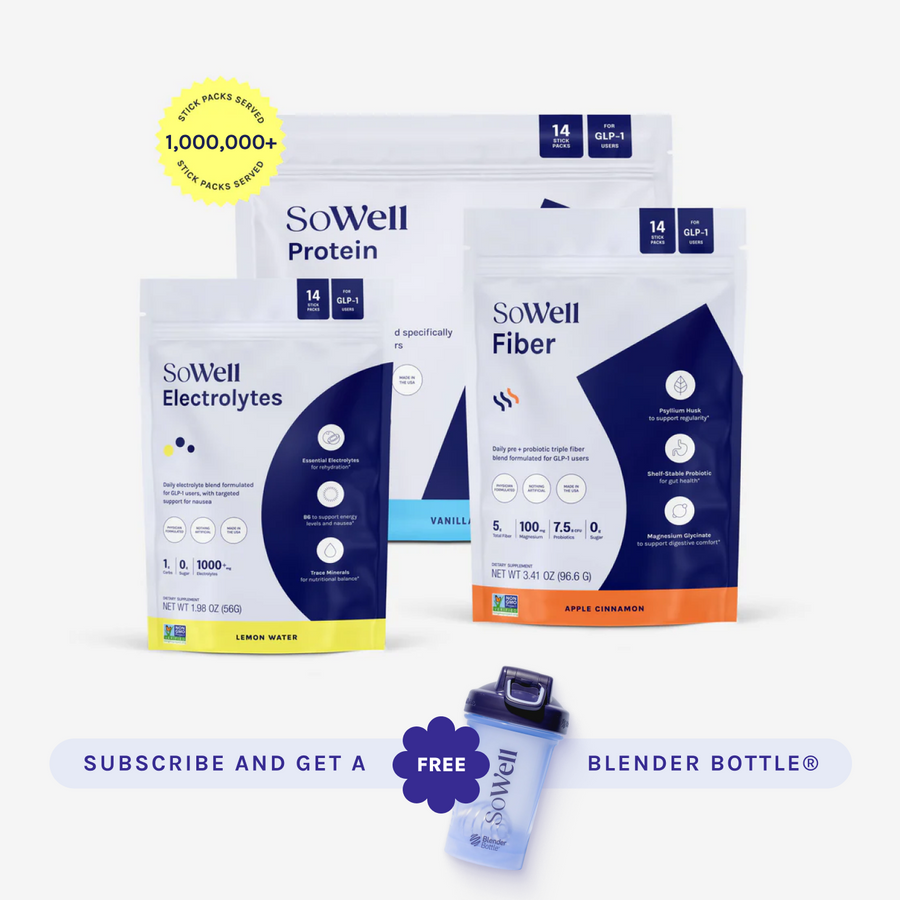
The GLP-1 Goal Getter Challenge Bundle is built around exactly this structure — 28 days of products, a free BlenderBottle for your morning protein mix, and a Go Bag for travel weeks when your routine gets tested. It's the stack, already assembled.
Free ResourceGet Dr. Sowa's GLP-1 Starter Guide
Weekly protocols, nutrition tips, and evidence-based guidance for your GLP-1 journey. Join 50,000+ readers.
★ Trusted by 50,000+ GLP-1 users · No spam, ever
When the Routine Gets Interrupted
Common Stumbling Blocks — and How to Handle Them
Forgetting doses. Pair each supplement with an existing behavior, not a time. Electrolytes go next to the coffee maker. Fiber goes next to your lunch prep area. Calm goes on your nightstand. Environment design beats willpower every time.
Traveling. This is exactly what the Go Bag in the Goal Getter Bundle is for. Stick packs and single-serve formats travel without spills, without TSA drama, and without the protein powder measuring ritual that falls apart in hotels. Your stack should survive a carry-on.
Injection day soreness. On injection days, appetite suppression often intensifies for 24–48 hours. Don't force solid food. Keep electrolytes and liquid protein in place — these are your insurance against the days your stomach wants nothing. Reduce fiber dose on severe nausea days; it adds volume your stomach doesn't want.
Dose escalation weeks. Every escalation week is effectively a reset. Symptoms that faded during your stable dose may return temporarily. Treat escalation weeks like Week 1 of the routine: prioritize hydration, reduce supplement load if needed, and add things back as tolerance returns. Don't grade yourself on these weeks.
The Bottom Line
You're not confused because you're doing this wrong. You're confused because nobody built a supplement system that accounts for how GLP-1 medications actually change your body's day. The timing matters. The sequencing matters. And starting everything at once is the mistake that makes people quit supplements entirely — when what they actually needed was a better starting point.
The GLP-1 Goal Getter Challenge Bundle gives you 28 days of products, a BlenderBottle for your morning protein, a Go Bag for the weeks life doesn't cooperate, and a stack that's already been figured out. Follow the schedule above. One week, one product. That's the whole plan.
The stack works. You just needed someone to hand you the order of operations.