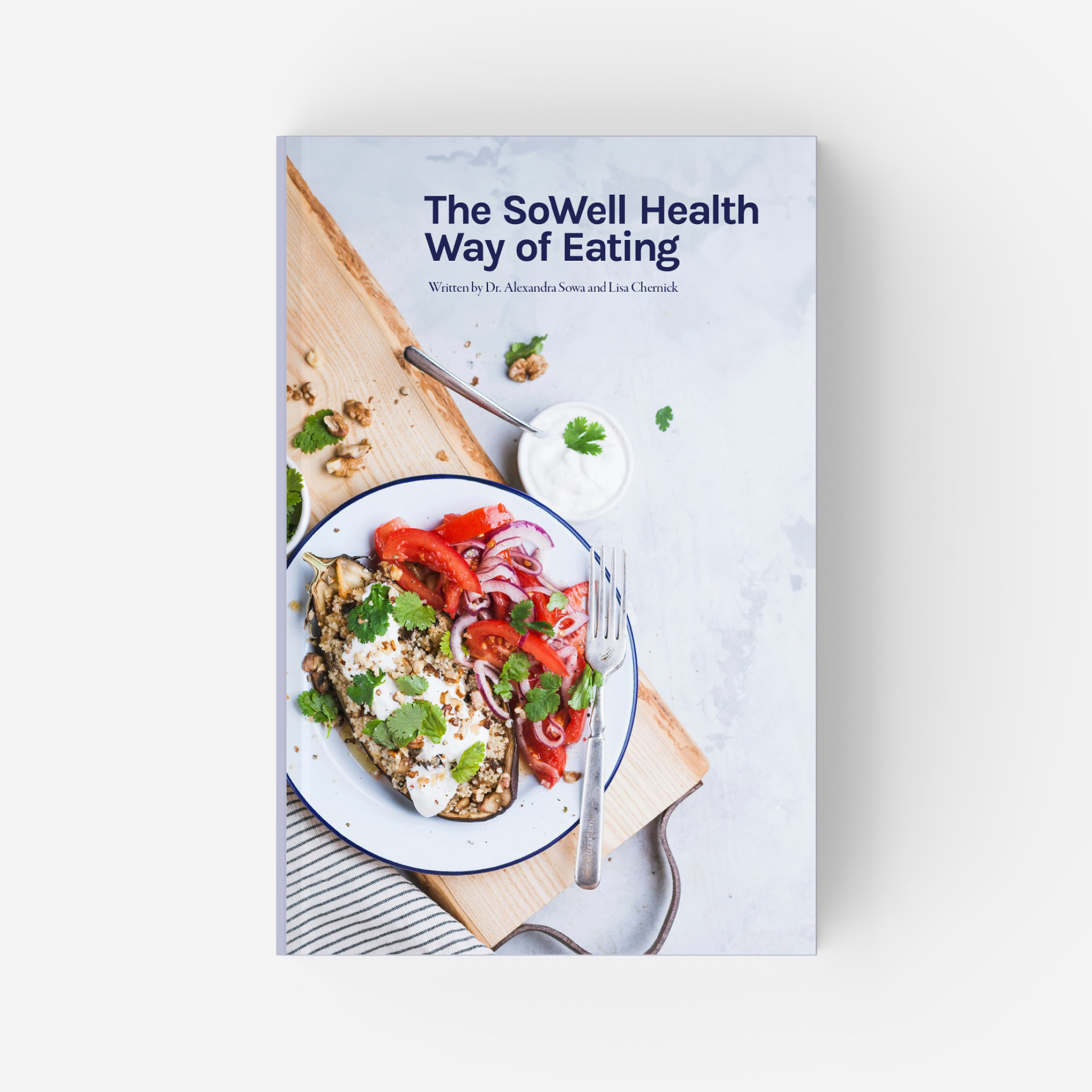
You started Ozempic — or Wegovy, or Zepbound, or Mounjaro — and your appetite dropped off a cliff. Great. That's the point. But now you're trying to hit your protein target, you grab a generic whey protein shake off the shelf, and thirty minutes later you feel like you swallowed a brick. Bloated. Nauseous. Sometimes worse.
Here's what nobody told you: most protein powders are engineered for one kind of person. Someone doing two-a-days, chasing a bulk, digesting food normally. That is not you right now. GLP-1 medications slow gastric emptying — meaning food (and protein shakes) sit in your stomach longer than they used to. A formula designed for fast-digesting athletes is a formula designed to wreck your gut when you're on a GLP-1.
The powder isn't the problem. The wrong powder is.
What a GLP-1-Friendly Protein Actually Needs
Before you compare brands or flavors or price-per-serving, you need a filter. One that accounts for what GLP-1 medications actually do to your physiology. These five criteria separate a protein powder that works for you from one that was never designed with you in mind.
The 5-Criteria GLP-1 Protein Checklist
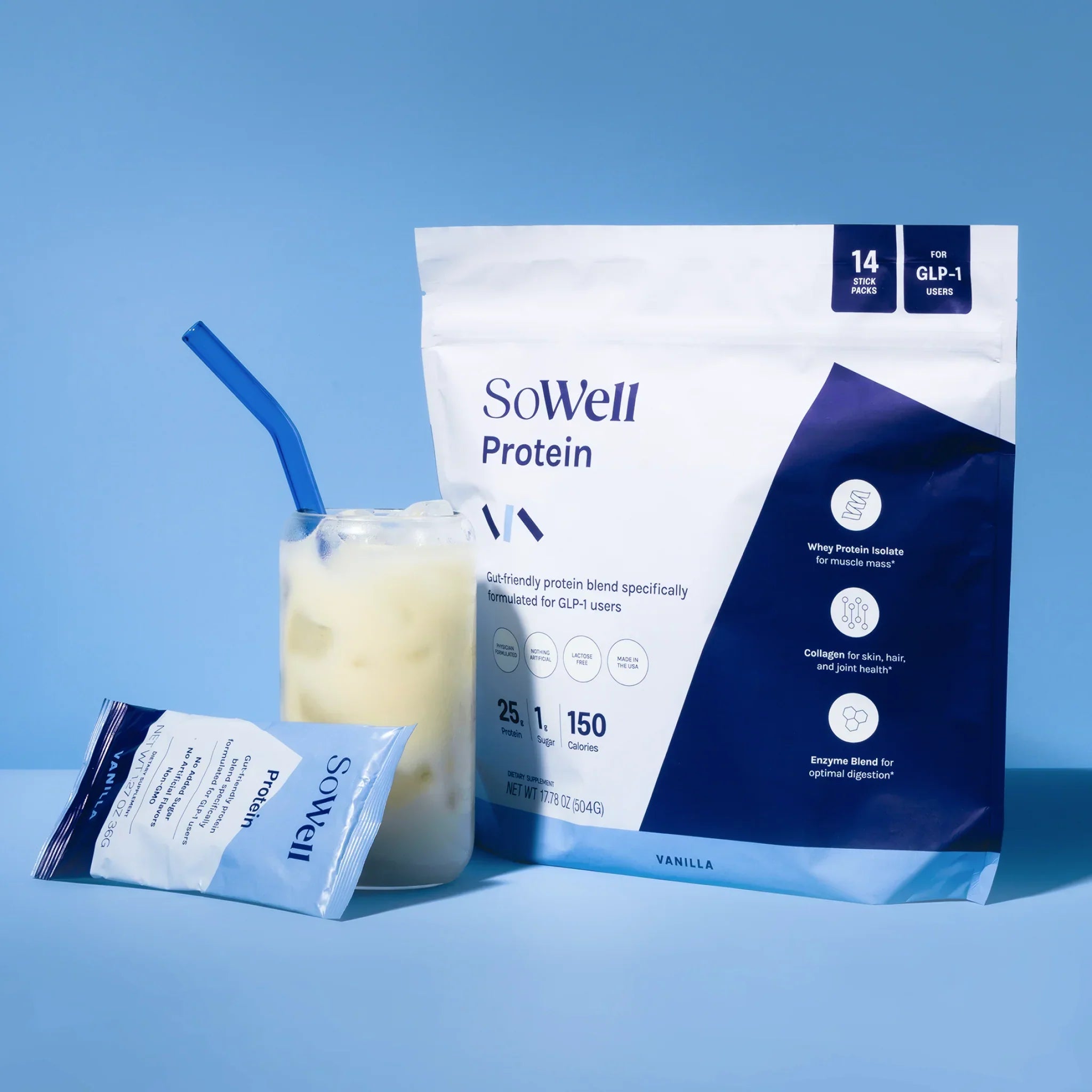
Whey isolate as the base protein. Isolate is stripped of most lactose during processing, making it the gentlest whey option for a stomach that's already running slower than usual. Concentrate is cheaper to produce and cheaper to buy, but it carries more lactose and fat — both of which compound GI distress when gastric emptying is delayed.
Built-in digestive enzymes. Look for papain, bromelain, or lipase on the label. These enzymes help break down protein before your stomach does — a meaningful assist when your gut is working at reduced speed. Without them, you're depending entirely on a digestive system that's been pharmacologically slowed.
Low-carb, zero added sugar. GLP-1 medications are doing real work to regulate blood sugar. Loading your shake with maltodextrin or 20g of carbs actively works against that. Three grams or fewer per serving is the ceiling. Anything higher is a formulation designed around taste, not your biology.
Collagen included or collagen-compatible. Rapid weight loss — even medically supported weight loss — causes skin laxity and accelerated hair shedding. Collagen peptides help preserve connective tissue and support skin elasticity during that transition. Most protein powders don't include it. For GLP-1 users losing weight quickly, it's not optional.
Stick-pack or single-serve format. On low-appetite days — which happen constantly during dose escalation — opening a tub and scooping is a meaningful friction point. A single-serve packet you can mix with a few ounces of water removes that barrier entirely. Carry one in your bag. Drink half if that's all you can manage.
“
"Most GLP-1 supplements weren't designed for GLP-1 users. They were designed for general wellness shoppers and rebranded when semaglutide went mainstream."
Here's the number that matters: during active weight loss, most research supports consuming 1.0 to 1.2 grams of protein per kilogram of body weight per day. Not to build mass — to preserve lean muscle while the scale moves. Every pound of muscle you lose during weight loss slows your metabolism and makes weight maintenance harder afterward. This is the part that doesn't show up on GLP-1 marketing materials, but clinicians who work with these medications talk about it constantly.
Do the math. If you weigh 175 pounds, your floor is 80 grams of protein daily. If you weigh 220 pounds, you need at least 100 grams. On a day when your appetite is suppressed and you've eaten half a meal, that number is very hard to hit from food alone. Protein supplementation isn't optional for most GLP-1 users. It's the gap-closer.
Just eat more chicken Hit your number when eating feels impossible
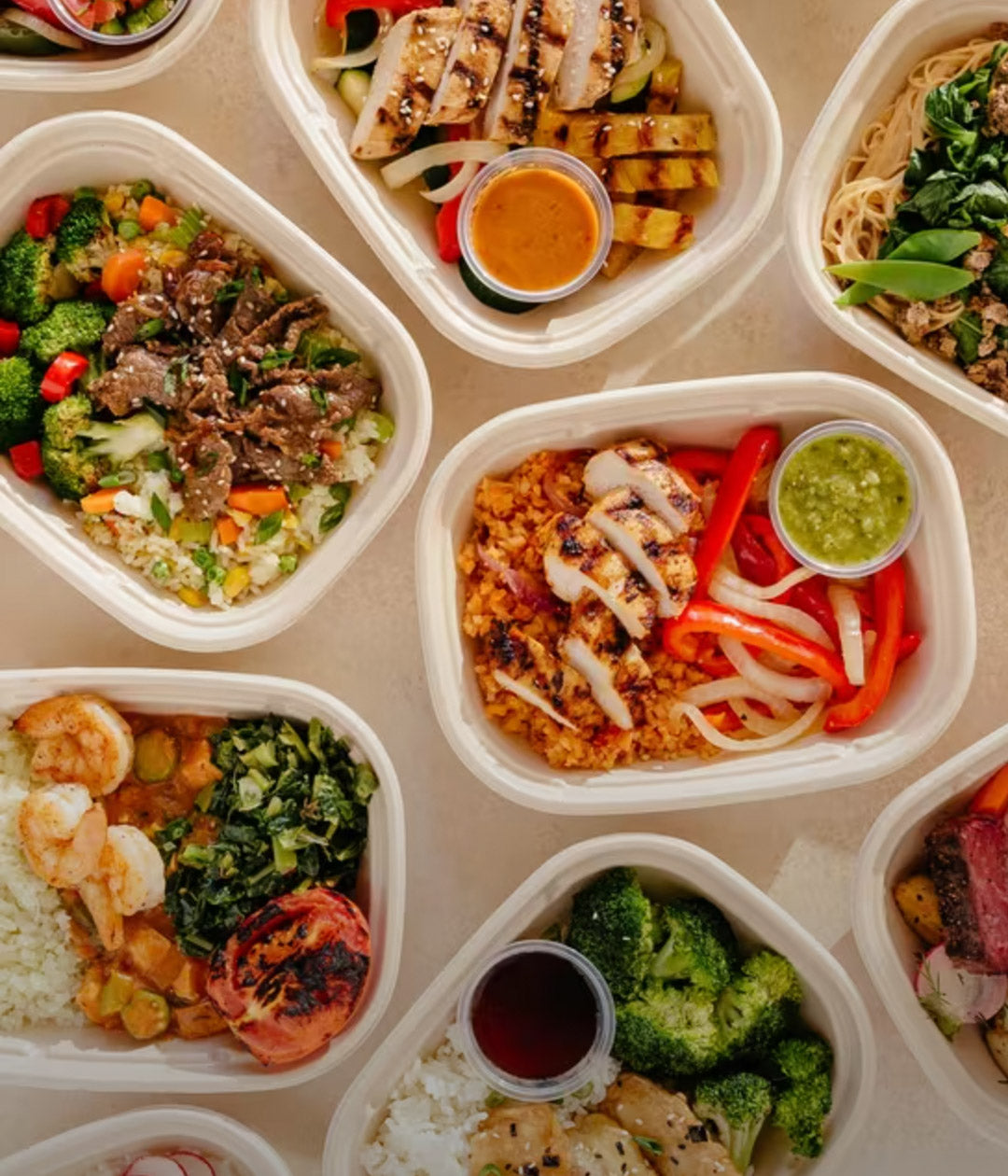
On dose-escalation days, a full meal can feel genuinely nauseating. Telling someone to "eat more protein" without acknowledging that eating anything is the challenge is advice that ignores the actual problem. A 20–25g protein shake — especially one in a small-volume stick-pack format — is often the only realistic path to hitting your target. One shake at breakfast, one mid-afternoon, and food-sourced protein at your one real meal. That's a workable day.
What 100g of protein actually looks like
Chicken breast (cooked): ~31g per 100g
Greek yogurt (full-fat): ~10g per 100g
Eggs: ~6g each
Cottage cheese: ~11g per 100g
GLP-1-friendly protein shake: 20–25g per serving
Realistic on a suppressed-appetite day: 1–2 real meals + 1–2 shakes
What GLP-1 users need
SoWell
Quest
Premier Protein
Vital Proteins
Orgain
Whey isolate base (low lactose)
✓ Isolate
✓ Isolate blend
✗ Concentrate
✗ Collagen only
✗ Pea protein
Digestive enzymes included
✓ Papain, bromelain, lipase
✗ Not included
✗ Not included
✗ Not included
✗ Not included
≤3g net carbs per serving
✓ 2g
✓ 4g (close)
✗ 5g
✗ 0g protein focus
✗ 10–15g
Collagen for skin & hair preservation
✓ Included
✗ Not included
✗ Not included
✓ Collagen-only
✗ Not included
Single-serve stick-pack format
✓ Stick packs
✗ Tub only
✓ Ready-to-drink
✗ Tub only
✗ Tub only
Zero added sugar
✓
✓
✗ 1g added sugar
✗ Varies
✗ 5–8g added sugar
Based on publicly available label data as of May 2026. Formulas may change — verify on each brand's site.
A few notes on the competition, because they're not bad products — they're just not built for you. Quest is an excellent choice for high-volume athletes who need more carbs and want a wide flavor selection; if you're off your GLP-1 and back to training hard, it's worth revisiting. Premier Protein's ready-to-drink shakes are genuinely convenient, but the concentrate base and higher sugar content make them a rough match for slowed gastric emptying. Vital Proteins built an entire brand around collagen — and that piece is real — but collagen alone is an incomplete protein source and won't cover your daily target. Orgain is a solid plant-based option for people who are dairy-free and not on GLP-1s; the carb count just doesn't fit this use case.
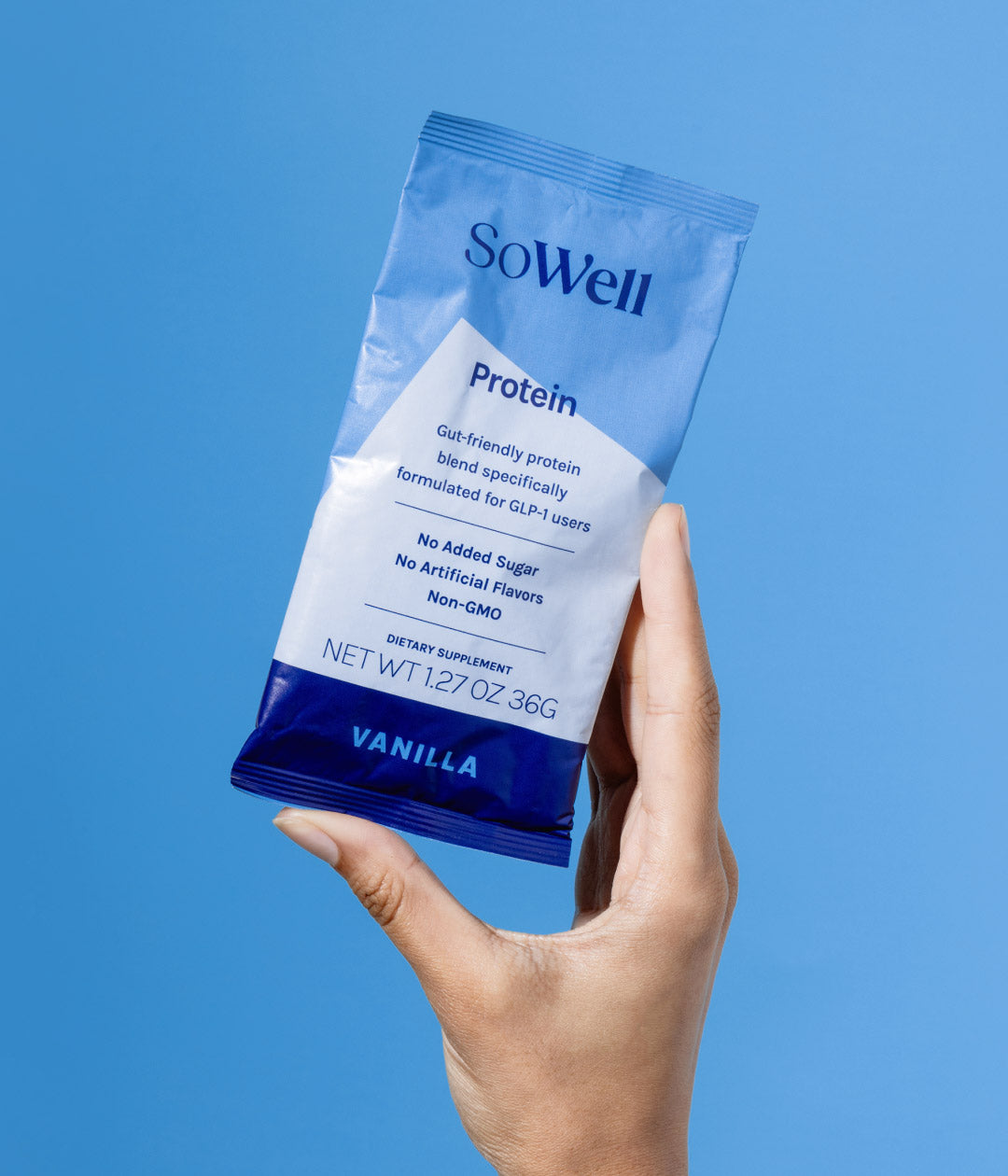
None of them were designed for someone on semaglutide or tirzepatide. SoWell Protein is.
4.8 Stars (73 Reviews)
Trusted by thousands of GLP-1 users
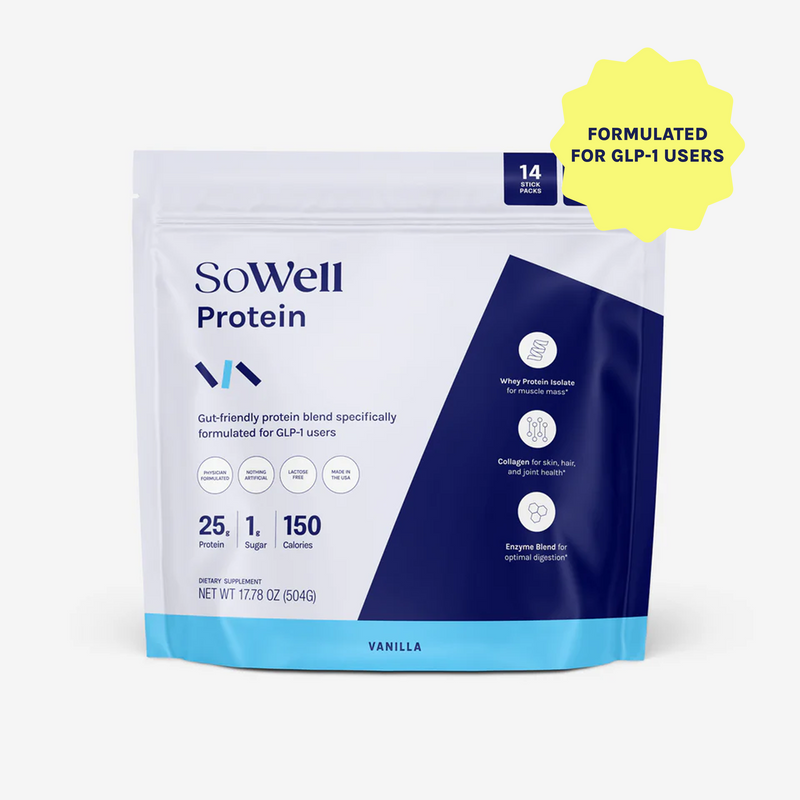
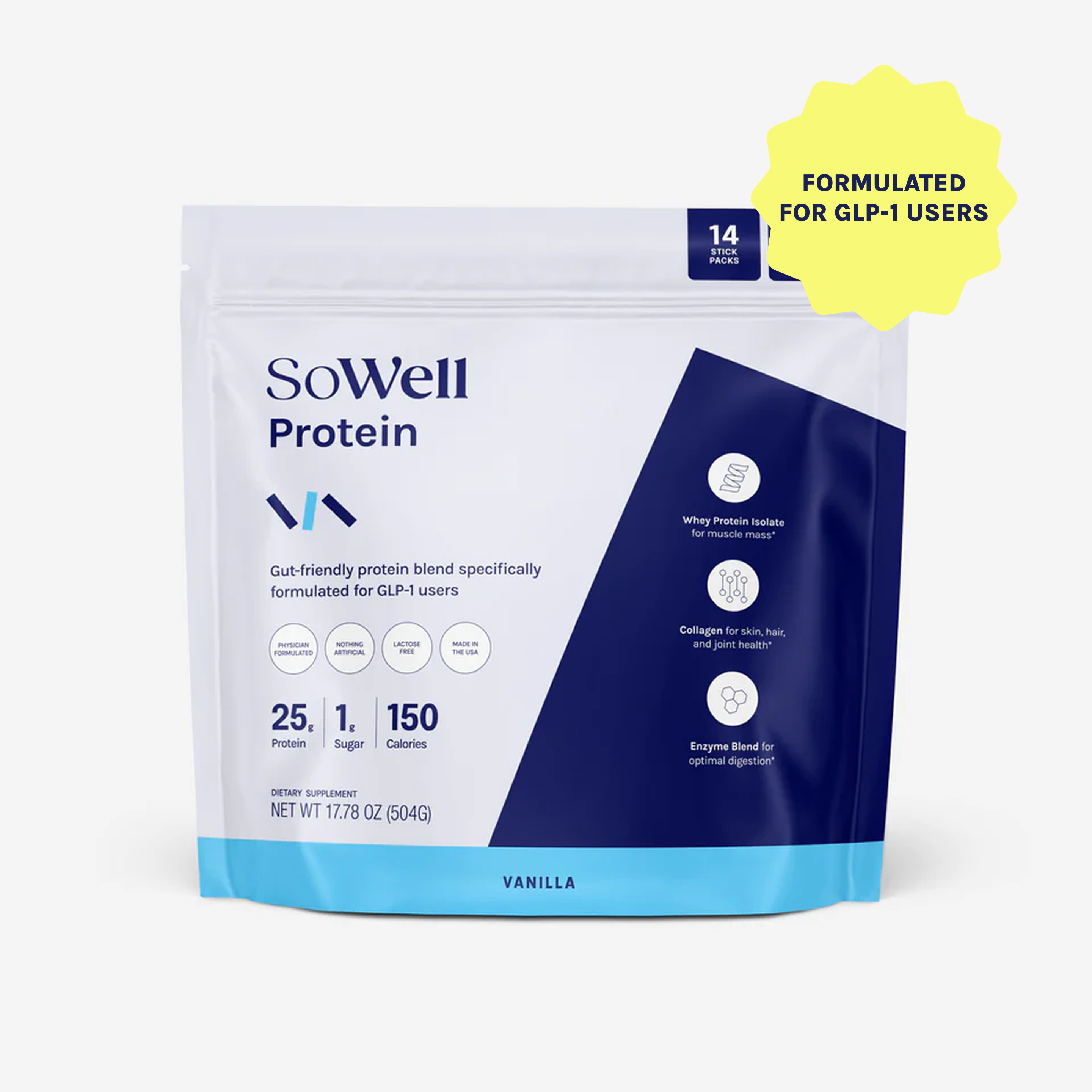
SoWell Protein
• Choose from 14 or 28 grab-and-go protein packets in a resealable, travel-friendly bag• Natural vanilla flavor mixes into anything• Easy-to-mix powder leaves no clumps•...
$89.98$44.99
Quantity:
Free Resource
Get Dr. Sowa's GLP-1 Starter Guide
Weekly protocols, nutrition tips, and evidence-based guidance for your GLP-1 journey. Join 50,000+ readers.
★ Trusted by 50,000+ GLP-1 users · No spam, ever
How to Actually Use Protein on a GLP-1 Protocol
Four rules that make the math possible
Front-load protein, not calories. When you have a window of appetite — usually morning, before nausea or fullness sets in — make protein the first thing you eat or drink. A shake before your coffee is not backwards. It's strategic.
Think small and complete. Half a stick-pack mixed in four ounces of water is still 10–12 grams of protein. That counts. On days when a full shake feels like too much, do half. Twice. The goal is daily accumulation, not single-serving perfection.
Pair protein with your injection timing. The 24–48 hours after your weekly dose is often when appetite suppression peaks. Plan ahead: have stick packs ready, a small amount of Greek yogurt in the fridge, eggs cooked and waiting. The days you're least hungry are the days preparation matters most.
Track for one week, then adjust. Most people who "eat enough protein" actually hit 50–60% of their target. Log it for seven days — not to obsess, but to see where the gaps actually are. Once you know, you can close them deliberately instead of guessing.
The Bottom Line
The generic whey shake that bloated you wasn't a coincidence. It was a formulation mismatch — a product designed for one physiology dropped into a completely different one. GLP-1 users need protein that accounts for slowed digestion, suppressed appetite, blood sugar management, and the real costs of rapid weight loss on muscle and connective tissue. That's a specific list. Most products don't come close to clearing it.
Your GLP-1 is doing its job. Make sure your protein is doing the same.
Your Questions About Protein on GLP-1, Answered
Can I take protein powder while on Ozempic or Wegovy?
Yes — and most clinicians who work with GLP-1 medications actively recommend it. Semaglutide and tirzepatide reduce appetite significantly, which makes hitting daily protein targets from food alone very difficult. Protein supplementation fills that gap and helps preserve lean muscle during weight loss. Look for a powder with whey isolate and digestive enzymes, which are better suited to the slowed gastric emptying that GLP-1 medications cause.
How much protein do I need on a GLP-1 medication?
The commonly cited range during active weight loss is 1.0 to 1.2 grams of protein per kilogram of body weight per day. For someone weighing 175 pounds that's a minimum of 80 grams daily — which is a meaningful target when appetite is suppressed. The goal of hitting that number is muscle preservation: every pound of lean mass you retain during weight loss makes weight maintenance easier afterward.
Why did a protein shake make me feel sick on Ozempic?
GLP-1 medications slow gastric emptying — food and liquids move through your stomach more slowly than usual. A protein powder made from whey concentrate (which contains more lactose and fat) or one with high carbohydrate content can sit in a slowed stomach and cause bloating, nausea, or cramping. Switching to a whey isolate formula with built-in digestive enzymes typically resolves this. Volume also matters: mixing with less liquid and drinking slowly tends to help.
Do I need collagen as well as protein on a GLP-1?
Collagen is not a complete protein and shouldn't replace a full-spectrum protein powder — but it plays a separate and important role. Rapid weight loss, including weight loss supported by GLP-1 medications, is associated with skin laxity and accelerated hair shedding. Collagen peptides help support skin elasticity and connective tissue health during that transition. A protein powder that includes collagen alongside whey isolate addresses both concerns in one serving, rather than requiring a separate supplement.
4.8 Stars (73 Reviews)
Trusted by thousands of GLP-1 users
SoWell Protein
• Choose from 14 or 28 grab-and-go protein packets in a resealable, travel-friendly bag• Natural vanilla flavor mixes into anything• Easy-to-mix powder leaves no clumps•...
$89.98$44.99
Quantity:
4.8 Stars (73 Reviews)TRUSTED BY THOUSANDS OF GLP-1 USERS
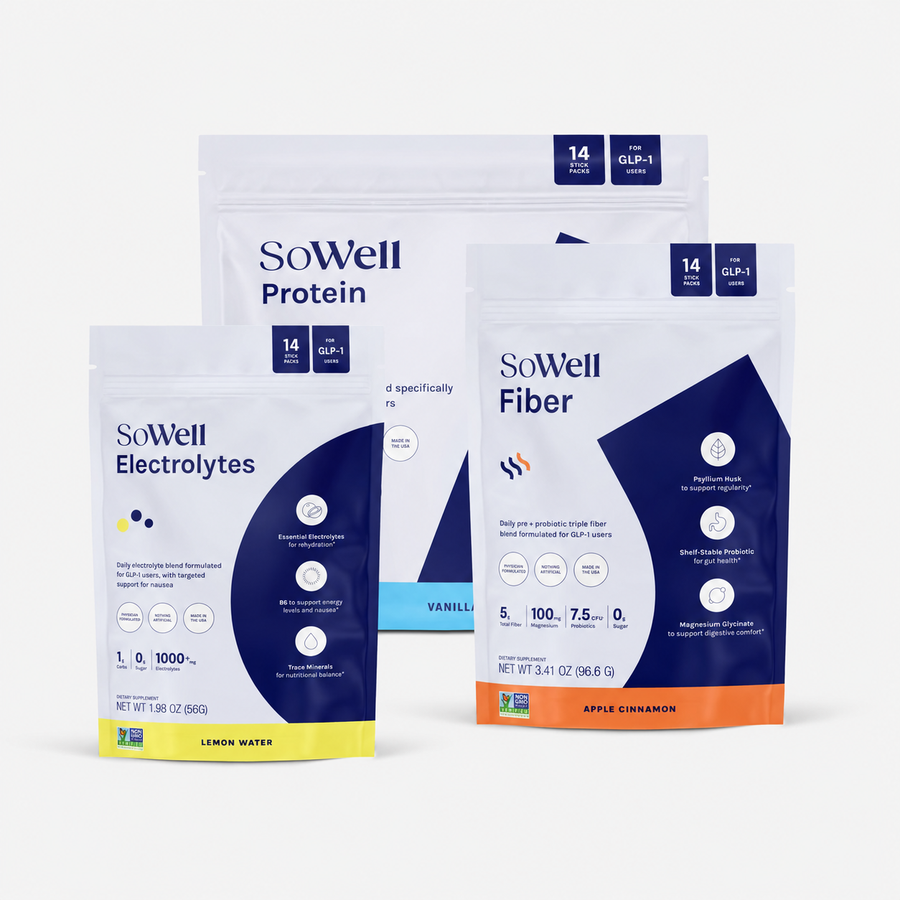
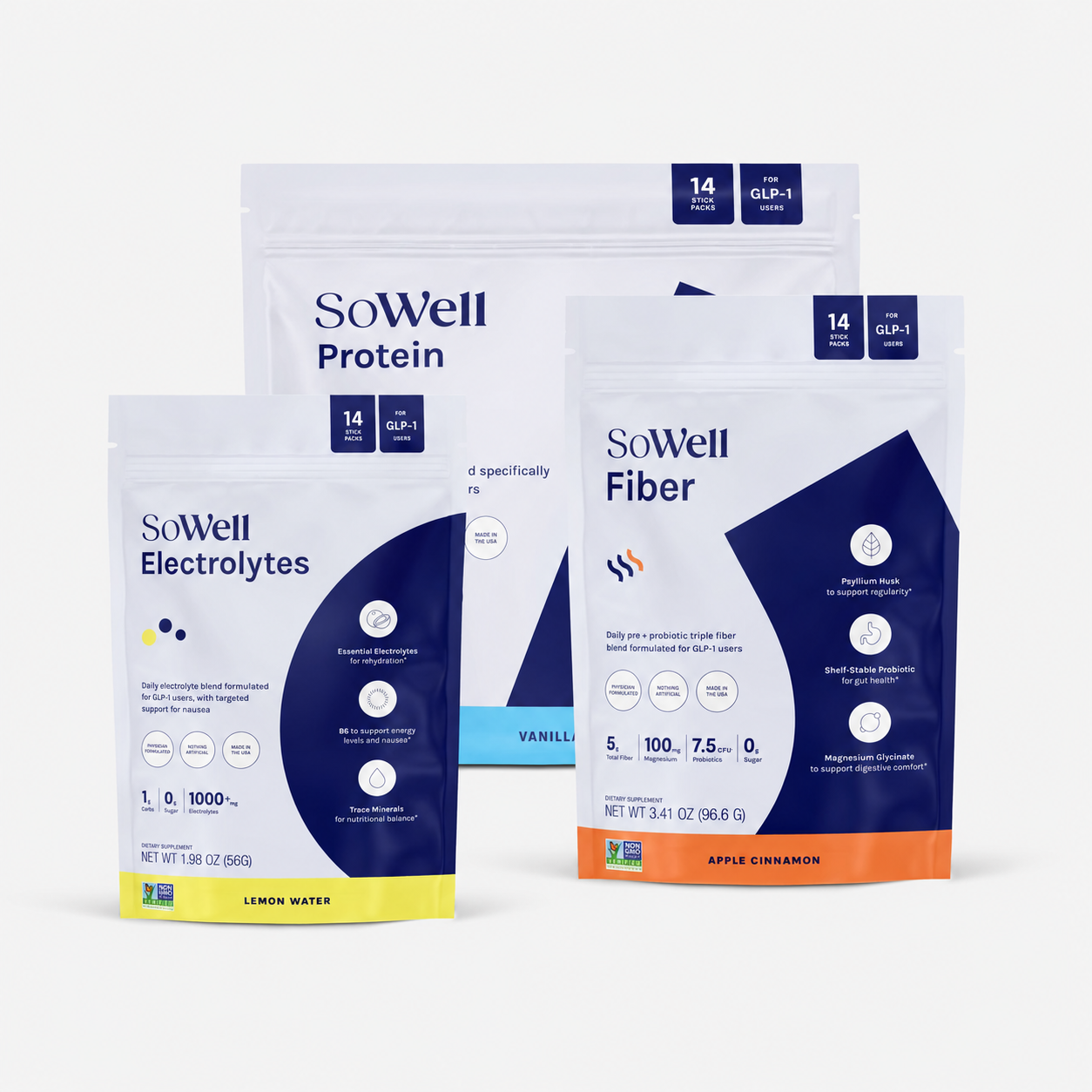
The GLP-1 Support System
Everything you need for a supported GLP-1 journey — fiber, protein, and essential micronutrients in one physician-formulated bundle. Save 20% vs. buying separately.
$104.97
$114.97
Quantity:
About the Author
Dr. Alexandra Sowa, M
Internal Medicine & Obesity Medicine Specialist · SoWell Medical Advisor
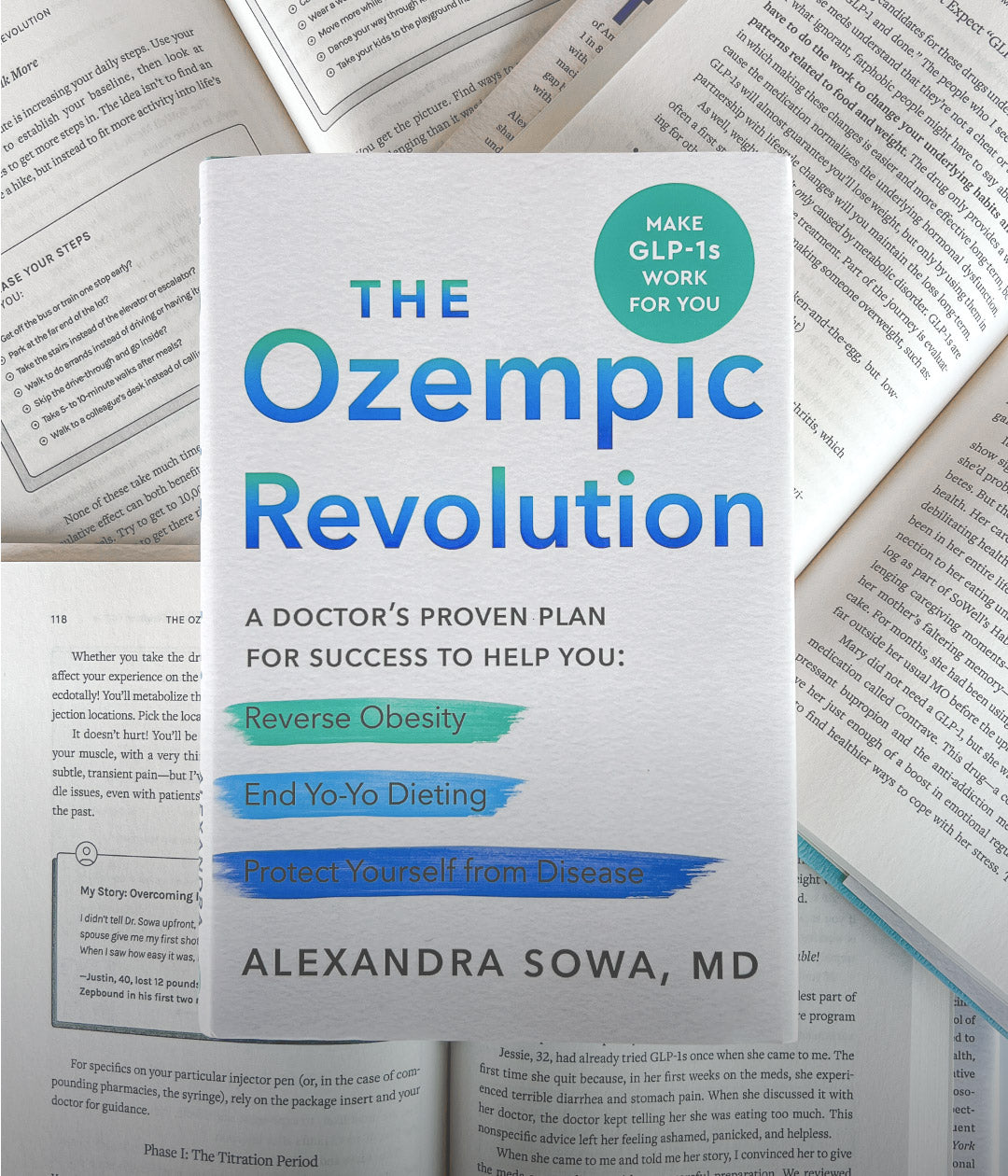
Dr. Sowa is a dual board-certified physician specializing in internal and obesity medicine. She is the founder of SoWell and the author of The Ozempic Revolution. Her practice focuses on evidence-based metabolic health and GLP-1 therapy, and she has been featured in The New York Times, Today Show, and Good Morning America.
*These statements have not been evaluated by the Food and Drug Administration. Products are not intended to diagnose, treat, cure, or prevent any disease.