About 30 to 40 percent of people on GLP-1 medications experience constipation. That's not a small side effect — it's a near-majority, and it usually shows up within the first few weeks as the medication slows gastric emptying and recalibrates how your gut moves food through. If you're reading this, you've probably already lived it: the bloating, the discomfort, the three days that become five that become a whole week of nothing.
So you grabbed fiber gummies. Or Metamucil. Maybe some Benefiber stirred into water. And it helped a little, or not at all, and now you're skeptical that "just add fiber" is the answer — because you already tried that and here you are. That skepticism is correct. The problem isn't fiber. The problem is that most fiber products on the market were built for people with normal gut motility. You don't have normal gut motility right now. GLP-1 medications fundamentally change how your digestive tract operates, and the fiber you need is different because of it.
Not all fiber is equal. Most fiber products aren't designed for you.
“
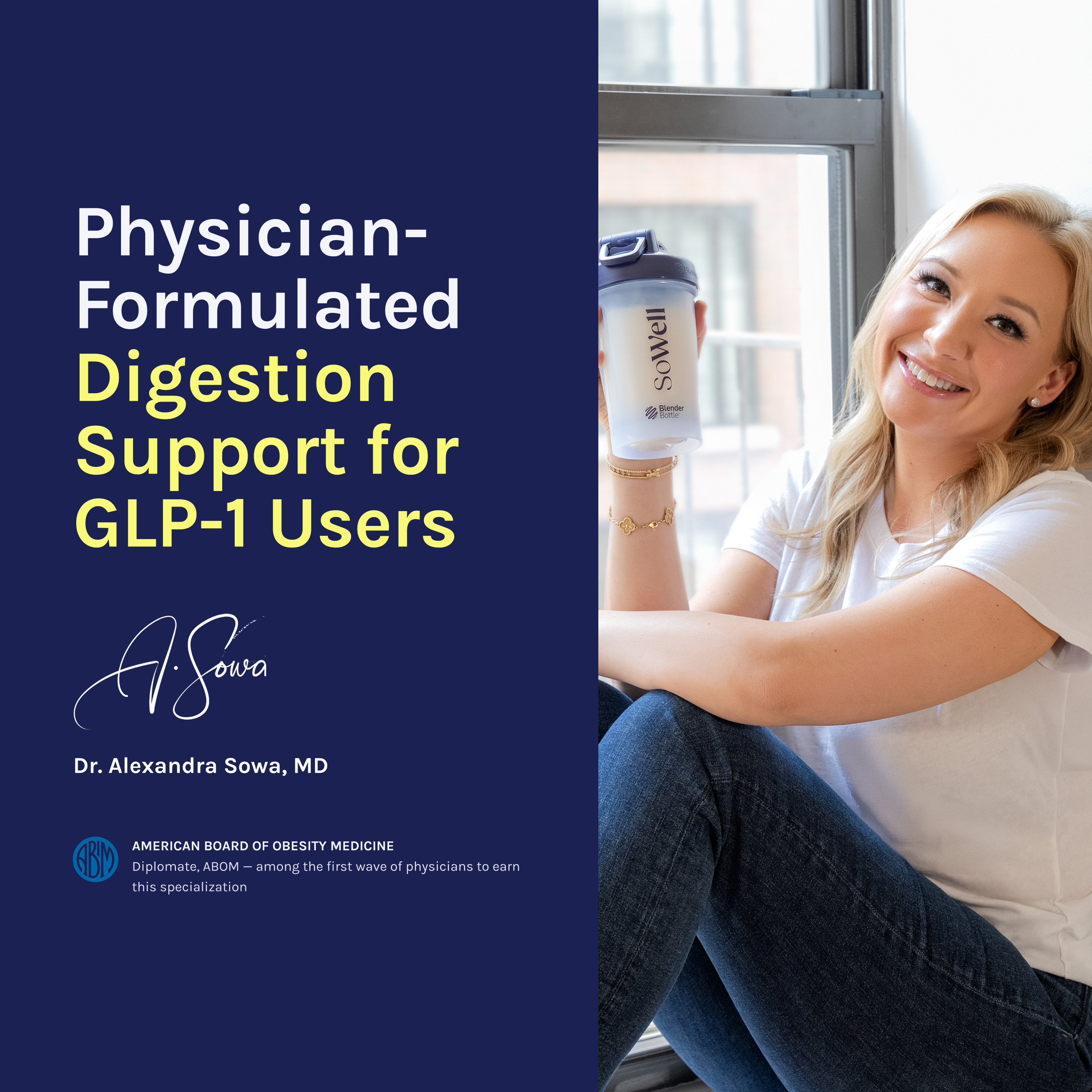
"Most GLP-1 supplements weren't designed for GLP-1 users. They were designed for general wellness shoppers and rebranded when semaglutide went mainstream."
ASDr. Alexandra Sowa, MDInternal Medicine & Obesity Medicine Specialist
The Four Fiber Types That Actually Move Things — and the Dose Math That Matters
There are dozens of fiber sources on the market. For GLP-1-slowed digestion specifically, four types have meaningful evidence and clinical use behind them. Everything else is filler — sometimes literally.
Psyllium Husk — The Gold Standard
Psyllium husk is the most studied fiber for constipation, full stop. It works via two simultaneous mechanisms: it absorbs water and forms a gel that softens stool, and it adds bulk that stimulates peristalsis — the muscle contractions that push things through. For GLP-1 users where motility is slowed, you need both. The effective dose in research is 5–10g per day, typically split across two servings. That number matters, because it's where most fiber products fail entirely.
Guar Gum (PHGG) — Gentle Viscosity
Partially hydrolyzed guar gum is a soluble fiber that forms a gentle viscous mass without the grittiness of psyllium. It's well-tolerated, produces less gas than inulin-based fibers, and has been studied specifically in populations with delayed gastric emptying — which is exactly the mechanism GLP-1 medications are using. Research suggests PHGG can normalize transit time without the urgency that sometimes accompanies psyllium. For readers who've had rough experiences with psyllium texture, PHGG is the other option worth knowing.
Apple Pectin — Prebiotic Bridge
Apple pectin is a soluble fiber that ferments slowly in the colon, feeding beneficial bacteria while also adding mild bulking. On its own it's not a constipation cure — the dose required is high and the transit-time effect is modest. But in combination with psyllium, it addresses something GLP-1 medications complicate: gut microbiome disruption. Emerging research suggests GLP-1 therapy affects gut flora composition, and pectin-class fibers help maintain the bacterial diversity that supports regular motility.
Ceylon Cinnamon — The GLP-1 Synergy Ingredient
This one isn't fiber. Include it here anyway, because it's the ingredient that separates a formula designed for GLP-1 users from a formula designed for the general population. Ceylon cinnamon has demonstrated effects on post-meal blood glucose response and insulin sensitivity — the same metabolic mechanisms GLP-1 medications target. Including it in a fiber blend isn't arbitrary; it's the difference between a digestive support product and one built around how this class of medications actually works.
Any fiber will fix GLP-1 constipation The fiber type and dose determines whether it works at all
A fiber gummy with 2–3g of inulin isn't a therapeutic dose — it's a gesture. Inulin at low doses is primarily a prebiotic, not a motility agent. At the doses in most gummies, it feeds gut bacteria (which can worsen bloating) without meaningfully addressing the mechanical slowdown caused by GLP-1 medications. The 5–10g psyllium threshold isn't arbitrary. It's the dose range where bulking and softening effects become clinically significant. Below it, you're spending money to feel like you tried.
What the dose math looks like
-
Fiber gummy (typical): 2–3g inulin — below therapeutic threshold for motility
-
Generic psyllium (1 tsp): ~3.5g per serving — needs 2–3 servings daily to reach efficacy range
-
Benefiber (1 tsp): 3g wheat dextrin — soluble, but limited bulking effect; works better as a stool softener than a motility agent
-
Effective GLP-1 fiber target: 5–10g combined soluble + bulking fiber per day, with adequate hydration
| What GLP-1 users need |
SoWell Fiber |
Metamucil |
Benefiber |
Olly Fiber Gummies |
Generic Psyllium Caps |
| Psyllium husk at therapeutic dose (5g+) |
✓ Yes |
✓ Yes (single-ingredient, needs 2–3 servings) |
✗ No (wheat dextrin, not psyllium) |
✗ No (inulin only) |
✓ Depends on capsule count |
| Multi-fiber formula (bulking + prebiotic + softening) |
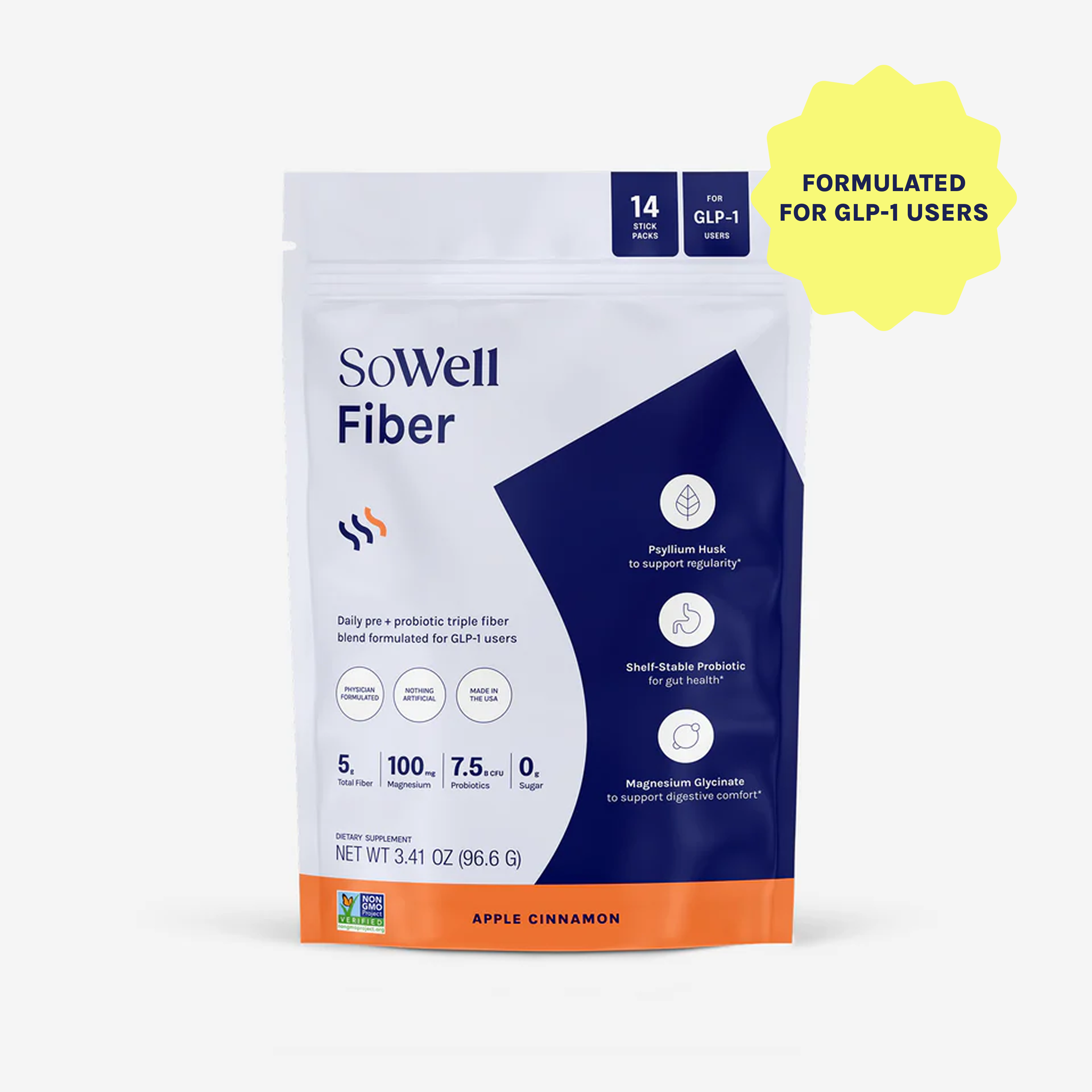
✓ Yes — psyllium + PHGG + apple pectin blend |
✗ No — single-fiber |
✗ No — single-fiber |
✗ No — inulin only |
✗ No — psyllium only |
| GLP-1-specific formulation (cinnamon + metabolic support) |
✓ Yes |
✗ No |
✗ No |
✗ No |
✗ No |
| Low bloat / gentle on slowed digestion |
✓ PHGG inclusion minimizes gas |
~ Moderate — can cause gas at high doses |
✓ Generally low-gas |
✗ Inulin is a gas-producer at most doses |
~ Moderate — texture and gas vary |
| No added sugar / low-calorie format |
✓ Yes |
~ Sugar-free versions available |
✓ Yes |
✗ Contains added sugar |
✓ Yes |
| Powder format (fastest hydration, easiest dosing) |
✓ Yes |
✓ Yes |
✓ Yes |
✗ Gummy only |
✗ Capsule — hydration timing varies |
| Best for |
GLP-1 users needing comprehensive digestive support |
Straightforward psyllium supplementation; widely available |
Mild softening support; easy mixability |
Convenience; palatable for fiber newcomers |
Budget psyllium; no frills |
Free ResourceGet Dr. Sowa's GLP-1 Starter Guide
Weekly protocols, nutrition tips, and evidence-based guidance for your GLP-1 journey. Join 50,000+ readers.
★ Trusted by 50,000+ GLP-1 users · No spam, ever
What to Actually Do — by Week
A realistic timeline for GLP-1 fiber supplementation
Before you start: Hydration isn't optional. Fiber absorbs water to do its job — if you're dehydrated (common on GLP-1 medications due to reduced appetite and fluid intake), adding fiber without adding water can make constipation worse. Aim for at least 64 oz daily before introducing a fiber supplement. If you're on a higher GLP-1 dose, 80–90 oz is a more realistic target.
Week 1 — start low, expect adjustment: Begin at half the recommended dose. Your gut is already operating slowly; introducing a full fiber load at once can cause cramping and bloating as bacteria start fermenting the new substrate. One serving in the morning with a full glass of water. Expect mild gas. That's the flora adjusting, not failure. SoWell Fiber is formulated with PHGG specifically to reduce this initial adjustment discomfort — but start low regardless of what you're using.
Week 2–3 — build to full dose: If week one was tolerable, move to the full daily dose. This is when most people see meaningful change — stool softening, more predictable timing, reduced straining. If you're still seeing minimal movement by week three, evaluate your hydration first, then your dose. Many GLP-1 users need the higher end of the 5–10g range because motility is significantly slowed compared to the general population the products were tested on.
Week 4 and beyond — consistency over correction: Fiber works as a daily intervention, not a rescue dose. Taking it only when constipation is acute is like watering a plant only when it wilts — you'll keep cycling through the same crisis. A daily maintenance dose becomes the baseline your gut can count on. At week four, most GLP-1 users who've been consistent report that the cyclical constipation flare pattern largely resolves — not because the medication changed, but because their fiber routine caught up to the medication's effect on motility.
The Bottom Line
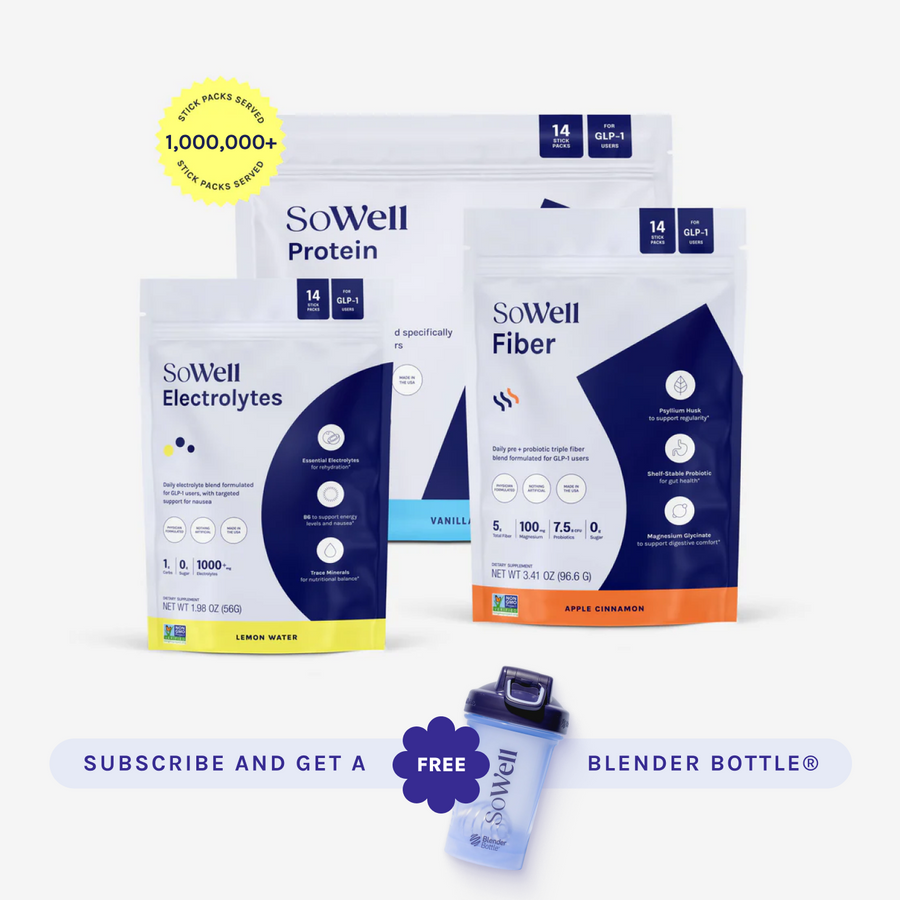
GLP-1 constipation is a mechanical problem — your medication is slowing gastric emptying and recalibrating gut motility as a feature, not a flaw. The fiber gummies didn't work because 2–3g of inulin isn't a therapeutic dose for a slowed gut. Generic psyllium works if you hit 5–10g daily and manage hydration, but it was designed for a digestive system that isn't operating under pharmaceutical modification. What actually moves the needle here is a multi-fiber formula built around how GLP-1 medications change your digestive physiology: psyllium for bulk and softening, PHGG to reduce adjustment bloat, apple pectin to support microbiome integrity, and Ceylon cinnamon for metabolic alignment with the medication itself. That's the criteria. If your current fiber product doesn't meet it, SoWell Fiber was built specifically for this. And if you're dealing with constipation as part of a larger picture — fatigue, nausea, appetite unpredictability — the GLP-1 Support System bundle addresses those as a coordinated daily stack rather than isolated fixes.
You tried the gummies. They weren't the answer. The answer is a fiber formula that actually accounts for what your medication is doing to your gut.