You're on Ozempic or a GLP-1 medication and you're doing the right things — staying hydrated, reaching for electrolytes, trying to keep your energy up. So why do you still feel like garbage by 3pm? Why do the cramps persist? Why is that LMNT packet making your reflux flare?
Because the electrolytes you're drinking were designed for athletes sweating through two-hour training sessions. Not for someone whose stomach empties slowly, whose nausea is already teetering, whose sodium tolerance has shifted, and whose body is burning through magnesium and potassium in ways most brands haven't even thought about. The GLP-1 electrolyte category doesn't exist yet — at least not in most supplement aisles. And that gap is costing you.
Here's how to find what actually works.
“
"Most GLP-1 supplements weren't designed for GLP-1 users. They were designed for general wellness shoppers and rebranded when semaglutide went mainstream."
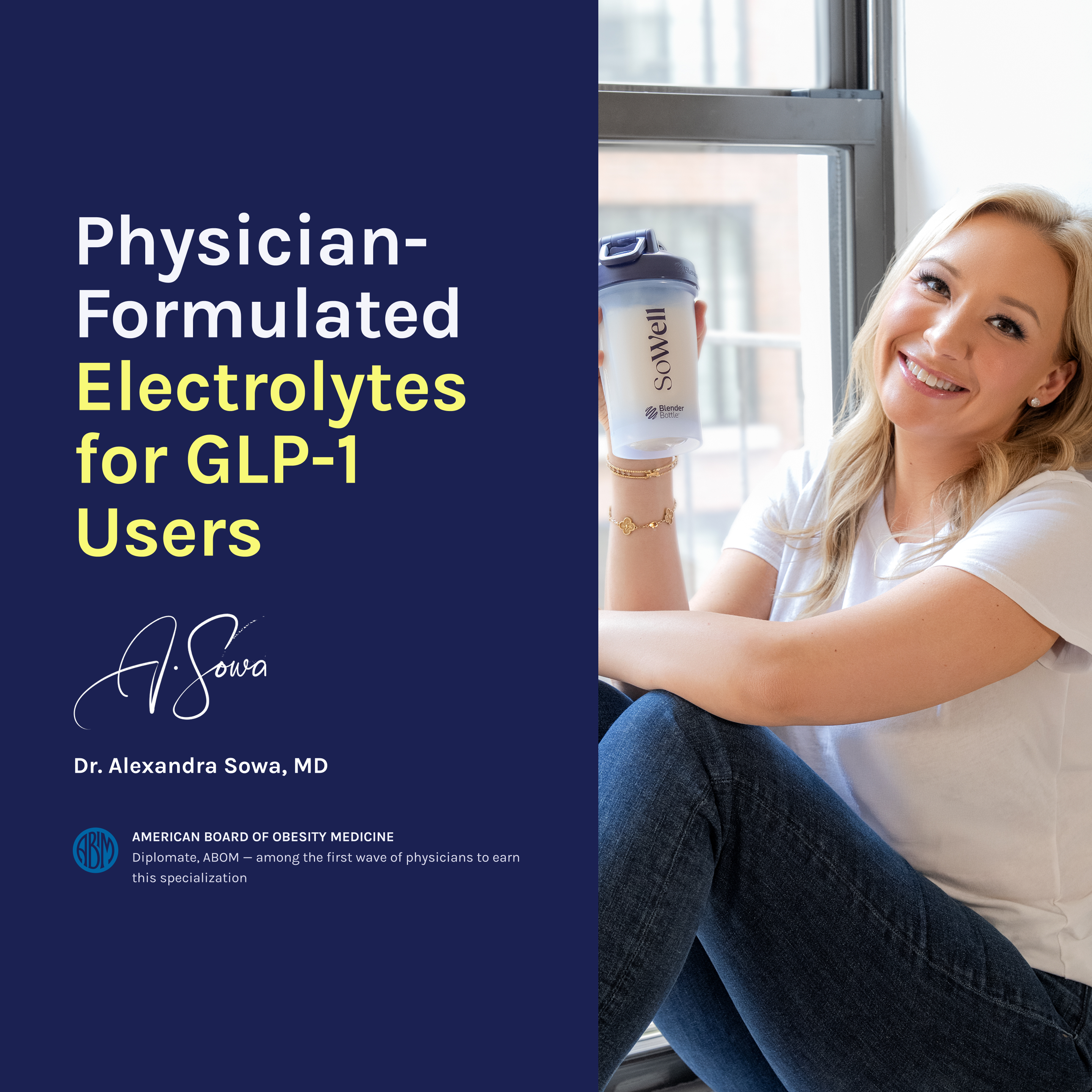
ASDr. Alexandra Sowa, MDInternal Medicine & Obesity Medicine Specialist
The 6 Criteria That Separate a GLP-1 Electrolyte from a Generic One
Not all electrolyte deficiencies are the same. GLP-1 medications create a specific physiological context: delayed gastric emptying, reduced caloric intake, increased urinary excretion of electrolytes, altered taste sensitivity, and a nausea baseline that's already higher than average. An electrolyte formula that's excellent for a cyclist or a keto dieter can be actively wrong for someone on semaglutide or tirzepatide.
Before you compare brands, you need to know what criteria actually matter for your situation. Here's the framework.
More sodium = better hydration Balanced sodium protects your GLP-1 stomach
The high-sodium trend in electrolytes — products like LMNT sitting at 1,000mg per packet — was built around research on endurance athletes and ketogenic dieters who genuinely excrete more sodium. GLP-1 users face a different problem: delayed gastric emptying and heightened reflux sensitivity. High-sodium loads in a slower-moving stomach can worsen nausea, trigger heartburn, and sit uncomfortably in ways that don't happen for a marathoner. The right target for GLP-1 users is moderate, balanced sodium — enough to support fluid retention, not enough to become its own problem.
The 6 criteria that matter for GLP-1 electrolytes
-
Sodium level: Moderate range (200–500mg), not mega-dosed
-
Sugar content: Low or zero — GLP-1 users have altered glucose metabolism and taste sensitivity
-
Magnesium: Present and meaningful — GLP-1-related muscle cramps are real
-
Potassium: Balanced for heart rhythm and muscle function during caloric restriction
-
Vitamin B6: The first-line clinical recommendation for nausea per ACOG guidelines — almost no electrolyte brand includes it
-
Absorption profile: Gentle on a slow-emptying stomach; no ingredients that compound nausea
| What GLP-1 users need |
SoWell |
LMNT |
Liquid IV |
Cure |
Nuun |
| Moderate sodium (200–500mg) |
✅ Yes |
❌ 1,000mg |
⚠️ 500mg |
✅ ~290mg |
✅ ~300mg |
| Low or zero sugar |
✅ Zero sugar |
✅ Zero sugar |
❌ 11g sugar |
⚠️ 4g (coconut water) |
✅ <1g sugar |
| Meaningful magnesium |
✅ Yes |
✅ 60mg |
❌ None |
❌ Trace only |
⚠️ 25mg |
| Balanced potassium |
✅ Yes |
✅ 200mg |
⚠️ 380mg |
✅ ~300mg |
⚠️ 150mg |
| Vitamin B6 for nausea |
✅ Included |
❌ None |
❌ None |
❌ None |
❌ None |
| Formulated for GLP-1 users |
✅ Yes |
❌ Athletic focus |
❌ General hydration |
❌ General wellness |
❌ Athletic/active |
What the Comparison Actually Tells You
Each brand in this table does something well. LMNT built its reputation in the keto and endurance space — and if you're logging long runs or training in heat, that 1,000mg sodium hit makes sense. It's a legitimate product for a different body in a different situation. Liquid IV's ORS-style formula is good for acute rehydration after illness. Cure's coconut water base appeals to people avoiding synthetic ingredients. Nuun is a solid, low-sugar option that's easy to find in pharmacies and grocery stores.
But none of them were built for the specific physiology GLP-1 medications create. And the one item that disqualifies all four for the GLP-1 context — the absence of B6 — isn't a minor omission. It's the ingredient clinicians most commonly recommend first for medication-related nausea, and it's nowhere in the competitive field.
Read that again. The one nutrient with the strongest clinical support for GLP-1 nausea management doesn't appear in a single competing electrolyte formula.
That's not a gap. That's the whole problem with the category.
Free ResourceGet Dr. Sowa's GLP-1 Starter Guide
Weekly protocols, nutrition tips, and evidence-based guidance for your GLP-1 journey. Join 50,000+ readers.
★ Trusted by 50,000+ GLP-1 users · No spam, ever
What to Actually Do: Using Electrolytes Strategically on GLP-1s
Four rules for GLP-1 electrolyte use that most people skip
Time it around your dose. Nausea typically peaks in the 24–72 hours after injection. That's when B6 and gentle hydration matter most — not just any day you remember to drink an electrolyte packet. Build the habit around your injection schedule, not around thirst.
Don't trust sodium tolerance from before GLP-1s. Delayed gastric emptying changes how sodium sits in your stomach. If high-sodium electrolytes (LMNT, some Liquid IV flavors) were fine before your medication and now cause discomfort or reflux, that's not coincidence — switch to a moderate-sodium formula and recheck.
Pair electrolytes with your smallest meal, not a standalone drink. On a slow-emptying stomach, drinking electrolytes on empty can amplify nausea. Taking them alongside a small amount of food gives the formula something to move with and reduces gastric irritation for many users.
Watch for magnesium as a cramp signal. GLP-1-related muscle cramps — especially in the legs — are commonly reported and clinically linked to electrolyte depletion during rapid weight loss. If cramps are frequent, check your magnesium intake first. Many electrolytes contain little or none.
The Bottom Line
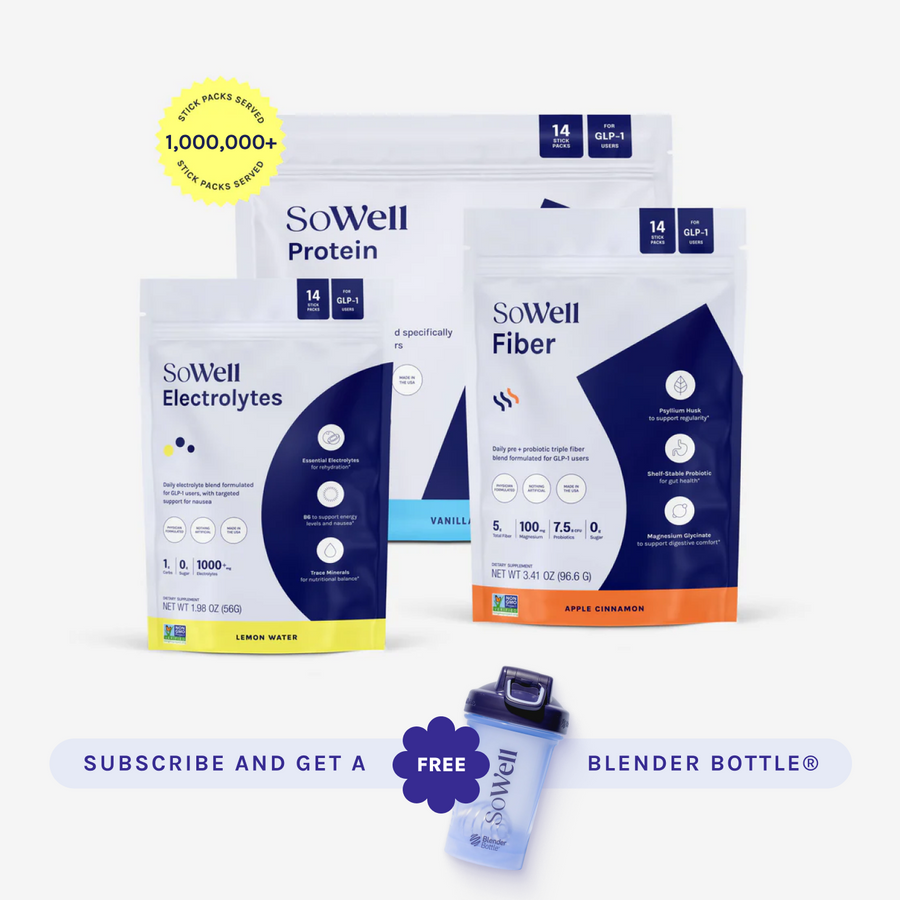
If you're searching for the best electrolytes for Ozempic, you've already figured out that water isn't enough. The next step is recognizing that most electrolyte brands on the market weren't designed with your physiology in mind — and that the difference shows up in how you feel after each dose cycle. Balanced sodium that doesn't aggravate reflux. Magnesium for cramps. B6 for nausea. These aren't nice-to-haves; they're the criteria that separate a formula built for GLP-1 users from one that happens to be marketed near them. SoWell Electrolytes is the only formula in this comparison that meets all six criteria — because it was designed specifically for the physiological context GLP-1 medications create, not retrofitted from an athletic hydration product. If you're already managing your protein and your calories, your electrolyte formula should be doing the same precision work. And if you want the full support system — electrolytes, protein, and the nutrients that matter most on GLP-1s — the GLP-1 Support System bundle puts it together.
The brands that were built for athletes are excellent for athletes. You're not an athlete right now — you're someone managing a medication that changes how your body handles almost everything. Your electrolytes should know the difference.